Scania R/S Series Maintenance Guide: Generations, Engines and Parts Selection
Scania R/S truck maintenance guide: PGR and Next Generation cabs, DC09/DC13/DC16 engines, Opticruise, retarder, service intervals and parts selection.
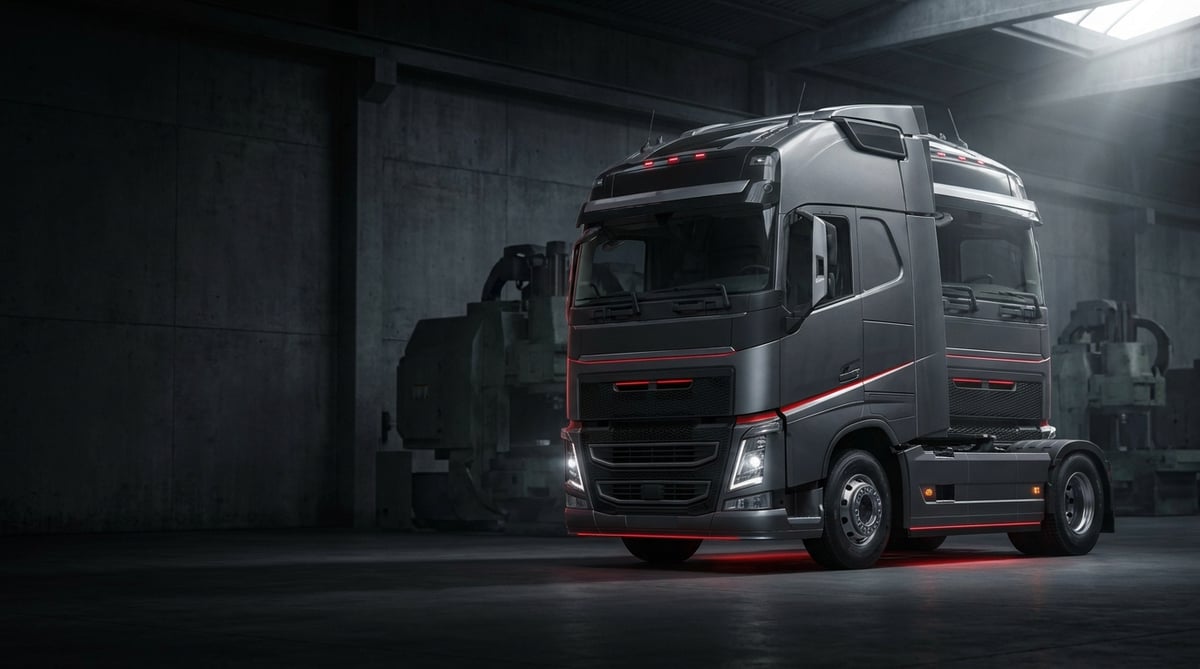
One of the most common lines heard at service reception is: "I need a part for a Scania, R series." From an ordering point of view, that sentence says almost nothing. On Scania trucks R and S are cab designations, not model names; under the same letter you find different generations, different engine families, different emission stages and entirely different drivetrain configurations. This guide treats the R and S series not as a single technical unit, but as a family of configurations in which cab, engine, gearbox, retardation equipment and emission system can each be specified separately.
Which duties are R and S built for? What the cab letters mean
On a Scania, the letter at the start of the model name describes the cab, not the engine. The manufacturer splits its heavy-range family by cab height, interior volume and floor design using letters. This split is not an abstract comfort choice: the cab letter directly indicates the job the truck was built for, and which maintenance items will come to the front as a result.
The lowest-cab configurations are set up for urban distribution; the mid-height cab is a balance point for regional haul and mixed use. The R series is the classic configuration for long-haul tractor work: bunk, storage and headroom are sized for extended stays on the road, and the cab floor has a low step corresponding to the engine tunnel. The S series, on the other hand, is the flagship trim that arrived with Next Generation Scania, and its defining feature is a completely flat cab floor — the bump corresponding to the engine tunnel disappears, and the cabin becomes a single continuous plane. Construction-site work has a separate equipment package of its own; that package changes chassis reinforcement and approach angle, not the cab.
The maintenance side of the cab choice is often overlooked. Cab suspension bellows and dampers, the tilt pump and cylinders, the heater and AC circuit, the cab filter, and the mirror or camera system are all parts tied to cab type. Because a long-haul cab sees heavier use of the parking heater and air conditioning, the battery and charging circuit are put under more strain as well. The number in the model name, for its part, only roughly indicates the power class; it is not a parts reference.
How does Scania's modular system change parts selection?
The feature that sets Scania apart most clearly in the industry is its modular build. The manufacturer does not design the truck as a single whole but as a combination of modules with fixed interfaces: the cab is a module, the engine is a module, the gearbox and rear axle are each modules, and the chassis is a carrier with a standard hole pattern. A limited number of modules is combined in ways that allow a very large number of configurations.
The first result of this on the ground is positive. Because the same component is used across more than one model and series, parts availability widens, service knowledge carries over from one truck to another, and the number of stock keeping units a fleet has to hold goes down.
The second result is a direct trap. The modular build means that two trucks wearing the same badge may have been built from different modules. One R-series tractor may carry a different engine family, a different gearbox step, and may or may not have a retarder fitted, compared with the next one off the line. As a result, the model name is not even a starting point in parts research — the real starting point is the truck's chassis number and the equipment list tied to that chassis.
The third result is that module updates can be made without the model name changing. When a component is revised partway through production, the series name stays the same, while the connection interface, sensor type or control logic behind it may have changed.
Generations: what changed from the PGR generation to Next Generation Scania?
The practical way to read a Scania fleet is to separate it by generation. Generation changes do not happen on a sharp date; two generations can be sold in the same calendar year. The periods below are given only approximately, and a given truck's generation should be confirmed from its chassis data.
| Generation | Approximate period | Standout change | What it means for maintenance and parts |
|---|---|---|---|
| Previous heavy series | Second half of the 1990s | Generation in which the modular build matured; cab letters not yet used in today's sense | Fleet largely renewed across this period; generation verification and parts availability are critical |
| PGR generation | From the mid-2000s | P, G and R cab letters became established; R set apart as the long-haul tractor cab | Parts set tied to cab letter became clear; engine family still needs to be verified separately |
| PGR update | Early 2010s | Aerodynamic and interior update; emission equipment grew heavier | Same cab housing different emission stages; sensor and valve differences intensified |
| Next Generation Scania, R | Mid-2010s to present | Entirely new cab family and renewed electrical-electronic architecture | Compatibility with the previous generation breaks on cab, front-end and electrical parts |
| Next Generation Scania, S | Mid-2010s to present | Flat-floor flagship cab; the new ceiling of the long-haul comfort class | Interior trim, floor and suspension items diverge from the R |
The sharpest break in this table sits between the PGR generation and Next Generation Scania. It was not only the cab that changed in that transition — the electrical architecture, the placement of control units and the cab connection points were also renewed. In practice, a cab part or a connector that is correct for a PGR truck is very often invalid on a Next Generation one. On the drivetrain side, by contrast, continuity is higher: thanks to the modular build, the engine and gearbox families have evolved independently of the cab change.
The split between R and S, meanwhile, sits inside the same generation. Both belong to the Next Generation cab family, and the electrical architecture and front-end equipment are largely shared between them; the difference concentrates on cab height, floor design, interior trim and cab suspension setting. The S series' flat floor directly changes the insulation and trim parts around the engine tunnel area.
Engine families: the difference between DC09, DC13 and DC16
The second axis that defines Scania's maintenance identity is the engine family, and it is chosen independently of the cab letter. In the naming, the number that follows describes the displacement class; the suffixes that come after it indicate the emission stage and power variant. The fact that all three families can be found under the same cab explains why a search for something like "R-series engine part" turns up nothing useful.
| Engine family | Cylinder layout and displacement class | Typical use | What stands out for maintenance and parts |
|---|---|---|---|
| DC09 | Inline five-cylinder, nine-litre class | Distribution, regional haul, light tractor and chassis-cab work | More compact engine bay; vibration and sound character specific to the five-cylinder layout |
| DC13 | Inline six-cylinder, thirteen-litre class | Backbone of the long-haul tractor fleet; the largest share of the heavy-range park | Most common family; widest parts availability and the highest number of variants |
| DC16 | V8, sixteen-litre class | Heavy tonnage, special transport, steep and long-gradient routes | Dual-bank layout; separate parts set on the exhaust, turbo feed and cooling side |
The difference between the families is not only about power. The vibration character of the five-cylinder layout differs from the six-cylinder, and the engine mounts, belt drive line and exhaust hangers are sized around that difference. In the V-configuration there are two exhaust manifolds, in most configurations two turbo feed paths, and a more complex cooling layout, all of which make service access harder. What actually decides maintenance is the family itself: oil volume and approved specification, filter type, belt layout and diagnostic routine all follow from it. Actual power and torque figures, on the other hand, vary by calibration even within the same family and should only ever be read from the truck's own documents.
How do you verify the engine code on the truck?
The engine family is never determined by guesswork. The type plate on the engine block, the engine information on the registration document and the control unit identity read from a diagnostic tool are used together. This step is critical especially on second-hand trucks or ones that have had an engine replacement; it is not unusual in the field to find a truck whose body belongs to one generation and whose engine belongs to another, and on such a truck ordering a part by model year is, by definition, ordering the wrong part.
Emission stages and aftertreatment equipment
The same engine family, under the same cab, can turn up with different emission equipment. This is the point that causes the most mistakes when reading a Scania fleet; the emission stage changes maintenance load, fault pattern and diagnostic path all at once.
In the Euro 5 era, the manufacturer offered two separate routes for NOx control: one built around exhaust gas recirculation, and one built around urea-based selective catalytic reduction. On an EGR-heavy build, carbon build-up on the valve and cooler side stands out; on an SCR-heavy build, fluid quality, dosing equipment and the sensor side come to the front instead. The fact that one of two trucks from the same model year regularly consumes urea while the other never does comes from exactly this split.
With Euro 6, the aftertreatment chain became heavier. The early Euro 6 generation used exhaust gas recirculation, a particulate filter and selective catalytic reduction together; the system brought both more components and a tighter dependency between them. In later generations, configurations became common in which the SCR side was strengthened and the EGR circuit was simplified.
The practical takeaway is clear: every part, sensor and valve on the aftertreatment side depends on the emission stage and should not be ordered before that stage is confirmed from the registration document. On the urea side, quality discipline matters as much as the maintenance itself; off-spec or contaminated fluid forms a crystalline crust in the dosing valve, clogs the filter, and eventually leads to staged torque limitation. These limits are triggered not only when the fluid runs out, but also whenever a quality fault is detected.
Opticruise: what the automated gearbox means for maintenance
Scania's best-known heading on the drivetrain side is the automated gearbox marketed under the name Opticruise. This is not an automatic gearbox in the classic sense: at its core it is a mechanical gearbox, in which gear changes and clutch movement are carried out by electronically controlled pneumatic actuators.
More than one generation of this layout exists in the field. Early configurations kept a clutch pedal for pulling away and coming to a stop; later generations removed the pedal and left the clutch entirely to the system, adding devices that shorten shift time along with fully automatic operating modes. Which generation a given truck has changes how a driver's complaint should be read: on a pedal-less truck, a complaint of "the clutch is slipping" can just as easily point to an actuator adaptation fault as to a mechanical clutch failure.
Maintenance runs on three legs. The first is gearbox oil: the approved specification and a timely change decide the life of the gears and synchronisers. The second is the air fed into the system: the actuators are supplied from the truck's own air system, and damp or oily air swells the seals, sticks the valves, and in winter freezes inside the line and delays shifts. This is exactly why maintaining the air dryer cartridge is a direct part of gearbox health. The third is data: clutch wear value, actuator adaptation logs and shift fault counters should be read regularly. The most common complaints are late or harsh shifts, loss of power on a grade, and staying stuck in neutral; a significant share of these come not from the gearbox itself but from air quality, clutch wear or a wrong adaptation.
Retarder and the deceleration chain: what actually stops the truck?
On a heavy commercial vehicle, deceleration is never the job of a single system. The service brake is the last link in the chain; ahead of it, auxiliary retarders working through the engine and drivetrain are already doing their part. How this chain is configured on any given Scania varies from truck to truck.
| Component | How it works | What stands out for maintenance and faults |
|---|---|---|
| Exhaust brake | Restricts the exhaust path to build back-pressure in the engine | Butterfly and actuator sticking, carbon build-up, play in the linkage |
| Engine compression brake | Releases compression energy to the exhaust through valve timing | Sensitive to valve adjustment and oil pressure; a change in sound character is an early warning |
| Hydraulic retarder | Converts momentum into heat by compressing oil between rotors in the drivetrain | Oil level and specification, heat exchanger, control valve and sensors |
| Cooling circuit | Carries the heat the retarder generates to the coolant and from there to the radiator | Temperature rise on long descents; a clogged core lowers retarder capacity |
| Service brake | Presses the pad onto the disc through air pressure acting on the chambers | Pad and disc thickness, slack adjuster play, caliper movement |
On long, steep descents, the hydraulic retarder takes on the bulk of the service brake's load and stretches out pad and disc life. The heat it produces, in turn, gets carried into the cooling circuit. On a truck with a clogged radiator core or a lazy fan clutch, the retarder loses capacity on a long descent and the driver is suddenly forced to lean hard on the service brake; on a Scania running mountain routes, cooling circuit maintenance is therefore effectively a brake safety item. The other side of the chain holds too: a driver who never uses the auxiliary retarder loads the service brake with everything, and a short pad life is more often than not a driving-habit issue rather than a parts one.
Further reading
For a plain-language technical overview of this subject, see the reference article on Wikipedia. Always confirm specific figures and procedures against the vehicle manufacturer service data.
How is the maintenance interval set? Why is a fixed mileage misleading?
The most common mistake in heavy commercial vehicle maintenance is tying service to a single mileage figure. There is no fixed service mileage on the Scania R and S series; the interval changes with generation, engine family, emission stage and, most of all, the truck's real duty profile. The manufacturer uses a flexible approach that bases the maintenance plan on the truck's own usage data: mileage alone is not the whole picture — operating hours, idle ratio, engine load, fuel consumption and the route's gradient profile are all weighed together.
The practical outcome is this: of two trucks on the same mileage, one can legitimately be called in for service much earlier than the other. A tractor running a steady load on a long, flat motorway and a truck doing urban distribution with constant stopping and idling are not in the same world when it comes to what the engine oil has actually been through. The conditions that shorten the interval are well known: heavy idling, short-distance and frequently interrupted work, dusty environments, constant maximum-load operation, steep-gradient routes, extreme heat or cold, low-quality fuel and off-spec urea use. Short-distance, idle-heavy work carries one more effect on top of that: because exhaust temperature never rises high enough, the particulate filter cannot complete its regeneration.
What items are covered in periodic maintenance, and why?
A maintenance list only earns its keep when it covers not just what gets changed but why it gets changed. Some items are handled at every service; others only come up at certain stages.
| Item | Why it is covered | Check point during the job |
|---|---|---|
| Engine oil and oil filter | Additives deplete; soot and fuel dilution build up | Approved specification, level trend, metal shavings in the filter |
| Fuel filter and water separator | Particulates and water wear the high-pressure equipment | Separator bowl, sediment from the filter, heater circuit |
| Air filter and intake path | Intake restriction increases; life shortens in dusty conditions | Restriction indicator, housing seal, hose cracking |
| Air dryer cartridge and air processing unit | Desiccant saturates; moisture and oil pass into the system | Purge cycle, water pooling in the tanks, valve module leaks |
| Urea filter and SCR system checks | Crystals and sediment clog the dosing line and mislead the sensor | Warning history, dosing fault logs, tank and strainer cleanliness |
| Coolant, circuit and retarder heat exchanger | Corrosion-inhibiting additives deplete; heat load rises | Freeze point, hose softening, core blockage |
| Belt, automatic tensioner and pulley bearings | Rubber ages, tensioner spring weakens, bearings develop play | Belt cracking and glazing, tensioner oscillation, bearing noise |
| Gearbox, rear axle oil and Opticruise actuators | Oil loses its cutting properties; actuator seals degrade from moisture | Shavings on the drain plug, sealing, air supply line, adaptation data |
| Brake pads, discs, chambers and slack adjusters | Friction material and disc thickness deplete | Pad thickness, disc cracking, chamber stroke, slack adjuster play |
| Cab suspension, tilt mechanism and chassis greasing | Bellows and dampers age; grease dries out and gets contaminated | Bellows cracking, latch mechanism, ball joint and U-joint play |
What these items have in common is that none of them works on a "fit the new one and forget it" basis. Every one of them is also a source of symptoms: sediment coming out of a filter tells you something about the fuel source, shavings on a magnetic drain plug tell you about gear wear, and oily air coming out of a dryer purge tells you something is developing on the compressor side.
What to watch on the air brake and air processing side
On a heavy commercial vehicle, compressed air is never just a source for the brakes; it is a shared supply feeding the parking brake, the Opticruise actuators, the cab and seat suspension, and the trailer line. Because of this, a fault in the air chain often shows up not at the brake but somewhere entirely different: a late gear shift, a tank drained overnight, or a sagging cab.
At the head of the chain is the air brake compressor; it is driven off the engine and sends the hot, moist air it produces to the air processing unit. Its most deceptive failure is not stopping outright but continuing to run while leaking oil: the system keeps holding pressure, but the oil carried into the line saturates the dryer cartridge, swells the valve seals, and leaves marks inside the brake chambers. A longer time to build up pressure and emulsion collecting in the tanks are the first warnings. For failure symptoms, replacement discipline and the maintenance approach for the compressor, see the air brake compressor faults, replacement and maintenance guide.
The second link is the air processing unit. On modern trucks the dryer, together with the pressure regulation and circuit protection valves, is usually combined into a single module. The desiccant inside the cartridge holds the moisture out of the air; once it saturates it can no longer do its job, and moisture works its way into the valves, actuators and chambers. In winter this moisture freezes inside the line and causes brake lag and gear-shift faults; changing the cartridge on time is the cheapest insurance the whole air system has. On trucks with an electronic braking system, modulators and sensors are also part of this chain.
The last link is on the consumption side: the brake chambers, automatic slack adjusters, calipers, discs and pads, the trailer line and the coupling heads. On air disc brake equipment, the item most often overlooked is the caliper itself; guide pins that stick and an adjuster mechanism that stops working wear the pad unevenly, heat up the disc, and put the truck out of service at inspection. For failure symptoms, service procedure and maintenance criteria for the caliper, see the air disc brake caliper faults, service and maintenance guide.
Engine and auxiliary drive: typical wear points and symptoms
Scania engines reach high mileages when they are run with the right oil and the right filter discipline. The bulk of the failures seen in the field come from usage, not design; reading the symptoms early is what stops a maintenance item from turning into a major overhaul.
The fuel system comes first. The manufacturer used unit injectors in earlier generations and moved to a high-pressure common-rail system in later ones. The fault pattern of the two architectures differs: on a unit-injector layout, valve adjustment is decisive, while on a common-rail layout, pressure control, return flow and fuel cleanliness come to the front. The common thread is vulnerability to particulates and water in the fuel; hard starting, rough idling, dark exhaust smoke and unexplained consumption increases are the classic warnings.
The air and exhaust side is the second heading. In the turbocharger group, a loss of lubrication and dust entering through the intake lead to blade wear and shaft play; the symptom shows up as power loss, a whistling sound and blue smoke from the exhaust. For how the turbo works, its failure symptoms and how to tell them apart from other faults, see the turbocharger failure symptoms guide. On V-configuration engines this group is duplicated on each bank, so a fault on one side can be mistaken for a fault on the other; readings should be taken separately for each line.
Aftertreatment is the third heading. The EGR valve sticks from carbon build-up, and when its cooler leaks internally, coolant consumption rises for no obvious reason. On short-distance, idle-heavy work the particulate filter cannot complete its regeneration and back-pressure climbs. On the SCR side, dosing faults, crystallisation and sensor drift all show up. These three systems affect one another: a fault in one can generate a fault code in another, which is exactly why the first code read out is almost never the root cause.
Cooling, lubrication and the auxiliary drive line are the last heading. A leaking coolant pump seal, a failed fan clutch and a clogged radiator core are typical items here; on retarder-equipped trucks this circuit carries a heavier load. Belt, automatic tensioner, pulley bearings, alternator and AC compressor all sit on the same drive line: when the tensioner weakens, belt noise starts, and when the belt fails, charging, cooling and, in most configurations, air production are all affected at the same time. The bottom end and crank assembly are the area where symptoms show up last; falling oil pressure, a brief metallic sound on a cold start, and rising metal content in an oil analysis are signs that something is developing in the main and rod bearings.
Fleet downtime risk and the real cost
A tractor's total cost of ownership is never made up of fuel and maintenance alone. A truck that goes down unplanned on the road generates the cost of the delayed load and the idle driver on top of its own repair bill. That is why the right question in fleet maintenance is never "how much does this part cost" — it is "where does the truck stop if this part fails."
| Risk item | How it stops the truck | Preventive practice |
|---|---|---|
| Air production and processing chain | Pressure never builds, the parking brake won't release, the truck can't move | Cartridge schedule, morning leak check, tank drain |
| Opticruise actuators and air supply | Won't shift, or stays stuck in neutral; the truck stops dead mid-route | Dry-air discipline, regular reading of clutch and adaptation data |
| Belt and automatic tensioner | Charging, cooling and air production all stop at once | Belt surface and tensioner oscillation check at every service |
| Fuel filter and water separator | Power loss, winter wax clogging, no-start | Change by whichever comes first, time or mileage; switch to winter-grade fuel |
| SCR system and urea dosing | Staged torque limitation and speed cap; slows down mid-route | Spec-compliant fluid, clean filling equipment, reading the warning history |
| Cooling circuit and retarder heat load | Overheat warning, power limitation, loss of retarding on descents | Freeze-point check, core cleaning, fan clutch monitoring |
| Brake caliper, slack adjuster and chambers | Truck fails inspection and roadside checks | Pad and chamber stroke measurement, caliper pin movement, play check |
What works for fleets running Scania trucks is grouping vehicles by duty profile rather than by age. When a long, flat-route truck and a mountain-route truck are put on the same service plan, the first group ends up with unnecessary cost and the second with maintenance that arrives too late. The modular build makes this grouping easier to carry out.
An eight-step verification checklist before ordering a part
The list below is a practical sequence that all but eliminates the risk of ordering the wrong part. Because of the modular build, this verification matters one notch more on a Scania than on other brands, since here the link between model name and equipment is the loosest.
- Read the chassis number from the registration document and from the stamp on the chassis itself, and cross-check the two; if they disagree, resolve that before moving on to the part.
- Take the engine family and number from the type plate on the block; where possible, compare it against the engine control unit identity read from a diagnostic tool.
- Confirm the emission stage from the registration document and the vehicle plate; the aftertreatment parts, sensors and valves depend entirely on this information.
- Verify the gearbox configuration and whether a retarder is fitted by checking the truck in person; cooling, oil-circuit and control parts all change with this choice.
- Check the axle configuration, the number of driven axles, and whether a lift axle is fitted; brake and suspension dimensions follow from this.
- Read and photograph the OE number and manufacturing stamp on the removed part; trust that number rather than visual resemblance.
- Check the interface: flange hole count and spacing, pulley type, hose and fitting diameter, connector pin count, cable exit direction.
- Decide in advance whether the part needs coding, adaptation or a learning cycle, and add any gaskets, seals, O-rings and single-use fasteners that must be renewed at the same time to the same order.
A ninth habit worth adding to this list is keeping a post-installation record: the installed part's number, the installation date, the truck's mileage at the time, and the reason the old part was removed, all logged to the vehicle's file. This record makes finding the correct variant a one-step job on the next purchase.
The right order for Scania R/S maintenance: summary and practical framework
If Scania maintenance has to be reduced to a single sentence, it is this: prove which truck you are looking at first, then read that truck's own data, and decide on the part last. Most of the time lost in the field comes from running this order in reverse — the part gets bought first, is then found not to fit, and only after that does anyone ask which generation the truck belongs to. On a modular brand, running the order backwards ends up costing more than it does elsewhere.
The practical framework has four headings. Identity: chassis number, engine family, emission stage, and gearbox and retarder configuration are all confirmed at the start of every job; the cab letter is only one part of that confirmation. Data: the maintenance plan, fault log history, clutch and actuator adaptation values, and fuel consumption trend are read. Condition: the truck's real duty profile is defined; idle ratio, route gradient, load pattern and climate are all valid grounds for bringing the interval forward. Discipline: no compromise is made on filters, dryer cartridges, fluid specification or urea quality.
Applied together, these four headings make R and S series trucks behave as vehicles that rack up high mileages with low unplanned downtime. Left unapplied, they produce a long list of small faults that trigger one another: a saturated dryer cartridge damages valves, the resulting poor air quality affects the Opticruise actuator, and a clogged radiator core weakens the retarder and pushes more load onto the brakes. On every item, what matters is the current OE service documentation matching the truck's own engine and chassis code; the framework in this guide exists to open that documentation with the right question.
VADEN parts compatible with this vehicle: Scania R I compatible spare parts list
Vehicles and engines mentioned in this guide: Scania DC16 · Scania DC9
Tags
Frequently Asked Questions
- What is the difference between the Scania R series and the S series?
- Both belong to the Next Generation Scania cab family, and the electrical architecture and front-end equipment are largely shared between them. The split lies in cab height and floor design: the R series has a low step in the cab floor corresponding to the engine tunnel, while the S series has a completely flat floor. Because this changes interior trim, insulation and cab suspension items, it should be verified separately when ordering parts.
- What does the letter at the start of a Scania model name mean?
- The letter describes the cab, not the engine; the manufacturer splits its heavy-range family by cab height, interior volume and floor design. Lower-cab configurations are built for urban distribution and short-haul work, while R and S are built for long-haul tractor work. The number in the model name only roughly indicates the power class and is not a parts reference.
- What changed between Next Generation Scania and the previous PGR generation?
- It was not only the cab that changed in that transition; the electrical architecture, control unit placement and cab connection points were renewed as well. Because of this, a cab part or connector that is correct for a PGR truck is very often invalid on a Next Generation one. On the drivetrain side, continuity is higher, because the modular build let the engine and gearbox families evolve independently of the cab change.
- Which engine families does Scania use?
- On the heavy-range diesel side there are three main families: the inline five-cylinder, nine-litre-class DC09; the inline six-cylinder, thirteen-litre-class DC13; and the V8, sixteen-litre-class DC16. The DC13 is the backbone of the long-haul fleet and the family with the widest parts availability. Because the family is chosen independently of the cab letter, all three can appear under the same R cab, which is why the engine family needs to be verified separately.
- How do I verify which engine family is fitted to my Scania?
- The type plate on the engine block, the engine information on the registration document and the control unit identity read from a diagnostic tool are used together. Cross-checking all three sources is especially critical on second-hand trucks or ones that have had an engine replacement. It is not unusual in the field to find a truck whose body belongs to one generation and whose engine belongs to another, and on such a truck ordering a part by model year is, by definition, ordering the wrong part.
- What is the service interval for the Scania R/S series?
- There is no fixed service mileage. The interval changes with generation, engine family, emission stage, the approved oil specification, and above all the truck's real duty profile; the manufacturer uses a flexible approach that bases the maintenance plan on the truck's own usage data. The exact interval should be taken from the current OE service manual matching the truck's own engine and chassis code, and from the maintenance plan on the truck itself.
- What is Opticruise and what should you watch for in its maintenance?
- Opticruise is not a classic automatic gearbox; it is a mechanical gearbox in which gear changes and clutch movement are carried out by electronically controlled pneumatic actuators. Maintenance runs on three legs: timely gearbox oil changes at the approved specification, keeping the air supplied to the system dry and free of oil, and regularly reading clutch wear and actuator adaptation data from the diagnostic tool. Early configurations kept a clutch pedal, while later generations removed it entirely.
- What can cause a late or harsh gear shift on a Scania?
- A significant share of these complaints comes not from the gearbox itself but from the quality of the air supplied to it. Damp or oily air swells the actuator seals, sticks the valves, and in winter freezes inside the line, delaying shifts. Clutch wear and a wrong actuator adaptation are the other two common causes; ruling out these three sources before pulling the gearbox apart solves the problem in most cases.
- What does the retarder do on a Scania and what should you watch for in its maintenance?
- The hydraulic retarder converts momentum into heat by compressing oil between rotors in the drivetrain, and on long, steep descents it takes on most of the service brake's load, extending pad and disc life. Because the heat it produces is carried into the cooling circuit, a clogged radiator core, aged coolant or a lazy fan clutch directly reduces retarder capacity. On trucks running mountain routes, cooling circuit maintenance is therefore effectively a brake safety item.
- Why is the chassis number requested when ordering a Scania spare part?
- Scania is built on a modular system; two trucks wearing the same badge can be built with different engine families, different gearbox steps, with or without a retarder, and with different emission equipment. Because module updates can also happen without the model name changing, it cannot be assumed that two trucks from the same model year carry identical parts. Using the chassis number, the engine type plate and the OE number on the removed part together keeps the margin for error to a minimum.
Related Articles
Ford F-MAX Maintenance Guide: Service Intervals, Engine and Parts Selection
Ford F-MAX truck maintenance guide: the Ecotorq engine, Euro 6 emissions, service intervals, air brake system checks and how to choose the right parts.
MAN TGX Maintenance Guide: Generations, Engines and Parts Selection
MAN TGX truck maintenance guide: generations, D20 and D26 engines, TipMatic, air brake system, service intervals and choosing the correct spare parts.
DAF XF Maintenance Guide: Generations, Engines and Parts Selection
DAF XF truck maintenance guide: generations from the 95XF to the new XF, MX-11 vs MX-13 engines, air brake care and ordering the right part first time.


