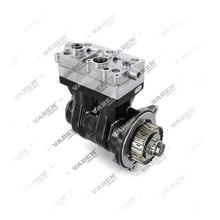
What Is an Air Brake Compressor?
An air brake compressor is the engine-driven pump that supplies the compressed air an air brake system needs to function. Driven off the vehicle's engine, it draws in clean atmospheric air, compresses it through a piston assembly, and feeds it into the air tanks, where it's stored under pressure until the brake valves, chambers and pneumatic control units call on it to apply the brakes. Air brake systems are standard on trucks, tractor units, buses, trailers and heavy construction equipment because they deliver stronger, more stable braking force than hydraulic systems can at these weights. That makes the compressor the heart of the whole air brake circuit — its condition affects braking response, system durability and, ultimately, driver safety.
How Does an Air Brake Compressor Work?
- Air intake: Powered by the engine, the compressor draws in fresh atmospheric air, usually passed through an air intake filter first to keep debris out of the system.
- Compression: A piston assembly compresses the incoming air, raising it to the pressure the brake system requires.
- Storage: The compressed air passes through an air dryer to remove moisture before being routed to the air tanks, where it's stored under pressure.
- Delivery and braking: When the driver presses the brake pedal, stored air pressure is released through the valve network to actuate the brake chambers and apply the brakes.
- Pressure regulation: A governor and associated valves keep system pressure within a set operating range, unloading the compressor once target pressure is reached to reduce unnecessary wear.
Core Components and Sub-Categories
- Compressor: The main unit that generates compressed air for the air brake system. Covers single- and twin-cylinder, air-cooled and water-cooled designs suited to trucks, tractor units, buses and trailers.
- Compressor Parts: Service and overhaul components — pistons, piston rings, cylinder heads, gaskets, valve plates, repair kits and bearings — that let workshops rebuild a compressor economically instead of replacing the complete unit.
Technical Overview
| Criterion | Details |
|---|
| Scope | Air brake compressors and compressor repair parts (pneumatic air pressure generation) |
| Vehicle type | Trucks, tractor units, buses, trailers and heavy construction equipment (heavy commercial vehicles) |
| Brand compatibility | Mercedes-Benz, MAN, Scania, Volvo, DAF, Iveco, Renault, BMC, Ford and other heavy-duty truck brands |
| System / standard | Pneumatic air brake systems; compatible approach with Wabco- and Knorr-Bremse-type architectures |
| OE-equivalent approach | Manufactured to OEM quality standards; cross-referenced to the vehicle's original OE part number |
| Cooling type | Air-cooled and water-cooled configurations |
| Maintenance | Regular checks on the intake filter, lubrication, air leaks and moisture drainage |
What Types of Air Brake Compressors Are There?
- Single-cylinder compressors: Suit systems with lower air demand; compact design with an economical cost of ownership.
- Twin-cylinder compressors: Preferred on heavy commercial vehicles that need higher air output; deliver faster, higher-capacity air generation.
- Water-cooled compressors: Tied into the engine cooling circuit to prevent overheating under sustained heavy use; well suited to long-haul and heavy-load operation.
- Air-cooled compressors: Simpler design with easier maintenance; a common choice for light- and medium-duty applications.
How Do You Choose the Right Compressor? (Fitment Guide)
- OE / OEM part number: Start with the OE reference number stamped on the original compressor — it's the most reliable way to cross-match and rules out fitment mistakes.
- Make and model: Confirm the exact vehicle brand, model and engine variant — Mercedes-Benz, MAN, Scania, Volvo, DAF, Iveco, Renault, BMC and others often run different compressors across engine options within the same model line.
- Cylinder count and output: Match single- or twin-cylinder capacity (delivery rate in l/min) to the system's actual air demand.
- Cooling type: Choose the air-cooled or water-cooled version that matches the vehicle's existing setup.
- Mounting and fittings: Verify the drive gear or pulley type, flange mount, inlet/outlet port sizes and mounting hole pattern all match the original unit.
Maintenance and What to Watch For
- Check the air intake filter: A clogged filter reduces air output and drives overheating; inspect it regularly and replace on schedule.
- Service the lubrication system: On piston compressors, monitor oil level, oil pressure, oil quality and oil passages — poor lubrication causes rapid mechanical wear.
- Check for air leaks: Inspect hoses, fittings, valves, gaskets and air tanks periodically to catch pressure loss before it affects braking.
- Drain moisture regularly: Condensation left in the air tanks leads to rust, corrosion, valve failure and freezing in cold weather; regular drainage is essential, especially in winter.
- Schedule periodic servicing: Pressure testing, valve inspection, piston and gasket checks, and wear testing should all be part of routine professional servicing.
Common Faults and Fixes
- Low system pressure (weak braking, slow air build-up): Usually caused by air leaks, a faulty valve, compressor wear or a clogged filter; inspect the pneumatic system thoroughly, seal any leaks and replace worn parts.
- Overheating (high temperature, burnt-oil smell): Often the result of low oil, a cooling issue, sustained heavy load or a blocked filter; check the lubrication system and air intake, and carry out the necessary cleaning and maintenance.
- Noisy or knocking operation (metallic noise, vibration): Points to bearing wear, piston damage or a crankshaft fault; inspect the internal mechanical components and replace anything worn.
- Air leaks (hissing sound, rapid pressure loss): Comes from failed seals at valves, gaskets or fittings; inspect the affected points and replace the sealing components.
Why Choose VADEN ORIGINAL?
- OEM quality standards: Manufactured to international quality standards and the technical requirements set by vehicle manufacturers.
- High durability: Stable performance under heavy loads, long-haul duty cycles, high temperatures and demanding road conditions.
- Long service life: A robust housing, quality piston assembly and low-wear internals for extended trouble-free operation.
- Lower maintenance cost: Quality materials reduce failure risk, cutting maintenance spend and boosting fleet uptime.
- Broad vehicle coverage: Compressor and compressor part options that cover a wide range of heavy commercial vehicle brands and models.
- A complete solution: From complete compressors to individual repair parts, all under one reliable product range.
Frequently Asked Questions (FAQ)
What does an air brake compressor do?
It generates the compressed air a heavy vehicle's air brake system relies on. That air is stored in the air tanks and released through the brake chambers and valves to apply the brakes — making the compressor the system's primary pressure source.
Why do heavy commercial vehicles use air brakes instead of hydraulic brakes?
Heavy vehicles need strong, stable braking force to safely stop high tonnage loads. Air brake systems deliver higher pressure capacity than hydraulic systems, making them more reliable and durable at these weights.
Which vehicles are VADEN ORIGINAL air brake compressors compatible with?
They fit trucks, tractor units, buses, trailers and a wide range of heavy commercial vehicles. Cross-referenced options are available for Mercedes-Benz, MAN, Scania, Volvo, DAF, Iveco, Renault and BMC, among other brands, based on OE part numbers.
How do I choose the correct compressor for my vehicle?
The safest method is to match the OE part number on your vehicle's original compressor. You should also confirm the make, model, engine type, cylinder count, cooling type and mounting dimensions match the original unit.
Should I replace the whole compressor or just repair it with parts?
If the fault is in a piston, ring, gasket or valve plate, a repair kit can fix it economically. If the housing, crankshaft or internals show heavy wear, replacing the complete compressor is usually the better long-term option.
Why does moisture need to be drained from the air tanks?
Water left in the tanks causes rust, corrosion, freezing and valve failure over time. Since this can seriously compromise braking safety, regular drainage is essential, particularly in cold weather.
Does a faulty air brake compressor affect fuel consumption?
Yes. A worn or inefficient compressor puts extra load on the engine, which can increase fuel use. Keeping the compressor properly maintained supports both safety and fuel efficiency.
How long does an air brake compressor last?
A quality compressor that's properly maintained can run reliably for years. Duty cycle, load conditions and how consistently maintenance is performed all have a direct impact on service life.
Conclusion
The air brake compressor is the pressure source behind a heavy commercial vehicle's entire air brake system, making it a direct factor in driving safety. Correct OE matching, quality parts and regular maintenance protect both braking performance and fleet uptime. For trucks, tractor units, buses and trailers, choose VADEN ORIGINAL for OEM-grade compressors and compressor parts you can rely on.
Learn more: Air Brake System Diagram · Technical Guide (PDF)
Related technical guide: Air Brake Compressor · Download PDF