Ford F-MAX Maintenance Guide: Service Intervals, Engine and Parts Selection
Ford F-MAX truck maintenance guide: the Ecotorq engine, Euro 6 emissions, service intervals, air brake system checks and how to choose the right parts.
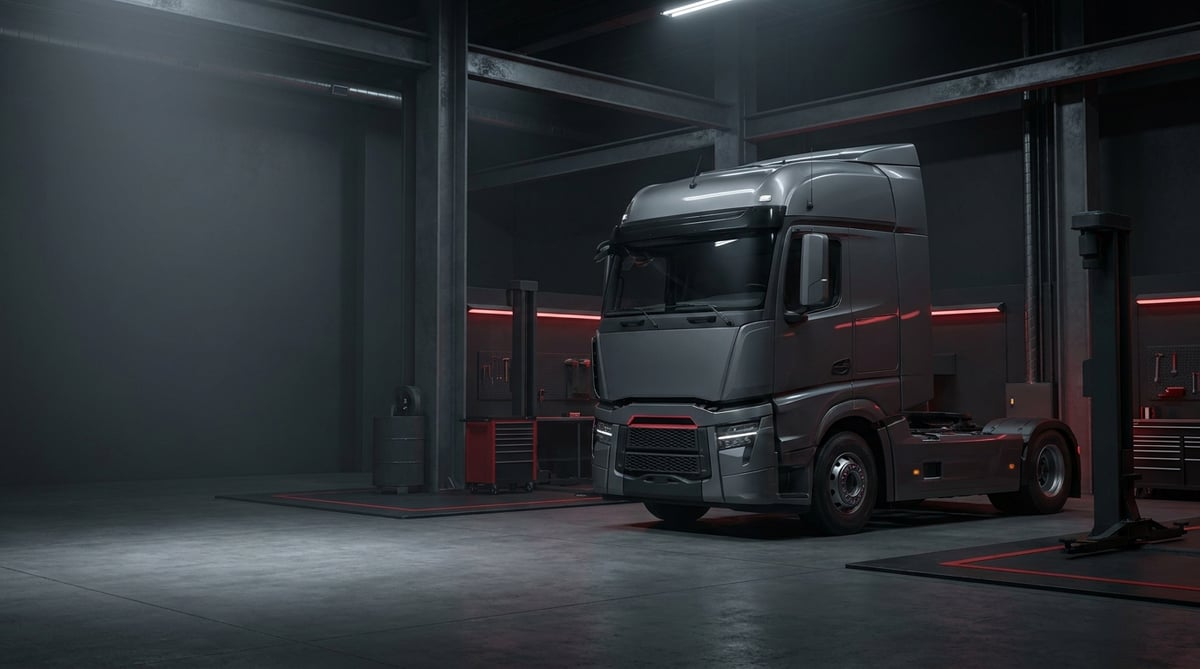
Two requests for two different F-MAX tractor units land on a fleet manager's desk in the same week: one is booked in for a routine service, the other broke down overnight, lost air pressure, and settled onto its parking brake at the roadside. Both trucks are the same model year, came off the same production line, and run the same route. The only real difference is that one truck's maintenance was planned around its actual duty cycle rather than the odometer, while the other skipped an interval on the assumption that "it will hold." In heavy commercial vehicles, maintenance is a decision made before a fault appears; a decision made afterwards is no longer maintenance but repair, and it sits in a different cost category altogether. This guide covers the Ford F-MAX — one of the most common long-haul tractor units built in Türkiye — as a whole: its generations, its engine family, how service intervals are actually determined, the critical points in the air brake and drivetrain systems, and how to choose the correct replacement part.
What kind of tractor unit is the F-MAX, and why does it need its own maintenance approach?
The F-MAX is the heavy-class tractor unit that Ford Trucks developed for long-haul operation. It was unveiled at the IAA 2018 commercial vehicle show and, in the same period, was named International Truck of the Year. That award is not a marketing footnote; it shows that the model was engineered from the outset to the European long-haul standard — sized for high annual mileage, long trip durations and continuous operation under heavy load. This is also what shapes its maintenance logic.
Two features of the truck have a direct bearing on maintenance planning. The first is that it is designed and built in Türkiye, and a substantial share of its main components, including the engine family, are manufactured domestically there; on the ground, this means parts availability and the service network can work with shorter lead times than for imported equivalents. The second is that the model is built largely around a single main cabin and a single engine family, so it carries less variant complexity than competitors offering many cabin and engine combinations. That does not mean "every F-MAX is the same," though; model-year updates, emission-stage changes and equipment packages create real differences at the parts level.
Model years, variants and equipment differences
Since launch, the F-MAX has not stood still; it has evolved step by step through model-year updates. These updates generally move along three axes: compliance with successive emission-regulation stages, the growing scope of driver-assistance systems (brake assist, lane-keeping, adaptive cruise control), and improvements to cabin equipment and connected-vehicle services. In the field, the safest approach is to verify which stage a given truck belongs to from its chassis number rather than guess; the same model name can hide a different electronic architecture and different part numbers.
In terms of configuration, the F-MAX is positioned primarily as a long-haul tractor unit. A high-roof, flat-floor sleeper cab is standard; depending on market and year, the axle layout, fuel and AdBlue tank capacities, final drive ratio, retarder fitment and brake equipment options can all differ. A given truck's parts identity is the sum of these options, not its model name.
This is where most maintenance mistakes originate: two F-MAX trucks from the same model year can still differ, with one fitted with a retarder and a different final drive ratio for heavier tonnage. That is why a fleet should keep a maintenance plan per vehicle, not per model.
The Ecotorq engine family and emission classes
The F-MAX runs on the Ecotorq heavy-duty diesel engine family developed in-house by Ford Otosan. Ecotorq is a large-displacement, inline six-cylinder engine family built for long-haul operation, and it is shared across Ford Trucks' heavy-class range. Because the engine is developed domestically, service documentation and parts sourcing benefit from more direct access to the local market — a practical advantage in the field.
On emissions, the F-MAX sits within the Euro 6 framework. Euro 6 itself has internal stages, and these have tightened over time in terms of durability requirements, in-service emissions monitoring and fault-diagnosis obligations. The practical consequence for service work is that two trucks carrying the same model name can differ in their aftertreatment hardware, sensor count and software behaviour depending on when they were built. When interpreting an emissions-related fault code, knowing which stage the vehicle belongs to matters more than the code itself.
| Topic | General picture | What it means for service and parts selection |
|---|---|---|
| Engine family | Ecotorq heavy-duty diesel, inline six-cylinder | The engine code and variant determine the part number — the model name alone is not enough |
| Emission framework | Euro 6 and its stages over time | A different stage changes the sensors, software and aftertreatment hardware |
| Aftertreatment | SCR (AdBlue)-based system, together with a particulate filter | AdBlue quality and filter discipline directly affect fault frequency |
| Fuel system | High-pressure, electronically controlled diesel injection | The filtration class cannot be downgraded, and the water separator cannot be neglected |
| Gearbox | Automated multi-speed gearbox (AMT) is common equipment | Oil type and actuator maintenance depend on the OE specification |
| Compressed air system | Engine-driven compressor, air dryer and electronic braking system | Compressor and dryer maintenance is a precondition for braking performance |
| Manufacturing | Built in Türkiye, with a domestic service and parts network | Lead times are short, but parts must still be verified against the chassis |
The items in the table give a general picture; none of them replace an exact specification. The engine code, emission stage and equipment options vary by individual vehicle, and the only reliable source of verification is the manufacturer's records tied to the chassis number.
How are service intervals determined? Why a fixed mileage figure is misleading
There is no single numerical answer to "how many kilometres between F-MAX services?", and quoting one figure would be misleading. On modern heavy commercial vehicles, the service interval is not a fixed distance but a variable one, calculated from the vehicle's actual duty profile. The truck collects its own operating data and brings the next service forward or pushes it back accordingly.
The main variables that feed into this calculation are:
- Load and route profile: a truck constantly climbing gradients at maximum tonnage does not put the same load on the engine as one running half-loaded on a flat motorway.
- Average speed and idling share: a high idling share increases engine hours out of proportion to distance travelled; oil ageing depends on operating hours, not kilometres.
- Fuel quality: fuel with a high sulphur content or water contamination both shortens oil life and puts extra strain on the emission system.
- Oil quality and approval: an oil that carries the manufacturer's approval and sits in the long-drain class allows a different interval than an ordinary oil.
- Short trips and frequent stops: cycles where the engine never fully warms up lead to fuel dilution in the oil and increase the regeneration load on the particulate filter.
- Ambient conditions: dusty construction-site roads, extreme heat or prolonged cold all shorten the interval on the filter and cooling-system side.
The on-board service indicator processes these variables continuously and announces the next service on the instrument cluster as a remaining distance or a remaining number of days. The right approach is to treat that indicator as the primary reference, plan around it, and never push past it on a "just one more trip" basis. Once the countdown reaches zero, continuing to run the truck is not deferring maintenance — it is operating beyond the oil and filter life the manufacturer has allowed for.
What items are covered in periodic maintenance?
Heavy commercial vehicle maintenance is made up of three interlocking layers: driver checks performed on every trip, periodic service maintenance, and major maintenance items that come round at longer intervals. On a high-mileage tractor unit like the F-MAX, how well these three layers reinforce each other is the single biggest factor behind unplanned downtime.
| Item | Why it matters | Check point |
|---|---|---|
| Engine oil and oil filter | Under heavy load, the oil both lubricates and cools, and keeps contaminants in suspension | Level, colour, smell; send for analysis if fuel dilution is suspected |
| Fuel filter and water separator | Protects the high-pressure injection equipment from particles and water | Water drainage, filter date, filtration class matching OE |
| Air filter | Dust in the intake air converts directly into cylinder wear | Restriction indicator, housing and hose seal integrity |
| Coolant and cooling circuit | Insufficient cooling on a long climb produces the most expensive engine damage | Level, freeze point, radiator/intercooler surface, thermostat behaviour |
| Belt and tensioner system | Drives the alternator, water pump and compressor | Cracking, wear marks, tensioner bearing noise and free play |
| Air dryer cartridge | Moisture in the system wears out valves, brake chambers and the compressor | Drain sound, water coming from the tank, cartridge replacement date |
| Brake pads, discs and brake chambers | On a loaded tractor unit, the brakes are the one safety item with no margin for error | Pad thickness, disc surface, chamber leaks, EBS warnings |
| Gearbox and differential oil | Drivetrain life depends directly on oil quality | Level, signs of leaks, whether the oil shows metallic glitter |
| AdBlue system and filter | Quality degradation triggers the inducement protocol and a breakdown | Tank cleanliness, signs of crystallisation, dosing and NOx codes |
| Suspension, air springs and tie-rod linkages | Determine road holding and even tyre wear | Air spring cracking, shock absorber weeping, bush play |
| Batteries and charging circuit | Failure to start is the most common cause of winter breakdowns | Terminal corrosion, charging voltage, battery age and load test |
The item most often skipped on this list is the air dryer cartridge. It gives no visible sign and lights no warning lamp; but once the cartridge is saturated, the moisture that gets into the system comes back months later as sticking valves, internal corrosion in the brake chambers, and frozen lines in winter.
Further reading
For a plain-language technical overview of this subject, see the reference article on Wikipedia. Always confirm specific figures and procedures against the vehicle manufacturer service data.
What to watch on the air brake and compressed air system
Like every heavy-class tractor unit, the F-MAX runs all of its braking, clutch actuation, suspension and auxiliary functions on compressed air. The source of that system is the engine-driven air compressor; when the compressor starts to wear, the first sign is not necessarily "the brakes not holding" — a chain of slowly worsening faults begins across the whole system.
The logic of the chain runs like this: the compressor pressurises the air, the air dryer traps the moisture and oil vapour it carries, the tanks store it, the valves distribute it, and the air springs and brake chambers do the work. As the compressor wears, oil vapour from the crankcase mixes into the air line; the dryer cartridge cannot hold that oil and becomes saturated; moisture passing through the saturated cartridge then reaches the valves and chambers. The truck eventually arrives at the workshop with a complaint of "a leaking valve" or "the parking brake releasing slowly," when the fault actually originates at the start of the chain. For compressor failure symptoms, the correct diagnostic order and what to check after replacement, the air brake compressor fault, replacement and maintenance guide is a detailed reference.
| Symptom | Likely source | First check |
|---|---|---|
| Longer time to build up pressure | Compressor efficiency has dropped, or there is a leak in the line | Time the fill-up at idle and check for leaks with soapy water |
| Water draining from the tank | Dryer cartridge is saturated, or the drain is not working | Check the cartridge date and how the drain valve behaves |
| Oil residue in the air line | Compressor ring and cylinder wear | Inspect the tank and hose interiors for oil traces, and the compressor outlet |
| Parking brake releasing slowly | Valve sticking, moisture-related corrosion | Review the moisture history of the relevant valve and line |
| Pressure drop overnight | Static leak, air spring or fitting leak | Record the rate of pressure drop with the vehicle loaded |
| Metallic noise from the compressor | Bearing, belt tensioner or drive-side fault | Rule out belt tension and pulley run-out first |
| EBS warning and uneven braking | Sensor, modulator or pressure-related | Read the fault code, but also check the pressure side for the root cause |
There is a simple rule of thumb that works in the field: the compressor is not a part expected to last the engine's entire life. Treating it in the fleet not as an item you wait out until it fails, but as one monitored through fill-up time and air quality, noticeably cuts down on unplanned downtime.
Typical wear points and early warning signs on the engine side
Very few engine failures on a long-haul tractor unit come out of nowhere. Almost all of them give an early warning that can be read weeks in advance; the problem is that this warning goes unrecorded. On a truck with high annual mileage like the F-MAX, the main wear axes to watch are set out below.
Lubrication system. Oil pressure is the most honest indicator of the engine's overall health. A drop in pressure at hot idle, even without a warning lamp coming on, points to a developing issue on the pump's suction side, in oil quality, or in bearing clearances. For the causes of a pressure drop, the symptoms it comes with and how to read the lubrication circuit, see the low engine oil pressure and lubrication system guide. The cheapest early-warning method a fleet can apply is periodic oil analysis; the metal and fuel content in the oil quantifies wear that is invisible without stripping the engine down.
Cooling circuit. The cooling margin shrinks when a long climb, heavy load and summer heat all coincide. A layer of dust and insects on the radiator and intercooler surface can raise temperature without any single part having failed. The thermostat, viscous fan clutch and water pump usually announce a developing fault by running the temperature gauge a few degrees above normal. If that difference is ignored, the chain ends at the head gasket and cylinder head.
Fuel system. The high-pressure diesel injection equipment works to micron tolerances and is the system's most sensitive link when it comes to contamination. Failing to drain the water separator regularly, delaying filter changes, or fitting a filter with a coarser filtration rating than OE calls for, all produce irreversible wear on the injectors and the high-pressure pump. The symptoms are misfiring, hard cold starting, loss of power and increased consumption.
Aftertreatment. In the SCR-based system, the most common problems trace back to AdBlue quality and contamination. Poor-quality or contaminated fluid causes crystallisation in the dosing module and on the interior exhaust surfaces; short trips and a high idling share accelerate this. A fault in this system is not only an emissions matter: once the regulatory inducement strategy applies staged torque limitation and speed reduction, the truck is effectively off the road.
Turbo and intake system. Even a small leak in the intake tract can stop the turbo from reaching its target boost pressure. Hose clamps and intercooler connections are the first items to rule out whenever a turbo fault is suspected.
Drivetrain: automated gearbox, clutch and rear axle
The automated manual transmission (AMT) commonly fitted to the F-MAX manages clutch engagement and gear changes electronically. Because the driver never touches a clutch pedal, disc life now depends far more on the system working correctly and being used correctly than on driving habits. The most common mistake is trying to drive it like a manual: stopping on a gradient and then slipping the clutch against the throttle to get moving burns through the friction disc much faster on an automated system. The correct approach on a heavy hill start is to use the truck's own hill-start assist and complete the manoeuvre without dragging it out.
The clutch-side symptoms are classic: speed failing to rise as revs climb on a gradient, vibration during engagement, a burning smell, and gear changes taking longer than before. For how the clutch assembly works, what determines disc life and how to tell the fault symptoms apart, see the clutch operating principle and failure symptoms guide. On automated gearboxes, the condition of the clutch actuator and the gear-selector actuators should also be assessed from live data rather than fault codes alone; an actuator that has slowed down can degrade shift quality even before the disc itself is worn out.
Gearbox and differential oil is the single most neglected item on a heavy commercial vehicle, because no indicator ever prompts a check. The oil's colour, smell and whether it shows any metallic glitter is the single most valuable check that can be done without stripping anything down. On the rear axle, pinion seal leaks, loosening of the axle-shaft flange bolts and wheel hub bearing noise should also be monitored periodically; every one of these items leaves a trace before it actually fails.
Why does model and generation matching matter when choosing parts?
"Does it fit a Ford F-MAX?" is not, on its own, a good enough question to choose a part by. The same model name can cover different engine variants, different emission stages, different final drive ratios and different equipment packages. In a heavy commercial vehicle, the wrong part is not just wasted money; an incompatibility that shows up after fitting sends the truck back into the workshop a second time, and that second stop is where the real cost lies.
The chassis number is the basis for correct matching. It carries the vehicle's production period, equipment package and engine variant, and the manufacturer's parts catalogue is built around it. The second basis is the OE number stamped on the part being removed. The third is physical verification: bolt-hole spacing, flange diameter, pulley width, electrical connector type and pin count, hose diameter and direction of rotation.
When the emission stage changes, the number and position of sensors, the hose routing and the module software can all change with it; two visually identical parts can carry different calibrations. Decisions should therefore be made on the number, not on appearance.
F-MAX-specific cost items and breakdown risks in fleet operation
In a long-haul tractor unit, the largest item in total cost of ownership is fuel, followed by tyres, then maintenance and repair. But none of these is actually what wrecks a fleet budget — unplanned downtime is. A breakdown does not only generate a recovery and repair bill; it compounds into delivery delays, driver waiting time, hire of a replacement vehicle and lost customers.
On trucks like the F-MAX, the items that generate the most unplanned-downtime risk are, unfortunately, the cheapest ones:
- Battery and charging circuit: failing to start in cold winter weather is the most common — and most preventable — cause of downtime. Battery age and charging voltage should be logged periodically.
- AdBlue and SCR system: quality degradation or letting the level run low leads to the regulatory staged speed limitation, and effectively to a breakdown.
- Moisture in the air system: neglecting the dryer cartridge comes back in winter as frozen lines and a truck that cannot move.
- Fuel filter and water separator: a fuel-related blockage tends to appear mid-route, usually at the point furthest from a service centre.
- Tyres and pressure management: a tyre running underinflated both increases fuel consumption and raises the risk of a blowout.
- Bulbs, fuses and wiring harness: these are the smallest items, yet the ones most likely to get a truck pulled over at a roadside inspection.
Domestic manufacturing gives a fleet a measurable advantage here: for common items, parts availability and lead time are more predictable than for imported equivalents. Capturing that advantage means keeping a minimum stock of critical parts in the fleet's own store and matching that stock to each vehicle's parts identity card. The right part sitting on a shelf is always cheaper than a truck sitting at the roadside.
Winter and summer preparation: a seasonal checklist
Across the wide range of climates an F-MAX may operate in, the same truck can cross a sub-zero mountain pass and a hot coastal route within the same month. Seasonal preparation should therefore be planned around the route, not the calendar.
| Season | Item | Why |
|---|---|---|
| Winter | Air dryer cartridge and tank drainage | Moisture in the system freezes and locks up lines and valves |
| Winter | Battery capacity and terminal cleaning | Battery capacity drops in the cold while starting current demand rises |
| Winter | AdBlue tank and heating circuit | The fluid freezes at low temperatures, so the heating circuit must be functional |
| Winter | Winter-grade fuel and draining the water separator | Water in the fuel freezes and blocks the filter and the line |
| Winter | Coolant freeze point | An insufficient mix leads to block and radiator damage |
| Winter | Brake chambers and parking brake valves | Moisture-related sticking becomes more pronounced in the cold |
| Summer | Radiator, intercooler and condenser surface | A layer of dust and insects reduces the cooling margin |
| Summer | Fan clutch and thermostat behaviour | Under heavy load, a rising temperature shows up here first |
| Summer | Tyre pressure and tread depth | Underinflation on hot asphalt increases blowout risk |
| All seasons | Belt and tensioner bearing | Temperature swings accelerate crack development in the belt |
| All seasons | Lighting and electrical connections | Vibration and moisture cause the most common faults at the connectors |
An eight-step verification checklist before ordering parts
The sequence below eliminates most wrong-part orders and the second workshop visit that comes with them. The steps do not substitute for one another; they should be followed in order.
- Read the chassis number from the vehicle itself and cross-check it against the registration document; never order from memory or from the number on a similar-looking truck.
- Verify the engine variant and emission stage; assume from the outset that different equipment can hide behind the same model name.
- Read the OE number on the part being removed or replaced, and photograph it if possible; if the number cannot be read, identify the part by measurement instead.
- Check the vehicle's file for any previous repairs; an earlier replacement may have fitted a different variant of the part.
- Compare the physical interfaces: bolt-hole spacing, flange diameter, pulley width and direction of rotation, hose diameter and fitting type.
- Verify the electrical interface: connector type, pin count and sensor type; visually similar connectors can carry a different signal layout.
- Add the supporting items that need to be replaced alongside it: gaskets, seals, O-rings, bolt sets, clamps and, if required, the belt.
- Plan the post-installation steps in advance: bleeding the system, calibration or software teach-in, a leak test and a test drive; skip planning these and the truck comes back in a second time.
Service records, resale value and the vehicle's long-term life
In a heavy commercial vehicle, the service record is not just a technical document; it is the single most concrete piece of data behind resale value. The price gap between an F-MAX with a regular service history, logged oil analyses and part changes filed under OE numbers, and an unrecorded truck at the same mileage, is far greater than the cost of keeping that record in the first place. The logic works the same way for a buyer: the first thing to check on a truck for sale is not the odometer, but the continuity of its service record.
For a record to be useful, it needs to contain three things. First, date and mileage: every job is logged against both the calendar and the odometer. Second, what was done: the OE number of the part replaced, the approval class and quantity of the oil used, and the procedure applied. Third, why it was done: a planned interval, a symptom, or a fault code. That third piece of information can shorten diagnosis by weeks if the same fault recurs.
In short, the F-MAX is a tractor unit engineered for high mileage on long-haul work, and getting the return on that engineering depends on the discipline of its maintenance. The service interval is not a mileage figure but a decision calculated from the vehicle's own data. Parts selection rests on the chassis number, not the model name. The compressed air system, the lubrication circuit and the aftertreatment system all leave a trace before they actually fail; a fleet that records those traces turns unplanned downtime into a manageable line item. In every case, the intervals, fluid specifications, torque values and procedures to apply must come from the current OE service documentation matched to the vehicle's chassis number.
VADEN parts compatible with this vehicle: Ford Trucks compatible spare parts list
Tags
Frequently Asked Questions
- How many kilometres between services on a Ford F-MAX?
- On modern heavy commercial vehicles, the service interval is not a fixed distance; the truck processes its own operating data and announces the next service on the instrument cluster. Load profile, idling share, fuel and oil quality, and ambient conditions all shorten or extend that interval. The right approach is to treat the on-board service indicator as the primary reference and confirm the exact period from the OE service manual matched to the chassis number.
- What engine family does the Ford F-MAX use?
- The F-MAX runs on the Ecotorq heavy-duty diesel engine family developed in-house by Ford Otosan. It is a large-displacement, inline six-cylinder engine family designed for long-haul operation. Because the engine is developed domestically, service documentation and parts are easier to source from the local market.
- Where is the Ford F-MAX built?
- The F-MAX is a heavy-class tractor unit designed and built in Türkiye by Ford Otosan. A substantial share of its main components, including the engine family, are manufactured domestically. In the field, this means parts lead times for common items are more predictable than for imported equivalents.
- What emission class is the Ford F-MAX in?
- The F-MAX sits within the Euro 6 framework. Euro 6 has its own internal stages that have tightened over time, so two trucks carrying the same model name can differ in sensor fitment, software behaviour and aftertreatment components depending on their production period. When reading an emissions fault code, knowing which stage the vehicle belongs to matters more than the code itself.
- When did the Ford F-MAX win International Truck of the Year?
- The F-MAX was unveiled at the IAA 2018 commercial vehicle show and was named International Truck of the Year in the same period. The award reflects that the model was engineered from the outset to the European long-haul standard — sized for high annual mileage and continuous operation under heavy load.
- Does the Ford F-MAX have an automatic gearbox, and how should it be driven?
- The common gearbox fitted to the F-MAX is an automated manual transmission (AMT) that manages clutch engagement and gear changes electronically. Since the driver never uses a clutch pedal, disc life now depends largely on correct use of the system. The most frequent mistake is slipping the clutch against the throttle on a hill start as if it were a manual; the correct method is to use the truck's own hill-start assist.
- What should you check when choosing parts for a Ford F-MAX?
- The model name alone is not enough; the same name can cover different engine variants, emission stages, final drive ratios and equipment packages. Correct selection rests on the chassis number, the OE number on the part being removed, and physical interface verification. Bolt-hole spacing, flange diameter, connector type and pin count should be compared before ordering.
- How do you recognise air brake compressor failure on a Ford F-MAX?
- The earliest sign is a longer time for pressure to build up. It is followed by water draining from the tank, oil residue in the air line, the parking brake releasing slowly, and pressure dropping overnight. Since the underlying fault is usually not in the valve but earlier in the chain, fill-up time should be measured and a leak check carried out first.
- What should you do if an AdBlue warning appears on a Ford F-MAX?
- An AdBlue warning is not only an emissions matter; once the regulatory inducement strategy applies staged torque limitation and speed reduction, the truck is effectively off the road. The warning can stem from a low level, but also from quality degradation or contamination. Since poor-quality or contaminated fluid causes crystallisation in the dosing module, simply topping up may not be enough — the system needs to be checked.
- How do you prepare a Ford F-MAX for winter?
- Winter preparation starts with moisture in the compressed air system: neglecting the dryer cartridge and tank drainage lets the lines freeze and leaves the truck unable to move. Next comes battery capacity and terminal cleaning, the AdBlue tank's heating circuit, draining the water separator with winter-grade fuel, and checking the coolant's freeze point. All of these are the cheapest items to maintain and the most expensive to neglect.
Related Articles

MAN TGX Maintenance Guide: Generations, Engines and Parts Selection
MAN TGX truck maintenance guide: generations, D20 and D26 engines, TipMatic, air brake system, service intervals and choosing the correct spare parts.

DAF XF Maintenance Guide: Generations, Engines and Parts Selection
DAF XF truck maintenance guide: generations from the 95XF to the new XF, MX-11 vs MX-13 engines, air brake care and ordering the right part first time.
Volvo FH Maintenance Guide: Generations, Engines and Parts Selection
Volvo FH truck maintenance guide: generations from the FH12 to today, D11-D13-D16 engines, I-Shift, VEB engine brake and choosing the right spare parts.