What Is an Oil Cooler Gasket?
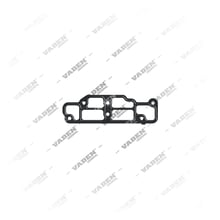
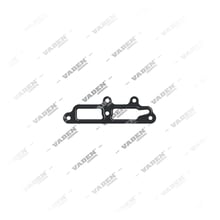
The oil cooler gasket seals the mating surface between the oil cooler and the engine block, oil filter housing, or cooler cover in heavy-duty commercial vehicle diesel engines. In this zone, where engine oil and coolant circulate side by side separated only by a thin wall, the gasket is the sole barrier preventing the two fluids from mixing or leaking out. In the field it is also known as the oil radiator gasket or heat exchanger gasket. On trucks, tractor units, buses, and heavy machinery, it is a single-use service part renewed every time the unit is removed.
How Does an Oil Cooler Gasket Work?
The oil cooler gasket works by being compressed in a controlled way between two metal surfaces. Once the bolts are torqued to spec, the gasket material fills the surface roughness and forms a closed sealing line around the channels. As the engine warms up, cover and block expand at different rates, and the gasket's elasticity absorbs that movement.
- Fluid separation: Isolates the oil channels from the water channels and prevents mixing.
- External sealing: Seals the outer perimeter, keeping oil and coolant from leaking outward.
- Thermal movement: Tolerates the expansion difference between cold start and full load.
- Pressure integrity: Keeps oil-circuit pressure from transferring into the cooling circuit.
Oil Cooler Gasket Technical Specifications
Oil cooler gaskets are made from materials that resist both engine oil and ethylene-glycol-based coolant. Depending on the application, fiber-reinforced sheet, multi-layer designs with rubber-coated metal carriers, or NBR, FKM, and silicone-based elastomer profiles are used. Because this zone runs continuously at high temperature under oil pressure, resistance to thermal aging is decisive.
- Material class: Fiber-reinforced sheet, metal-elastomer composite, or elastomer profile.
- Temperature and pressure rating: A class suited to the application; for exact limits, the current service manual is authoritative.
- Chemical resistance: A compound that does not swell under oil, additive packages, or coolant.
- Geometry and thickness: Hole count, diameter, channel profile, and thickness must match the original.
Oil Cooler Gasket Types and Subcategories
This category is the sealing branch of the Oil Cooler family under the Engine group. The items here are not the cooler core or housing itself, but the gaskets and rings used where the unit mounts to the engine.
- Housing gasket: Seals the wide surface where the housing sits against the block; a multi-hole sheet type.
- Cover gasket: Used between cover and housing; thinner, with a narrower contour.
- Heat exchanger core gasket: Seals the surface where the exchanger meets the water jacket.
- O-rings and rings: Point sealing at the oil inlet and outlet ports.
- Gasket set: Bundles every gasket needed for one teardown in a single package.
How to Choose the Right Oil Cooler Gasket
The most reliable way to find the correct gasket is the OE number on the original part. Within the same model, gasket shape can differ once the engine variant or emissions level changes; ordering by vehicle model alone is a common mistake.
Oil Cooler Gasket Selection and Compatibility Criteria| Criterion | Why It Matters | How to Verify |
|---|
| OE part number | Gasket shape changes between variants | Cross-match against the removed part's number |
| Engine code | Cooler design varies with emissions level | Verify the code on the engine plate |
| Hole count and position | A blocked channel cuts off oil flow | Lay the old gasket over the new one and compare |
| Gasket thickness | Affects compression ratio and sealing | Measure with calipers against the original |
| Material type | Determines resistance to oil and coolant | Choose the sheet or elastomer for the application |
| Set or single | A missing ring creates a new leak | Choose a set based on teardown scope |
| Brand application | Layout differs across Mercedes-Benz, MAN, Scania, Volvo, DAF, and Iveco engines | Check the engine match in the application list |
Oil Cooler Gasket Maintenance and Key Considerations
Gasket maintenance is really a matter of installation discipline. The oil cooler gasket is single-use; however sound a removed gasket looks, it must never go back in. Sealing depends on surface cleanliness and on correct tightening sequence and torque.
- Clean the surfaces correctly: Remove residue with a soft scraper; scoring the metal opens a permanent leak path.
- Check surface flatness: Verify with a straightedge and feeler gauge; no gasket holds on a warped surface.
- Follow the tightening sequence and torque: Tighten bolts in stages from center outward; torque varies by engine, so the current service manual is authoritative.
- Avoid unnecessary liquid gasket: Assemble dry unless otherwise specified; excess sealant can squeeze into the channels and block them.
- Inspect after replacement: Bring the engine up to temperature, let it cool, and check the surface visually.
Common Failures and Solutions
Oil cooler gasket failures usually start slowly and go unnoticed. Reading the symptom correctly heads off more serious engine damage.
- Oil mixing into the coolant: The gasket has failed where it separates the channels. Remove the unit, renew the gasket, flush the circuit, and change the fluid.
- Rising oil level: Water is passing into the oil circuit. Replace oil and filter, renew the gasket, and recheck after a short run.
- External oil leakage: Flatness is lost, torque has backed off, or the gasket has aged. Check the surface, replace the gasket, and torque it in sequence.
- Persistent coolant loss: The outer perimeter seal has failed. Locate the leak with a pressure test and renew gasket and o-rings together.
- Recurring leaks: Scoring, warping, or wrong thickness is the usual cause. Measure the surface, machine it if needed, and redo the assembly.
Why VADEN ORIGINAL?
VADEN ORIGINAL oil cooler gaskets are manufactured to match the dimensions and material logic of the original part, so the workshop completes the teardown in a single pass and the vehicle does not come back for the same fault.
- Built to OE dimensions: Hole pattern, contour, and thickness match the original.
- Broad OEM coverage: Common engine families across Mercedes-Benz, MAN, Scania, Volvo, DAF, Iveco, Renault Trucks, BMC, and Ford.
- Application-appropriate materials: Compounds resistant to oil and coolant, with strong thermal-aging resistance.
- Single and set options: Choose a single gasket or a complete set based on teardown scope.
- Exported to over 100 countries: A range proven across different climates and duty cycles.
Conclusion
The oil cooler gasket is a small but decisive part that keeps an engine's two most critical fluids apart. Chosen in the correct dimensions and material, and fitted onto a clean surface at the specified torque, it runs trouble-free for a long time; the wrong choice leads to consequences that threaten the engine, such as oil and water mixing. Select the gasket that matches your vehicle's OE reference and send the cooler unit back into service with confidence.
Frequently Asked Questions (FAQ)
What does an oil cooler gasket do?
The oil cooler gasket seals the surface between the oil cooler and the engine block or cooler cover. It prevents engine oil and coolant from mixing with each other and from leaking out of the engine. It is a small part, but it has a direct impact on engine health.
What are the symptoms of a failed oil cooler gasket?
The most typical symptoms are oil mixing into the coolant, an unexplained rise in oil level, and discoloration of the oil. External oil leakage around the unit, persistent coolant loss, and rising oil temperature can also occur. If any of these symptoms appear, the unit should be removed and the gasket inspected.
Can a removed oil cooler gasket be reused?
No. Oil cooler gaskets seal by being compressed in a controlled way during installation, and that deformation is permanent. Even if it looks intact, a reused gasket will leak within a short time; the gasket must be renewed every time the unit is removed.
How do I find the right oil cooler gasket for my vehicle?
The most reliable method is cross-matching the OE part number on the original gasket or cooler housing. You should also verify the engine code, emissions class, hole count and position, and gasket thickness. Even within the same vehicle model, gasket shape can vary by engine variant.
Should I use liquid gasket when installing an oil cooler gasket?
Unless the vehicle manufacturer specifically calls for it, the assembly should be dry. Excess liquid gasket can squeeze into the oil channels, restrict flow, and create a new source of failure. For tightening sequence and torque values, the vehicle manufacturer's current service manual is authoritative.
Related technical guide: Oil Cooler: Failure Symptoms, Replacement & Maintenance Guide