What are the functions of a fuel pump pipe?
- Fuel transport: Provides uninterrupted fuel flow from the tank to the pump and from the pump to the injector rail.
- Pressure resistance: Especially on the high-pressure side, withstands the pressure generated by the system without deforming.
- Sealing: Works together with gaskets and fitting surfaces at connection points to provide a complete seal, preventing fuel loss and air ingress.
- Vibration damping: Continues to function despite engine vibration without cracking or developing fatigue failure; this is why correct routing and clip support matter.
What are the symptoms of a failed fuel pump pipe?
- Fuel leakage: Wetness or a fuel smell at pipe fittings or a cracked section.
- Loss of engine power: A leak on the low-pressure line means the pump does not receive enough fuel, causing sluggish acceleration.
- Hard starting: A low-pressure pipe that draws in air can cause an air lock in the system and make the engine difficult to start.
- Increased fuel consumption: Small, unnoticed leaks can cause fuel loss and therefore higher consumption.
- Visible damage: Swelling, cracking, wear on the pipe, or looseness at a fitting.
How is a fuel pump pipe checked?
Inspection should be carried out with the engine off, and cooled if possible. The pipe run is visually inspected end to end, looking for chafing marks, swelling, discoloration, or fuel staining around fittings. If an air leak is suspected on the low-pressure line, the system is bled and refilled with a hand primer pump while watching for bubble formation. On high-pressure pipes, in addition to a visual crack check, the area around fittings should be kept clean with the engine idling to check for fresh leak traces; never touch a high-pressure system by hand while it is running, since a thin jet of fuel can cause serious injury.
What should be considered during replacement?
- Correct pipe type: Low-pressure and high-pressure lines are not interchangeable; wall thickness and material differ.
- Fitting torque: Especially on high-pressure pipes, fittings must be tightened to the manufacturer's specified torque; overtightening causes cracking, undertightening causes leakage.
- Routing and clip support: The pipe must follow its original route, secured with all its clips, and must not contact moving engine parts or hot surfaces.
- System air: After replacement, the low-pressure line should be bled and refilled with a hand pump, and the seal checked before starting the engine.
- Filter check: Because pipe replacement carries a risk of dirt entering the system, the fuel filter's condition should also be reviewed.
How should a fuel pump pipe be selected?
Selection should be based on the vehicle's engine code, injection system type (common rail, inline pump, etc.), and the pressure class of the pipe. Confirming against the OEM part number guarantees the correct length and fitting type.
Fuel pump pipe selection criteria| Criterion | Description |
|---|
| Pressure class | Wall thickness suited to the low- or high-pressure line |
| Material | Special steel or coated pipe resistant to fuel and corrosion |
| Length and route | Matches the original installation route and clip points exactly |
| End fitting | Fully compatible with the fitting type and thread on the pump/injector rail |
| Pressure rating | Suitable for the system pressure specified in the vehicle's current OE service manual |
Maintenance and service life
A fuel pump pipe lasts a long time on vehicles that run clean fuel and have filters changed on schedule. Dirty fuel, excessive vibration, or incorrect routing lead to early fatigue cracking. A visual check of the pipe run during routine maintenance, especially on the high-pressure side, catches a developing leak before it turns into a roadside breakdown.
When diagnosing a fuel system fault, it is important to assess not only the pipe itself but also the fitting surface and gasket condition it connects to; many leaks that appear to originate from the pipe are in fact caused by a worn fitting seal. For fleet operators, periodic inspection of the pipe run is one of the cheapest ways to prevent unplanned downtime.
When removing or installing high-pressure fuel pipes, care must be taken to keep oil or dirt off the fitting surfaces; even minor contamination can, over time, cause pump or injector failure in an injection system that operates on millimetre-level tolerances. For this reason the work should be carried out in a clean work area using appropriate blanking caps.
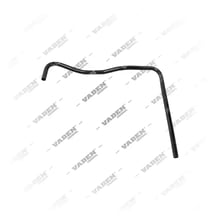
VADEN fuel pump pipe
VADEN manufactures OEM-matching feed and pressure pipes for heavy-duty commercial vehicle fuel systems, built to the correct material class and dimensional tolerance, with the goal of preserving the vehicle's original fuel delivery performance.
Frequently Asked Questions (FAQ)
When should a fuel pump pipe be replaced
It should be replaced when visible damage, leakage, or cracking is found, or when the fuel system shows unexplained performance loss or hard starting.
Is a high-pressure fuel pipe the same as a low-pressure pipe
No, a high-pressure pipe is made from special steel with much thicker walls, designed to withstand several hundred bar; it cannot be substituted with a low-pressure pipe.
How does an air leak in a fuel pipe affect the engine
An air leak on the low-pressure line causes an air lock in the system, showing up as hard starting, misfiring, and power loss.
Is it safe to touch a high-pressure fuel pipe by hand
Never while the engine is running; system pressure is extremely high and a thin jet of fuel from a small crack can cause serious injury.
What is the most common mistake during fuel pipe replacement
Tightening the fitting outside the manufacturer's specified torque; overtightening causes cracking, while undertightening causes leakage and air ingress.