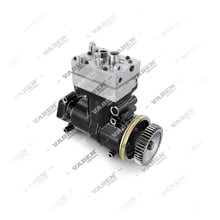
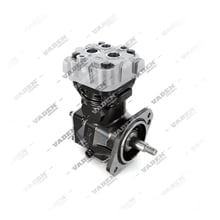
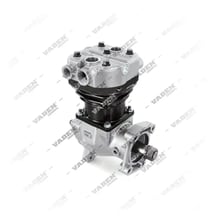
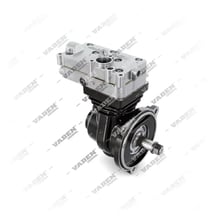
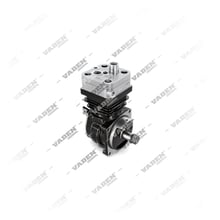
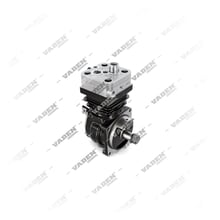
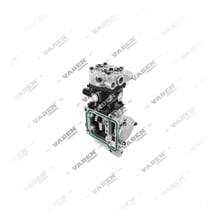
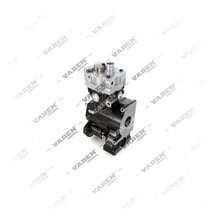
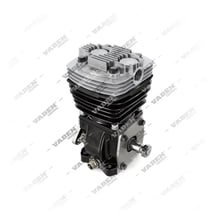
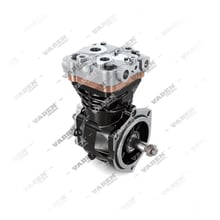
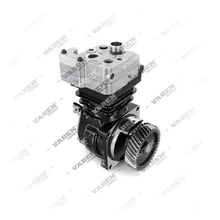
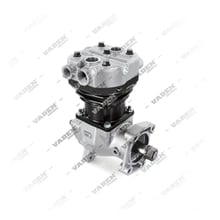
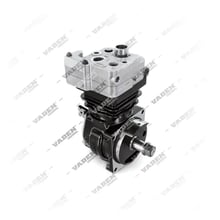
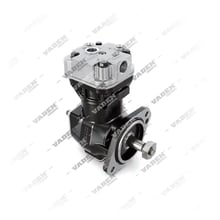
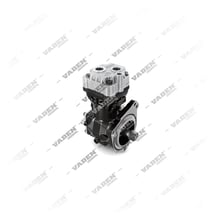
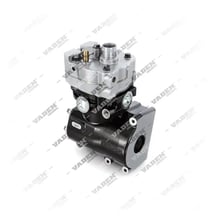
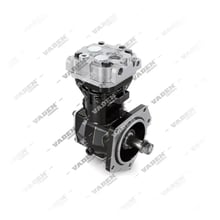
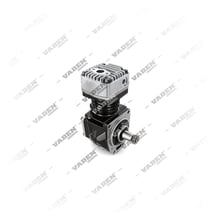
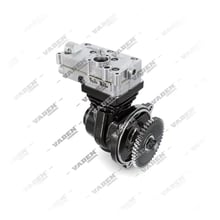
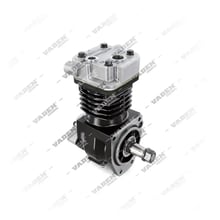
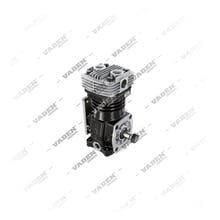
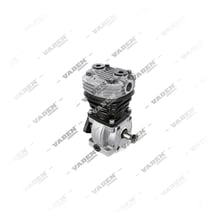
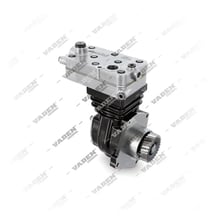
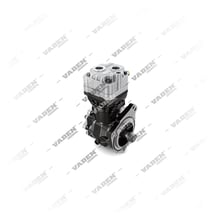
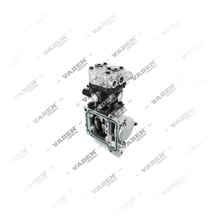
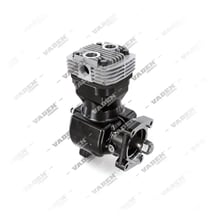
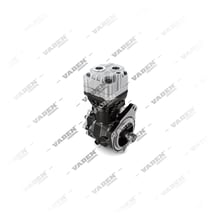
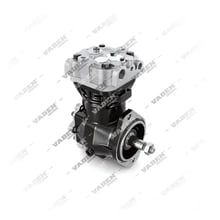
What is a single cylinder air brake compressor?
The single-cylinder design is more compact and lighter than twin-cylinder compressors. It is generally preferred in vehicles with medium and low air consumption, single-deck buses, distribution trucks, and classic heavy vehicle engines. Twin-cylinder units are used in multi-axle tractor units with high air consumption. Under the category, single-cylinder compressor options with air-cooled and water-cooled, oil-fed, different flange and drive types are available.
What are the functions of a single cylinder air brake compressor?
- Producing compressed air: Compresses and pumps into the circuit the air that will provide the brake system's operating pressure.
- Maintaining tank pressure: Switches to load mode when pressure drops to refill the tanks, and runs unloaded when the cutoff pressure is reached.
- Supplying auxiliary consumers: Serves as a source for secondary air consumers such as gearbox control, clutch boost, cabin suspension, air bellows, horn, and door system.
- Managing heat and oil: Dissipates the heat generated during compression via air fins or engine cooling water; distributes oil from the oil gallery to the bearings and returns it to the engine.
What are the symptoms of a single cylinder air brake compressor failure?
Single cylinder air brake compressor failures are usually gradual, not sudden. The most common symptoms encountered in the field are:
- Slow pressure buildup: If the vehicle takes longer than normal to reach operating pressure, the valve plate may be leaking or the piston rings may be blowing by.
- Staying continuously engaged: The compressor not unloading indicates either leaks in the line or a problem between the pressure regulator and the compressor.
- Excessive oil carryover: Oil coming from air tanks, the dryer muffler, or brake valves indicates piston ring and crankshaft seal wear; it also shortens the dryer cartridge's life.
- Metallic knocking and rhythmic sound: Indicates increased connecting rod bearing, crankshaft bearing, or piston pin clearance.
- Coolant or oil leakage: Deterioration of the head gasket and cylinder gasket may cause water to migrate to the crankcase side in water-cooled models.
- Overheating: The compressor housing heating above normal means a blocked intake line, blocked discharge pipe, or contaminated cooling channels.
How is a single cylinder air brake compressor checked?
The check should start without disassembling the compressor. First eliminate leaks on the system side, then evaluate the unit.
- Fill time measurement: With tanks drained, the time for the vehicle at above-idle speed to bring pressure to the specified operating value is measured and compared with the time in the OE service manual.
- Leak test: With the engine stopped and the parking brake not released, pressure drop is monitored. If there is a significant drop, line, bellows, and valve leaks are checked first.
- Discharge line temperature: Excessive heating of the discharge pipe and carbonization marks indicate seizure or blockage.
- Oil carryover check: The connection near the compressor outlet is opened and the inner surface checked for oil buildup; a wet, flowing oil film is unfavorable.
- Mechanical play: Axial and radial play at the pulley or gear hub is checked by hand; noticeable play indicates bearing wear.
- Valve plate inspection: When the head is removed, the valve reeds are checked for cracks, the seating surface for carbon buildup, and the gasket surface for leak marks.
What should be watched for during replacement?
- Drain the system air: The connection must not be removed before the tanks are completely drained.
- Clean oil and water lines: Residue from the old compressor may burn the new unit's bearings early. Supply and return lines should be blown out and checked.
- Renew gaskets and O-rings: Head, flange, and connection gaskets must not be reused; the discharge pipe, if carbon has built up and is suspect, should be replaced.
- Follow the tightening sequence: Flange and head bolts should be tightened in stages, in cross order, with a torque wrench; values follow the vehicle's current OE service manual.
- Ensure initial lubrication: Before installation, clean engine oil should be supplied through the oil inlet to form an initial oil film layer on the bearings.
- Align the drive: Gear backlash on gear-driven models, and pulley alignment and belt tension on belt-driven models, should be checked.
- Replace the dryer cartridge: On a system that has carried oil, the cartridge will be saturated; it is appropriate to renew it together with the new compressor.
- Post-run test: Leak check, fill time measurement, and unloading at cutoff pressure should be observed.
How is a single cylinder air brake compressor selected?
Correct selection is made not by brand name but by OE number and technical matching. The original part number from the vehicle's chassis number should be matched against a cross-reference list to decide. OE manufacturer numbers such as Wabco, Knorr-Bremse, Bendix and vehicle numbers such as Mercedes-Benz, MAN, Volvo, DAF, Scania, Iveco can be used for cross reference. Drive type, flange hole circle, rotation direction, cooling type, oil inlet-outlet position, and intake connection must always be compared.
Single cylinder air brake compressor selection and inspection points| Inspection point | What is checked | Note |
|---|
| OE number | Original number on the vehicle and compressor | Number match, not brand, is authoritative |
| Drive type | Gear, belt, or direct flange drive | For gear drive, tooth count and module must match |
| Cooling type | Air-cooled or water-cooled housing | Water-cooled changes the inlet-outlet position |
| Flange and connection | Hole circle, bolt count, centering diameter | A dimension difference makes installation impossible |
| Rotation direction | Clockwise or counterclockwise | Wrong direction disrupts lubrication |
| Oil supply | Pressurized oil inlet and crankcase return | Line diameter and fitting type should be checked |
| Flow class | Capacity suited to vehicle air consumption | Low flow leads to continuous running |
| Operating pressure | Compatibility with system cutoff pressure | The OE service manual is authoritative for the general range |
Our product group offers numerous single-cylinder compressor options suitable for different drive and cooling types; for example, units numbered 1200 250 002, 2500 010 001, 2900 120 001, and 3500 010 001 are in this category. You can review the cross-reference lists on the product detail pages to select the correct reference matching your vehicle's number.
Maintenance and service life
The life of the single cylinder air brake compressor largely depends on intake air cleanliness, oil quality, and leakage status in the system. Adhering to engine oil and air filter maintenance intervals is also compressor maintenance. A compressor operating continuously under load both heats up more and carries more oil; therefore timely correction of line leaks directly extends life.
- Periodic leak check: Bellows, fitting, hose, and valve leaks should be checked at every service.
- Dryer cartridge: Should be replaced at the manufacturer's given interval; the interval should be shortened if oily air is detected.
- Tank drainage: Condensation water in the tanks should be drained regularly; if oily water keeps coming, the compressor should be examined.
- Drive elements: Belt tension and pulley condition, and gear backlash on gear drives, should be monitored periodically.
In cases where wear is caught in an early stage, repair can be done with compressor parts such as the valve plate, gasket kit, piston ring set, and crankshaft flange instead of replacing the housing. When wear has reached the crankshaft and housing, a complete unit replacement is a more economical and safer solution.
VADEN single cylinder air brake compressor
VADEN is a manufacturer specialized in air brake compressor production; it offers a wide OE cross-reference scope in the single-cylinder compressor group. Housing machining, valve plate and piston group production, and test processes are carried out in-house. When selecting the correct single-cylinder air brake compressor for your vehicle, proceed from the OE number and verify drive and cooling type; for cases you are unsure of, consult our technical team with the chassis number.
Frequently Asked Questions (FAQ)
What is the difference between a single cylinder air brake compressor and a twin cylinder compressor?
A single cylinder compressor has a single piston and a single cylinder; it is more compact, lighter, and suitable for vehicles with moderate air consumption. Twin-cylinder units produce higher flow at the same speed and are used in vehicles with intensive air consumption such as multi-axle tractor units and bellows-equipped buses. Which one is suitable for your vehicle is determined by the OE number; downgrading capacity by making a swap causes the compressor to run continuously under load and wear prematurely.
How do I know if the compressor is carrying oil?
Typical indicators are: the water drained from the air tanks being oily, oil spraying from the dryer muffler, and an oil film present on the inner surface of brake valves and bellows. The dryer cartridge saturating much earlier than expected is also a sign in the same direction. In this case, the intake line and air filter should be checked first; if the problem continues, the piston rings and crankshaft seal should be inspected.
Can a single cylinder air brake compressor be repaired, or does it need complete replacement?
If wear is limited to the valve plate, gaskets, piston rings, or crankshaft flange, repair can be done by replacing the relevant compressor parts. If there is deep scoring on the cylinder surface, noticeable play in crankshaft bearings, or a crack in the housing, complete unit replacement is safer and more economical in the long run. Cylinder and crankshaft dimensions must always be checked before deciding.
If pressure still builds slowly after installing a new compressor, what could be the cause?
In most cases the problem is not in the compressor but in the system. Line, bellows, fitting, and valve leaks, a blocked or saturated dryer cartridge, a crushed intake hose, a discharge pipe narrowed by carbon, and a faulty pressure regulator all produce the same symptom. After replacement, a leak test should be done first, then the tanks should be drained and the fill time measured and compared with the value in the vehicle's current OE service manual.
How do I choose the correct single cylinder compressor?
Selection should be made based on the OE number, not the brand. The original part number derived from the vehicle's chassis number should be matched against the cross-reference list on the product page. Additionally, drive type (gear, belt, direct flange), flange hole circle and centering diameter, rotation direction, cooling type (air- or water-cooled), oil inlet-return position, and intake connection should be compared. In cases of uncertainty, consulting the technical team with the chassis number is recommended.
Related technical guide: Single vs Twin-Cylinder Air Compressor: Choice & Fitment