What Is an Oil Pan?
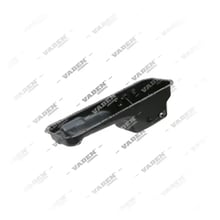
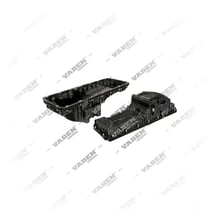
The oil pan is the complete housing bolted to the bottom of a heavy commercial vehicle engine's lower block, where the engine oil is stored. Sitting at the lowest point of the block, it is also called the oil sump, sump pan, or simply the pan on the shop floor. This subcategory is the complete-unit bucket of the Oil Pan group under the Engine section, listing vehicle-ready pan housings rather than individual service parts. Pans used on trucks, tractor units, buses and heavy machinery are made in different depths, volumes and flange patterns depending on oil capacity and engine block geometry.
How Does the Oil Pan Work Inside the Engine?
While the engine runs, the oil pump draws oil through the pickup strainer at the bottom of the pan and forces it into the galleries; once it completes its circuit, gravity returns it to the pan through the drain-back channels. The pan therefore serves as both the oil reservoir and a settling and initial-cooling volume. In heavy-duty engines, internal geometry keeps oil from moving away from the pickup strainer during grades and cornering.
- Oil reservoir: Holds the engine's full oil volume; once the level drops, oil pressure and film thickness weaken immediately.
- Settling volume: Lets air bubbles in the circulating oil separate out and reduces foam formation.
- Pre-cooling surface: The large metal surface transfers part of the oil's heat to the surrounding airflow.
- Debris collection: Wear particles and soot settle to the bottom, gathering near the drain plug.
- Sealing boundary: The flange between block and pan seals the engine's underside from the outside environment.
Oil Pan Technical Specifications
Heavy commercial vehicle oil pans are mainly made from stamped steel sheet, cast aluminum, or reinforced composite polymer. Steel pans flex under impact, aluminum pans are lighter, and composite pans insulate better but need tighter torque control. Heavy-duty applications typically carry oil capacities above ten liters; the exact figure varies by engine family, and the manufacturer's current service manual is the reference. Flange bolt pattern, drain plug thread, dipstick guide and, where fitted, the sensor bore must match the original geometry exactly.
Oil Pan Types and Subgroups
- Stamped steel sheet pan: The most common heavy-duty type; economical, and deforms by crumpling rather than tearing on impact.
- Cast aluminum pan: Cuts weight and improves heat transfer, at a higher cracking risk from stone impact.
- Composite polymer pan: Found on modern low-emission engines; good thermal insulation but low tolerance for overtightening.
- Deep-sump pan: Built for long-haul and heavy-towing applications needing a higher oil volume.
- Low-profile pan: Used on buses and low-floor vehicles with limited under-chassis clearance; volume is compensated with a wider base.
- Sensor-equipped pan: Has a ready-made bore for an oil level or temperature sensor; a version without it triggers a fault warning light.
How to Choose the Right Oil Pan
The starting point for selecting a complete pan is always the vehicle's original OE part number. Even within one engine family, chassis height, front-axle position and emission level can change pan geometry. A pan with the wrong dimensions disrupts oil pickup by changing the gap between the strainer and the pan floor. The table below summarizes what to verify before ordering, and where the line falls between complete-unit replacement and repair.
Oil Pan Selection and Decision Criteria| Criterion | What to Check | Decision Note |
|---|
| OE / OEM number | Casting or label number on the pan | The most reliable way to cross-match |
| Engine code | Engine family and emission level | Pan design changes by engine code within the same series |
| Material | Steel sheet, aluminum, or composite | A material change affects torque and gasket selection |
| Flange pattern | Bolt count, hole spacing, flange thickness | Sealing fails if even one hole is off |
| Sump depth | Clearance between pickup strainer and floor | A depth difference disrupts pickup and level readings |
| Plug and sensor | Drain plug thread, sensor bore | A version without the bore triggers a warning light and fault code |
| Complete unit or repair | Housing crack, flange distortion, corrosion | Replace the complete unit if the housing is deformed; reseal only for a leak |
Oil Pan Maintenance and What to Watch For
The pan sits close to the road; its upkeep relies mainly on regular visual inspection and correct installation discipline. At every oil change, the flange area, plug region and housing floor should be wiped down and re-inspected. Bolts are tightened in a crossing pattern from the center outward, in stages; the exact torque value varies by engine, and the manufacturer's current service manual is the reference.
- Clean the flange surface: Don't seat the new unit until old gasket and sealant residue is fully removed.
- Tighten in a crossing, staged pattern: Going straight to full torque in one pass warps the flange, especially on sheet-metal and composite pans.
- Renew the plug washer: Reusing a single-use washer is the most common cause of dripping.
- Avoid overtightening: Excess torque strips threads and starts cracks on composite and aluminum pans.
Common Failures and Solutions
- Oil seeping along the flange: A degraded gasket or warped flange; check flange flatness, and replace the complete unit if the housing is bent.
- Dripping from the drain plug: A worn washer or stripped thread; renew the washer, and replace the housing if the thread is damaged.
- Dent or crack after a stone impact: Structural damage risking sudden oil loss; complete-unit replacement is recommended over repair.
- Low oil pressure warning: A wrong-depth or caved-in pan blocks the pickup strainer; fit a unit with the correct geometry.
Why VADEN ORIGINAL?
VADEN manufactures heavy commercial vehicle spare parts true to OE dimensions and exports to more than 100 countries. On complete oil pan units, flange pattern, sump depth, plug thread and sensor bore are matched to the original geometry, removing the need for extra machining or hole enlargement at the workshop.
- OE-dimension manufacturing: Flange, bolt pattern and sump geometry match the original unit.
- Broad OEM coverage: OE-number cross-references are available for Mercedes-Benz, MAN, Scania, Volvo, DAF and Iveco applications.
- Material consistency: Sheet thickness, coating and casting quality are held to one standard across the range.
- Wide supply network: Distribution to more than 100 countries shortens fleet downtime.
Conclusion
The oil pan is the complete unit that carries the engine's oil volume and is where the lubrication circuit begins; chosen correctly, it causes no trouble for years, while chosen incorrectly it can lead to problems ranging from oil leaks to interrupted pickup. The decision on complete pans in this category should rest on verifying the OE number, engine code, material and flange pattern. If the housing is cracked, bent, or thinned by corrosion, choose complete-unit replacement over repair.
Frequently Asked Questions (FAQ)
Should the oil pan be replaced completely, or can it be repaired?
If the leak is coming only from the gasket or the drain plug area and the housing itself is sound, renewing the sealing components is enough. However, if the flange is bent, the housing is dented, the thread is stripped, or corrosion is close to perforating, complete-unit replacement is the lasting fix. A repaired but still bent flange usually leaks again within a short time.
How do I find the correct oil pan?
The most reliable approach is to start from the casting or label OE number on the old pan. Next, verify the engine code, material type, flange bolt pattern, sump depth and whether a sensor bore is present. Even within the same model series, different pans can be used depending on the engine option.
Can I replace a steel oil pan with an aluminum equivalent?
A material change should only be made if the manufacturer defines an alternative pan for that engine. Changing the material also changes bolt torque, gasket type and thermal behavior. An unsuitable swap increases the risk of cracking under overtightening or leaking after installation.
What torque should oil pan bolts be tightened to?
The torque value varies by engine family and pan material, so no single general figure can be given. Bolts should be tightened in a crossing pattern from the center outward, in stages. For the exact value, the vehicle manufacturer's current service manual is the reference.
What symptoms indicate a failing oil pan?
A dark oil stain on the parking spot, oil weeping along the pan flange, dripping around the plug, and a fast-dropping oil level are typical symptoms. If there is a dent or crack after a stone impact, the vehicle should not be driven, due to the risk of sudden oil loss. If the oil pressure warning light comes on, the engine must be stopped immediately.
Related technical guide: Truck Oil Pan Group: Faults, Replacement & Maintenance Guide