What is an Oil Cooler Thermostat?
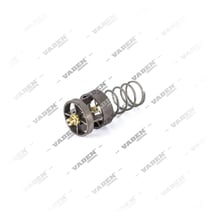
The Oil Cooler Thermostat is a compact part containing a temperature-sensitive wax element or bimetallic spring that mechanically moves a valve as it expands. It is usually located at the connection point between the oil cooler housing and the engine block. The thermostat begins to open gradually within a certain temperature range and, once fully open temperature is reached, the entire oil flow passes through the cooler.
What are the functions of the Oil Cooler Thermostat?
- Temperature regulation: Keeps engine oil within its target operating temperature range.
- Fast warm-up: Keeps the cooler circuit closed while the engine is cold, helping the oil quickly reach optimal viscosity.
- Overheat protection: Opens the cooler circuit when oil temperature rises, ensuring the oil is effectively cooled.
- Pressure balance: Regulates flow within the cooler circuit, reducing sudden pressure fluctuations in the lubrication system.
- Component protection: Oil operating at the correct temperature helps protect sensitive components such as engine bearings and the turbo.
What are the symptoms of an Oil Cooler Thermostat failure?
- Engine oil temperature running higher or lower than normal
- Oil temperature rising very slowly even when the engine is cold
- Leakage around the oil cooler or moisture traces on seal surfaces
- Oil temperature or engine temperature warning light illuminated on the dashboard
- Drop in oil pressure during prolonged operation under high load
How is the Oil Cooler Thermostat checked?
- Visual inspection: Check the thermostat housing for cracks, deformation or leakage traces.
- Temperature test: Remove the thermostat and measure its opening temperature and travel in a hot water bath.
- Oil temperature monitoring: Observe the oil temperature trend using the gauge or a diagnostic tool while the vehicle is running.
- Valve movement: Check whether the thermostat element moves freely.
- Seal and surface check: Check the surfaces the thermostat seats on for damage that could cause leaks.
What should be considered when replacing it?
- Drain the engine oil before replacement and clean the area around the thermostat.
- Never reuse the old seal or o-ring; always replace it with a new one.
- Install the thermostat in the correct orientation so it seats fully; reverse installation prevents the system from working.
- Apply tightening torque according to the vehicle's current OE service manual.
- After installation, run the engine and confirm oil temperature runs within the expected range.
- Follow the manufacturer's specified procedure to ensure no air is trapped in the system.
How to choose the right Oil Cooler Thermostat?
Correct thermostat selection should be based on engine model, opening temperature and connection geometry.
Oil Cooler Thermostat Selection Criteria| Criterion | Description |
|---|
| Engine model | The thermostat must match the vehicle's engine type and oil cooler layout |
| Opening temperature | Must match exactly the temperature threshold specified by the manufacturer |
| Connection geometry | Mounting bore and seal surfaces must be compatible with the original part |
| Material resistance | Must be made from components resistant to high temperature and oil chemistry |
| OE reference cross-check | Verify by matching the OE number of the removed part |
Maintenance and service life
The oil cooler thermostat has few moving parts but is continuously exposed to temperature cycling. It is recommended to visually inspect the thermostat housing and seal surfaces at every oil change interval. Using low-quality oil and operating under heavy load conditions can cause the thermostat element to fatigue prematurely. A properly functioning thermostat significantly improves engine oil life and the reliability of engine components.
VADEN Oil Cooler Thermostat
VADEN manufactures oil cooler thermostats compatible with OE references for heavy commercial vehicle engines; products are tested for opening temperature accuracy and durability before release.
Frequently Asked Questions (FAQ)
Can the vehicle still be driven if the oil cooler thermostat fails?
It can be driven for a short time, but since uncontrolled rise in oil temperature can damage engine components, the fault should be fixed as soon as possible.
What happens if the thermostat stays open?
If the thermostat stays permanently open, oil warm-up is delayed when the engine is cold, which can negatively affect lubrication and fuel consumption.
What happens if the thermostat stays closed?
If the thermostat stays closed, oil does not pass through the cooler and engine oil can overheat, leading to premature oil breakdown and engine damage.
Is the oil cooler thermostat the same part as the engine coolant thermostat?
No, the two operate in different circuits; one regulates engine oil and the other regulates coolant (antifreeze), and they should not be confused.
How often should the thermostat be replaced?
There is no fixed interval, but it is recommended to check it when abnormal oil temperature is observed or during major engine servicing.