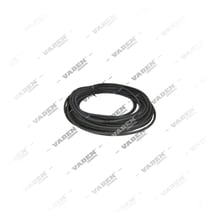
What are the functions of a fuel tank hose?
- Flexible fuel transport: Maintains uninterrupted fuel flow between the tank and the feed line or filler neck despite moving mounting points.
- Vapour venting: In some applications, provides a path for controlled venting of fuel vapour inside the tank.
- Absorbing vibration and movement: Absorbs the relative movement between the chassis and the tank that a rigid pipe connection could not handle.
- Sealing: Provides a complete seal at clamped connection points, preventing fuel loss and fire risk.
What are the symptoms of a failed fuel tank hose?
- Fuel smell: A noticeable fuel odour whether the vehicle is parked or driving.
- Visible leakage: Wetness or dripping around the tank or at hose connection points.
- Cracking/swelling on the hose surface: The rubber hardening, cracking, swelling, or changing colour.
- Unexplained drop in fuel level: Faster-than-expected fuel consumption relative to distance driven.
- Loose clamp: Visible looseness at the connection point or the hose shifting out of place.
How is a fuel tank hose checked?
Inspection should be done with the engine off and, if possible, with the vehicle raised. The hose is gently flexed by hand from end to end to check for stiffness, cracks, or porosity; a healthy hose should stay flexible and should not whiten or crack when bent. Clamp tightness is checked, since a loose clamp is one of the most common causes of leaks. After refuelling, the area around the hose is checked for fuel staining. If a leak is suspected, the tank can be left briefly in an enclosed space while monitoring for an increase in fuel odour; this simple method helps catch a larger leak early.
What should be considered during replacement?
- Correct diameter and length: The hose's inner diameter must seat fully at connection points; a hose that is too long or too short creates tension or sagging during installation.
- Clamp type: Corrosion-resistant clamps suited to fuel lines should be used, without overtightening to the point of crushing the hose.
- Fuel-compatible material: A general-purpose water or air hose must never be used in a fuel system; the material must be specifically resistant to diesel fuel.
- Routing: The hose must be secured on its original route, kept away from hot surfaces such as the exhaust and from sharp edges.
- Post-installation check: After replacement, the tank should be filled and checked for leaks before the vehicle is driven.
How should a fuel tank hose be selected?
Selection should match the hose's inner diameter, wall thickness, and pressure class exactly to the vehicle's original part. It is recommended to confirm that the material resists diesel fuel, biodiesel blends, and outdoor conditions, using the OEM part number.
Fuel tank hose selection criteria| Criterion | Description |
|---|
| Inner diameter | Must seat fully at connection points without causing leakage |
| Material | Multi-layer rubber resistant to diesel fuel and fuel vapour |
| Outer durability | Reinforced outer layer against UV, temperature swings, and mechanical wear |
| Length | Matches the original installation route, allowing tension-free routing |
| Pressure rating | Suitable for the system value specified in the vehicle's current OE service manual |
Maintenance and service life
A fuel tank hose hardens and loses flexibility over time because it is directly exposed to outdoor conditions; this is a natural aging process. Regular visual inspection, at least once a year on long-haul vehicles, checking both the hose and its clamps, prevents an unexpected leak. On vehicles operating on salted roads, clamp corrosion can accelerate, so this area should be checked separately.
The most commonly overlooked point on fuel tank hoses is the connection on the tank side, which usually sits under the chassis, exposed to dust and moisture buildup. Cleaning and inspecting this area during routine underbody washing and checks helps catch corrosion-related clamp failures early.
VADEN fuel tank hose
VADEN manufactures OEM-matching tank hoses for heavy-duty commercial vehicle fuel systems, built to the correct material structure and dimensional tolerance, with the goal of preserving the vehicle's original sealing and durability performance.
Frequently Asked Questions (FAQ)
How often should a fuel tank hose be checked
A visual check at least once a year is recommended, especially on long-haul vehicles; early replacement is needed if cracking, hardening, or clamp looseness is found.
Can a water hose be used instead of a fuel hose
No, general-purpose water or air hoses are not resistant to diesel fuel and will swell and crack quickly; a hose made from fuel-specific material must be used.
How dangerous is a crack in a fuel tank hose
A cracked hose can lead to fuel leakage and fire risk; once noticed, it should be replaced before the vehicle is driven again.
Should the clamp also be replaced when the fuel tank hose is changed
Yes, if the clamp is corroded or deformed; a loose or rusted clamp may not seal properly even with a new hose.
Does a fuel smell always mean the hose has failed
No, the filler neck seal, tank cap, or feed line connections can also be the cause; the whole line should be visually inspected to locate the source.
Related products — Fuel System: Fuel Tank (view all)