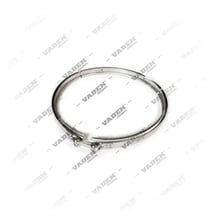
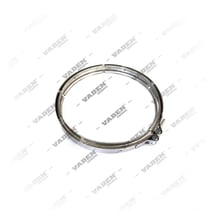
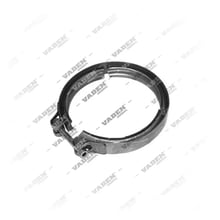
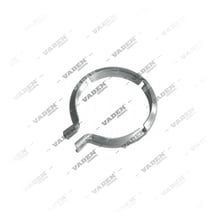
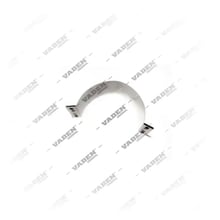
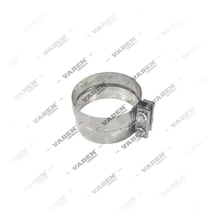
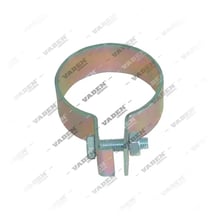
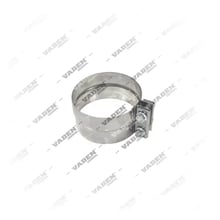
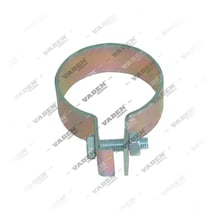
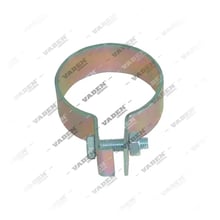
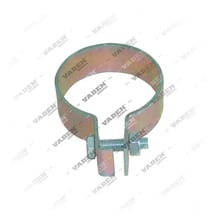
What Is a Spiral Clamp?
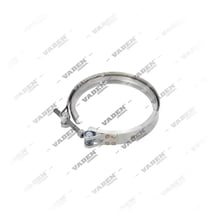
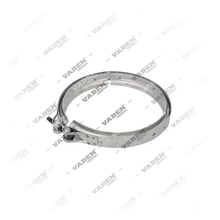
A spiral clamp is a fastening component in the exhaust system of heavy commercial vehicles that seals the point where the corrugated flex pipe joins the manifold, turbo outlet, or continuing exhaust pipe, creating a leak-tight, vibration-resistant connection. The exhaust flex pipe absorbs engine vibration and thermal expansion, reducing strain on the rest of the pipe run; keeping this moving joint securely fastened is the clamp's job. In the field it also goes by names such as exhaust flex clamp, bellows clamp, or flex pipe clamp, and is fitted at both ends of the flex pipe on trucks, tractor units, buses, trailers, and heavy construction equipment.
How Does a Spiral Clamp Work?
A spiral clamp distributes the clamping force from its bolt evenly around the pipe via its band or profile body. This radial force presses the flex pipe's end sleeve against the mating surface of the counter pipe, stopping exhaust gas from escaping. The joint must do more than seal — it also has to hold axially, since the line expands when hot, contracts when cold, and vibrates continuously with chassis movement.
- Radial clamping: Bolt torque draws the band tight, closing the gap between the pipe and the sleeve.
- Axial grip: Friction keeps the pipe from slipping out of the joint under thermal expansion and gas pressure.
- Vibration-damping support: Holds the joint end fixed while letting the flex pipe move, delaying bellows fatigue.
Spiral Clamp Technical Specifications
Spiral clamps are made mostly from stainless steel or coated carbon steel. Because temperatures near the exhaust outlet stay high for long periods, stainless grades are preferred for heavy-duty use. Sizing is based on the pipe's outside diameter; the catalogue lists the nominal diameter (typically 40-150 mm) and the band width. The same nominal diameter can come with different clamping ranges, so compatibility should never be judged on diameter alone.
- Material: Stainless steel or coated steel with enhanced thermal-corrosion resistance.
- Nominal diameter: Selected to match the pipe's outside diameter; intermediate sizes are not used.
- Band width: A wider band spreads the clamping force, reducing the risk of crushing thin-walled pipe.
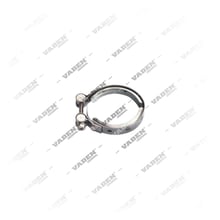
- Fastener: Single- or double-bolt; double-bolt types hold better.
Spiral Clamp Types and Subgroups
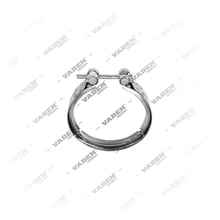
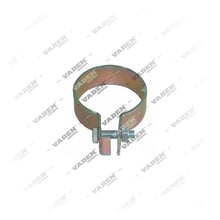
- U-bolt clamp: The most common type on exhaust lines; clamps the pipe between a bridge saddle and a U-bolt. Economical and strong, though overtightening can oval the pipe's cross-section.
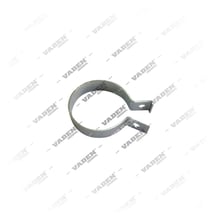
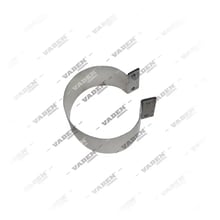
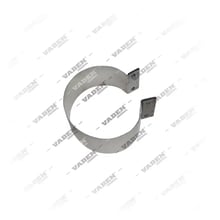
- Wide-band (banding) clamp: Spreads the clamping force over a broad surface, reducing the risk of deforming the thin-walled end of the sleeve. Preferred on heavy-duty lines.
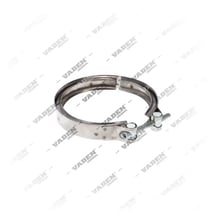
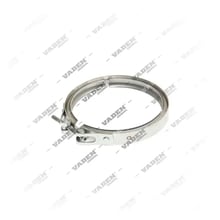
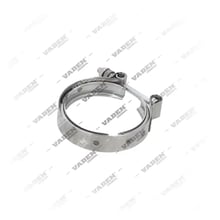
- V-band clamp: Draws two flanges together across tapered surfaces; a high-sealing, quick-release solution for turbo outlets and other high-temperature joints.
- Spring-loaded clamp: The spring built into the bolt evens out clamping force through thermal expansion, reducing the tendency to loosen on lines with large temperature swings.
- Bolt-and-nut kits: Covers the bolts, nuts, washers, and bridge saddles that should be renewed along with the clamp.
How to Choose the Right Spiral Clamp
The right choice starts with measuring the part being replaced. Measure the outside diameter of the flex pipe and the mating pipe with calipers, then determine the connection type; front and rear ends of the same vehicle often use different types. The most reliable method is cross-referencing against the original part's OE number, since even within one model series, Mercedes-Benz, MAN, Scania, Volvo, DAF, Iveco, and Renault Trucks vehicles can have different exhaust layouts depending on engine and emissions level.
Spiral clamp selection and compatibility criteria| Criterion | How it's determined | What to watch for |
|---|
| OE reference number | The removed clamp or the parts catalogue | Most reliable method; eliminates application errors |
| Pipe outside diameter | Caliper measurement at the flex pipe end | An intermediate size risks leaks and crushing |
| Connection type | U-bolt, wide-band, V-band, or spring-loaded | V-band seals better at turbo and manifold outlets |
| Clamping torque | Vehicle manufacturer's current service manual | Value is vehicle-specific; never exceed the manual's spec |
Spiral Clamp Maintenance and What to Watch For
A spiral clamp must always be renewed whenever the flex pipe or the silencer is replaced. A clamp that has been through thermal cycling has a fatigued band and corroded threads, so it won't deliver the same clamping force a second time. Since thread breakage is common on removal, apply penetrating oil and loosen the fasteners in stages.
- Tighten in stages: On double-bolt types, tighten both sides alternately in equal steps; tightening one side only seats the joint askew.
- Take torque from the manual: Torque varies by type and vehicle; the manufacturer's current service manual is the authority.
- Do not overtighten: Excess torque crushes the flex pipe's braided armor, cracks the bellows, and turns the leak into a permanent one.
- Recheck after the first heat cycle: Rechecking torque once the engine has warmed up and cooled back down catches loosening early.
Common Failures and Solutions
- Exhaust leak at the joint (hissing sound, soot marks): Caused by loosening, wrong diameter, or corrosion on the seating surface; undo the joint, clean the surfaces, and fit a new clamp.
- Bolt shearing or thread stripping: Corrosion and overtightening act together; remove what's left and replace the clamp with a full bolt-and-nut kit.
- Crushing or cracking at the flex pipe end: Typical result of a narrow-band or overtightened clamp; replace the flex pipe and switch to a properly sized wide-band type.
- Repeated loosening: Fixed-bolt types loosen on lines with high thermal expansion; a spring-loaded or V-band type is the lasting fix.
- Widespread corrosion: Seen on clamps with damaged coating; choose stainless grades on vehicles exposed to road salt.
Why VADEN ORIGINAL?
VADEN ORIGINAL spiral clamps are manufactured true to the original part's diameter, band width, and bolt dimensions, so they seat in place without extra fitting work. A broad OEM cross-reference list matches different make-and-model combinations from a single catalogue. VADEN exports heavy commercial vehicle spare parts to more than 100 countries.
- Built to OE dimensions: Size and clamping range match the original part.
- Broad coverage: A size range spanning truck, tractor unit, bus, trailer, and construction equipment exhaust lines.
- Kit completeness: Clamp, bolt, and nut ship together, preventing delays caused by missing parts.
- Wide stock: This category offers 78 product options across different diameters and types.
Conclusion
The spiral clamp is one of the smallest yet most decisive fastening components in the exhaust system. A clamp fitted at the correct diameter, type, and torque extends the flex pipe's service life and prevents exhaust leaks along with the noise and odor problems that follow. The safest approach: start selection from the OE reference, renew the clamp whenever the flex pipe is replaced, and take the clamping torque from the vehicle manufacturer's current service manual.
Frequently Asked Questions (FAQ)
What does a spiral clamp do?
A spiral clamp seals the point where the exhaust flex pipe (the flexible corrugated pipe) joins the manifold, the turbo outlet, or the continuing exhaust pipe. It also keeps the pipe from slipping out of the joint under thermal expansion and vibration. This prevents exhaust gas leaks and connection noise.
Should the clamp be replaced along with the flex pipe?
Yes, renewing the clamp is recommended whenever the flex pipe or the silencer is replaced. A clamp that has been through thermal cycling has a fatigued band and corroded bolt threads, so it won't deliver the same clamping force the second time around. A reused clamp tends to loosen quickly and cause a leak.
How is the correct spiral clamp size determined?
Size is determined by the outside diameter of the pipe the clamp will sit on; take the measurement with calipers at the flex pipe end. The most reliable method is cross-referencing the removed part's OE number. Using an intermediate size causes both leaks and crushing at the flex pipe end.
What torque should a spiral clamp be tightened to?
Clamping torque varies by clamp type, diameter, and vehicle; for the exact value, the vehicle manufacturer's current service manual is the authority. On double-bolt types, both sides should be tightened alternately in equal steps. Overtightening crushes the flex pipe's braided armor and leaves permanent damage.
What is the difference between a U-bolt clamp and a wide-band clamp?
A U-bolt clamp applies clamping force over a narrow area; it's economical, but overtightening can oval out the pipe's cross-section. A wide-band clamp spreads the force over a larger surface and reduces the risk of deforming the thin-walled flex pipe end. Wide-band or V-band types are preferred for heavy-duty applications.
Related technical guide: Exhaust Clamp & Connecting Pipe: Faults, Replacement, Care