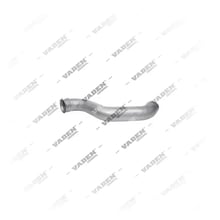
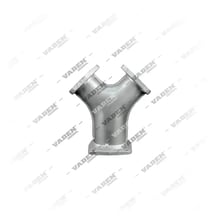
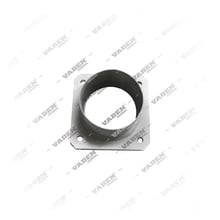
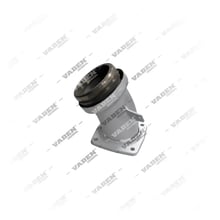
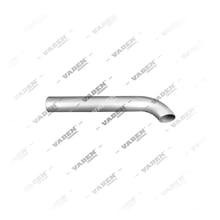
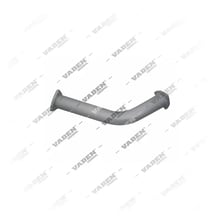
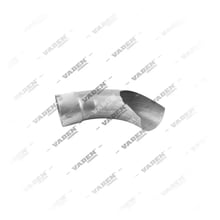
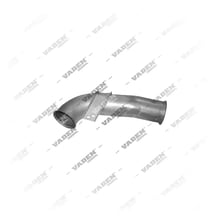
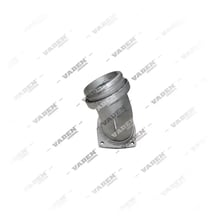
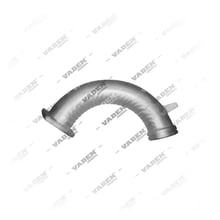
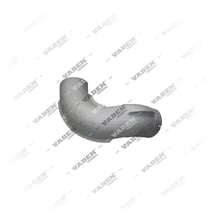
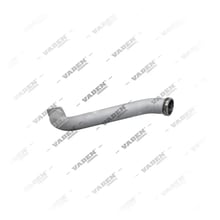
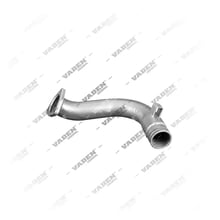
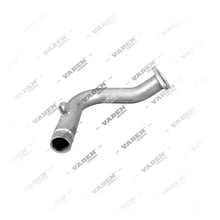
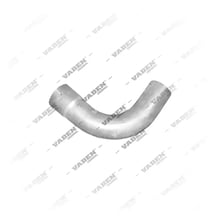
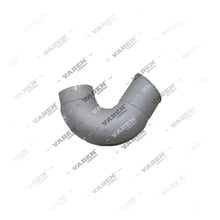
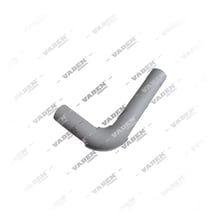
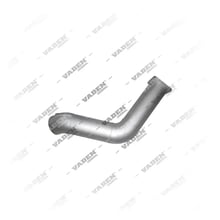
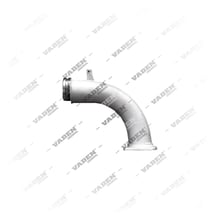
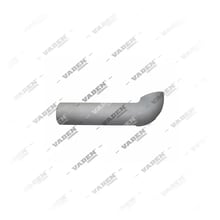
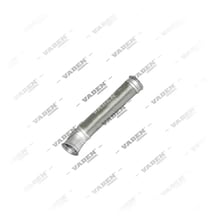
What Is a Spiral Exhaust Pipe?
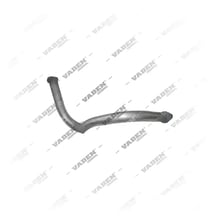
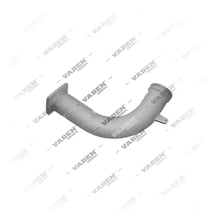
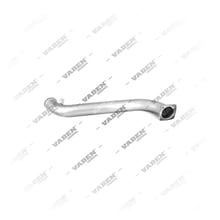
A spiral exhaust pipe is the flexible section of a heavy commercial vehicle's exhaust system that connects the engine outlet to the muffler, its braided stainless steel body absorbing vibration and thermal expansion. In the field it's also called a flex pipe or bellows exhaust pipe. As part of the Spiral subgroup, it moves through a limited angle range and takes on chassis-torsion stress, unlike rigid sections. It is used in trucks, tractors, buses, and trailers at the turbo outlet, manifold flange, and muffler inlet transitions.
How Does a Spiral Exhaust Pipe Work?
A spiral exhaust pipe performs two jobs at once: sealing the gas path and absorbing mechanical movement. The inner bellows carries exhaust gas, while the outer braid protects the pipe against overextension and impact. During operation gas temperature rises quickly, the line lengthens, and the engine moves on its own mounts; the flexible body absorbs it all.
- Vibration damping: Engine vibration and torque reaction are absorbed in the flexible body instead of reaching the rigid line.
- Thermal expansion compensation: The line lengthens from cold start to full load; the bellows absorbs this without generating stress.
- Chassis torsion: On rough terrain the chassis and engine block move at different angles; the flexible joint tolerates the difference.
- Sealing: The bellows and flange surfaces keep exhaust gas from leaking into the cab and chassis area.
Spiral Exhaust Pipe Technical Specifications
Spiral exhaust pipes combine a stainless steel bellows with braided wire; ends are shaped as a straight pipe, flange, or tapered transition. Three dimensions decide a correct replacement: inside and outside diameter, free length, and end connection type. On heavy commercial vehicles typical diameters run roughly 40 to 130 mm, with free lengths of 100 to 400 mm. These are general ranges; for exact dimensions and tightening torque, the vehicle manufacturer's current service manual is authoritative.
- Body material: Stainless steel bellows with an outer braided wire or interlocked wrap for protection.
- Connection type: Straight end (clamped), welded flange, tapered transition, or threaded nut.
- Flex capacity: Axial, angular, and lateral movement capacity depends on the mounting point's direction of movement.
- Temperature rating: Applications near the turbo outlet call for a body rated for higher temperatures.
Spiral Exhaust Pipe Types and Subgroups
Products in the Spiral subgroup differ by manufacturing method and connection geometry. Two pipes of the same diameter aren't necessarily interchangeable if end type or free length differs; identifying the right variant prevents ordering mistakes.
- Braided-wire spiral exhaust pipe: The most common type, preferred for high-vibration engine connections.
- Interlocked-wrap spiral pipe: Made by interlocking a metal strip, resistant to impact, and used on long runs.
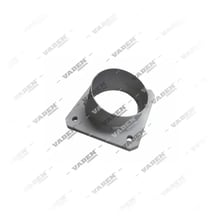
- Flanged spiral exhaust pipe: Used at bolted connections such as manifold or turbo outlets thanks to its drilled flange ends.
- Straight-end clamped spiral pipe: Secured with a clamp; common at muffler inlets and intermediate line connections.
How to Choose the Right Spiral Exhaust Pipe
Choosing the right replacement starts with measuring the part being removed. Make and model alone aren't enough — the same model series can need different spiral pipes by engine option, chassis length, or exhaust outlet direction. The most reliable method is cross-matching the OE part number, then verifying diameter, free length, and end connection type.
Spiral Exhaust Pipe Selection and Compatibility Criteria| Criterion | How to Determine It | What to Watch For |
|---|
| Inside and outside diameter | Measured at the end section with calipers | Outside diameter is decisive for clamped connections; inside diameter for flanged types |
| Free length | Measured between mounting points in the unstressed position | A pipe chosen too short stays under constant tension and cracks prematurely |
| End connection type | Flange, straight end, or tapered transition | On flanged types the bolt hole count and spacing must also match |
| OE reference | Cross-matched against the original part number | Priority for Mercedes-Benz, MAN, Scania, Volvo, DAF, Iveco, and Renault Trucks applications |
Spiral Exhaust Pipe Maintenance and Points to Watch
A correctly installed spiral exhaust pipe runs trouble-free for a long time; most early failures trace back to installation error. Never stretch or twist the pipe into position, never weld the bellows, and fit clamps only on the straight-end section.
- Avoid a strained fit: Forcing the pipe into place under tension creates permanent stress in the bellows and shortens service life.
- Check the hangers and mounts: Worn hangers throw all the movement onto the spiral pipe; inspect hangers whenever the pipe is replaced.
- Tighten bolts progressively: Flange bolts should be tightened crosswise to the manufacturer's value, never overtightened at one point.
- Renew the gasket: Replace the flange gasket at every removal; never reuse a deformed gasket.
Common Failures and Their Solutions
- Exhaust leak noise and cabin odor: Caused by a crack in the bellows or a degraded flange gasket; clean the surfaces, renew the gasket, and replace the pipe if the body is cracked.
- Braided wire unraveling: Caused by an overstretched installation or worn hangers; renew the hangers and mounts and fit a pipe with the correct free length.
- Metallic rattling and body vibration: From a loose clamp, a broken hanger, or contact with another line; check the fasteners and separate the contact point.
- Crushing or corrosion-related perforation: Caused by an incorrect clamp, impact, or road salt; replace the part, since a narrowed cross-section raises back pressure.
Why VADEN ORIGINAL?
VADEN is a manufacturer specialized in heavy commercial vehicle spare parts, producing spiral exhaust pipes to original part dimensions. The goal is a part the workshop can install without modification.
- OE-dimension manufacturing: Diameter, free length, and end geometry match the original part, with no cutting or expanding required.
- Broad OEM matching: Reference cross-matching is provided for Mercedes-Benz, MAN, Scania, Volvo, DAF, Iveco, Renault Trucks, BMC, and Ford applications.
- Material consistency: The bellows and protective layer use steel resistant to high temperature and corrosion.
- Exports to over 100 countries: Products are tracked with field feedback from fleets across varied climates and road conditions.
Conclusion
A spiral exhaust pipe is a critical component handling both sealing and mechanical-movement tolerance in the exhaust line. Choosing the correct diameter, free length, and end connection type prevents leaks and delays cracking in neighboring parts. Matching the removed part's measurements, avoiding a strained installation, and checking the hanger system together extend service life; when in doubt, the vehicle manufacturer's current service manual is authoritative.
Frequently Asked Questions (FAQ)
What is a spiral exhaust pipe for?
A spiral exhaust pipe flexibly joins the section of line between the engine outlet and the muffler, carrying exhaust gas without leaking. At the same time it absorbs engine vibration, the change in length caused by thermal expansion, and chassis torsion, which keeps rigid exhaust pipes from cracking.
How can you tell a spiral exhaust pipe has failed?
The clearest sign is a blowing or hissing sound that grows louder as engine speed rises, along with an exhaust smell noticeable in the cab. Soot or staining around the pipe, unraveling braided wire, or a visible crack in the body are also definite signs of a leak. In that case the part should be inspected and replaced if necessary.
How do I determine the correct size of spiral exhaust pipe?
Measure the inside and outside diameter of the removed part with calipers, take the free length between the mounting points in the unstressed position, and identify the end connection type (flange, straight end, or tapered transition). The most reliable method is cross-matching the original part's OE number. For exact dimensions, the vehicle manufacturer's current service manual is authoritative.
Can a spiral exhaust pipe be repaired, or does it need to be replaced?
If there is a crack, tear, or perforation in the bellows or braided layer, the pipe cannot be repaired and must be replaced as a complete unit. If the leak is coming only from the flange gasket or a loose clamp, renewing the sealing element and tightening the connection to the manufacturer's torque value may be enough.
Why does a spiral exhaust pipe fail so quickly?
The most common cause is installing the pipe under tension, or worn exhaust hangers throwing all the movement onto the spiral section. Choosing the wrong free length, clamping onto the bellows itself, and welding on the body also lead to premature failure. Checking the hangers, mounts, and gasket together at replacement time extends service life.
Related technical guide: Exhaust Clamp & Connecting Pipe: Faults, Replacement, Care