What is the Oil Cooler Repair Kit?
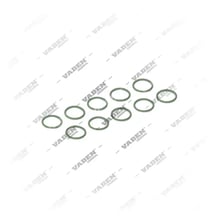
The Oil Cooler Repair Kit is a package containing the main housing gasket at the surface where the oil cooler connects to the engine block or filter head, o-rings that separately surround the oil and coolant passages, and on some models a thermostat or bypass valve seal. The kit renews sealing on both the oil and coolant sides of the heat exchanger at the same time, so it is offered as a complete gasket/o-ring group rather than a single gasket.
What are the functions of the Oil Cooler Repair Kit?
- Oil-coolant separation: prevents the oil and coolant passages inside the heat exchanger from mixing.
- Pressure sealing: prevents leakage to the outside environment under the operating pressure of the oil system.
- Heat transfer efficiency: maintains tight contact between the housing and the block, supporting consistent heat transfer.
- Corrosion prevention: the o-rings block moisture ingress, reducing corrosion at the mating surfaces.
What are the symptoms of Oil Cooler Repair Kit failure?
When the gasket or o-ring wears, oil leakage around the heat exchanger housing, an oil stain under the engine, and sometimes an oily appearance in the coolant expansion tank (oil-coolant mixing) may be seen. Oil-coolant mixing is a serious failure sign; if a foamy/dirty-white appearance is noticed on the dipstick or oil traces are found in the coolant, the engine should be stopped and inspected immediately. As the leak progresses, oil level drops faster than expected, and fluctuation in the oil pressure gauge and a tendency to overheat can appear.
How is the Oil Cooler Repair Kit checked?
Visual inspection involves cleaning around the heat exchanger housing and observing for leaks while the engine runs. A cooling system pressure tester pressurises the system to check for leaks in the oil cooler area. Finding water/glycol traces in an oil analysis or dipstick inspection is treated as an indirect indicator. Before removing the heat exchanger, it should be separately confirmed that the leak genuinely originates from the gasket/o-ring and not from a crack in the heat exchanger housing itself.
What should be considered during replacement?
Before replacement, engine oil and coolant should be drained, and the heat exchanger housing and mating surfaces thoroughly cleaned of old gasket/o-ring residue. O-rings should not be fitted dry - they should be lightly lubricated with manufacturer-approved oil. Bolts should be tightened in the sequence and staged torque values specified by the manufacturer; applying full torque in a single pass can cause premature gasket failure due to uneven pressure. After installation, the system should be refilled and the engine run to repeat the leak test, then oil and coolant levels checked.
How to choose the right Oil Cooler Repair Kit?
Kit selection should be based on the engine code and oil cooler model/version, as different gasket/o-ring dimensions can be used for different heat exchanger types within the same engine family. Rubber compound should be chosen to resist both oil and coolant exposure (typically NBR or similar). VADEN oil cooler repair kits are manufactured to OE dimensions and material composition, guaranteeing a direct replacement fit.
Oil Cooler Repair Kit - general technical reference values| Parameter | Approximate range |
|---|
| Operating pressure (oil side) | 2-8 bar (depending on engine speed) |
| Operating temperature | -30 degC ... +150 degC |
| Gasket/o-ring material | NBR or oil/coolant-resistant rubber |
| Bolt tightening sequence | Staged, crossing pattern recommended |
| Inspection interval | Visual check together with general engine maintenance |
The values in the table are general reference figures; for exact pressure and torque values the engine current OE service manual is authoritative.
Maintenance and service life
A correctly installed oil cooler gasket/o-ring set typically performs without issue for a long period, up to the next engine overhaul. Key factors that shorten its life include overheating, trapped air in the cooling system, loose or uneven bolt torque, and irregular oil change intervals. Checking around the heat exchanger for leaks during periodic engine maintenance is recommended for early detection before a major fault develops.
VADEN Oil Cooler Repair Kit
VADEN manufactures oil cooler repair kits to OE dimensions and material composition for heavy-duty diesel engines, reliably preserving oil-coolant separation and sealing.
Frequently Asked Questions (FAQ)
Why use an oil cooler repair kit
It provides an economical and fast repair by renewing the housing gasket and o-rings instead of replacing the entire heat exchanger.
What happens if the oil cooler gasket leaks
Serious symptoms can appear, such as oil leakage, an oily appearance in the coolant, or water mixing into the oil.
What should be done if water is found mixed into the oil
The engine should be stopped and inspected immediately; this usually indicates a serious fault related to the oil cooler or cover gasket.
How should o-rings be prepared during installation
They should not be fitted dry - they should be lightly lubricated with manufacturer-approved oil before fitting.
What should be checked when selecting a kit
The gasket/o-ring dimensions matching the engine code and oil cooler model/version should be the basis for selection.