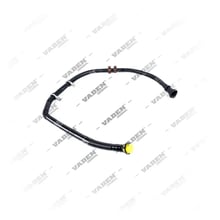
What Is an Oil Cooler Pipe?
The oil cooler pipe is the rigid metal connection line that carries pressurized oil between the engine oil cooler and the engine block, oil filter housing, or turbo oil line on heavy-duty commercial vehicles. In the field it is also referred to as the "oil cooler line" or "oil line pipe"; unlike flexible braided hoses, however, it is manufactured with a fixed geometry from a steel or aluminum body and is secured to the engine block with flange or fitting connections. Sitting in the Engine > Oil Cooler > Pipe chain, this component is the load-bearing element that connects the oil cooler to the engine with a high degree of sealing integrity. It is produced in different lengths and connection geometries depending on engine type for Mercedes-Benz, MAN, Scania, Volvo, DAF, Iveco, and Renault Trucks heavy trucks and buses. By carrying the uninterrupted flow of engine oil to and from the cooler unit, the oil cooler pipe directly contributes to keeping engine oil temperature under control.
Functions of the Oil Cooler Pipe
- Oil Transfer: Carries hot engine oil to the oil cooler and routes the cooled oil back to the engine block.
- Pressure Integrity: Its rigid structure maintains a constant flow cross-section without deforming under oil pump pressure.
- Sealing: O-rings and gasket surfaces at the flange or fitting ends prevent oil leaks.
- Vibration Resistance: Stays secure at connection points without loosening despite engine vibration.
- Thermal Balance: Prevents overheating by ensuring uninterrupted oil circulation between the cooler and the engine.
Oil Cooler Pipe Technical Specifications
Oil cooler pipes are typically manufactured from a steel, stainless steel, or cast aluminum body, with a flange that seats against the engine block, an O-ring groove, or a threaded fitting at the connection ends. Inner diameter and pipe length are determined by engine displacement and oil flow rate; an incorrectly sized pipe leads to insufficient cooling or excessive pressure loss. Pressure resistance is manufactured with a safety margin above operating pressure and remains dimensionally stable at high temperatures. Gasket surfaces on the connection flanges are precision-machined, since surface roughness directly determines sealing performance. For exact dimensions, torque values, and gasket type, consult the vehicle's current service manual, as pipe geometry can change with engine revisions.
Oil Cooler Pipe Types and Subgroups
- Supply (Feed) Pipe: Carries hot oil from the engine block to the oil cooler.
- Return Pipe: Routes cooled oil from the oil cooler back to the engine block.
- Flanged Connection Pipes: Secured to the engine block with a bolted flange and O-ring.
- Fitting-Connected Pipes: Connect to the oil filter housing or turbo line via threaded fitting ends.
- Steel-Bodied Pipes: Preferred in heavy-duty applications requiring high pressure and temperature resistance.
- Cast Aluminum Pipes: Used in lighter engine groups, with heat conduction also taken into account.
How to Choose the Right Oil Cooler Pipe?
Choosing the right oil cooler pipe starts with the vehicle's engine model and chassis number; even within the same engine family, pipe length and connection end can vary by revision. Making sure the connection type matches the existing oil cooler and engine block exactly eliminates the risk of leaks after installation. The table below summarizes the key criteria to consider during the selection process.
Oil Cooler Pipe Selection and Application Criteria| Criterion | Point to Consider |
|---|
| Engine Model and Application | Pipe geometry is specific to the engine family; must be confirmed with the chassis/engine number |
| Connection Type | Flanged, fitting, or threaded end; must exactly match the existing oil cooler and engine block |
| Body Material | Steel, stainless steel, or cast aluminum; corrosion resistance and temperature endurance |
| Sealing Element | O-ring or gasket groove size; must match the original specification |
| Inner Diameter / Flow Compatibility | Sized to the engine's oil flow rate, must not be restricted |
| Installation Torque | Must be tightened to the torque value in the manufacturer's service manual |
Oil Cooler Pipe Maintenance and Points to Watch
- Keep Connection Surfaces Clean: Dirt and old gasket residue on flange and fitting surfaces compromise sealing; they must be cleaned thoroughly before installation.
- Follow the Torque Value: Over-tightening can crack the flange, while under-tightening causes oil leaks; the value in the service manual should be used as the reference.
- Check for Vibration and Ovalization: If the pipe shows crushing, ovalization, or cracks, the part must be replaced — welding or reshaping should not be attempted.
- Renew the Gasket and O-ring After Every Removal: A used sealing element should never be reinstalled.
- Perform Periodic Leak Checks: If there is an oil stain or moisture under the engine, the pipe connections and gasket surfaces should be inspected promptly.
Common Failures and Solutions
- Oil Leak at the Connection Point: Caused by a worn O-ring or degraded gasket surface; the sealing element and, if necessary, the pipe should be replaced.
- Rising Engine Oil Temperature: Blockage or crushing inside the pipe can narrow the flow cross-section; the pipe should be inspected and replaced with a new one if needed.
- Cracking at the Flange Area: Occurs due to incorrect torque or vibration fatigue; the pipe must be replaced entirely and the installation torque verified.
- Loosening at Connection Bolts: Caused by insufficient tightening torque or an old, thinned gasket; the torque value should be reset according to the service manual.
- Corrosion and Perforation: Prolonged exposure to moisture and salty environments can cause rust on the steel body; a corroded pipe must be replaced immediately.
Why VADEN ORIGINAL?
- Manufactured to OE Dimensions: Oil cooler pipes are produced with an inner diameter, length, and connection end that match the original engine geometry exactly.
- Extensive OEM Coverage: A wide reference range is offered, suitable for Mercedes-Benz, MAN, Scania, Volvo, DAF, Iveco, and Renault Trucks engine groups.
- Durable Materials and Craftsmanship: A corrosion-resistant body and precision-machined gasket surfaces ensure a long service life.
- Easy and Reliable Installation: Manufactured to original dimensions, the pipes install directly without any additional machining.
- Exported to Over 100 Countries: Used with confidence in different fleets and climates under a globally tested quality standard.
Conclusion
Although it may look like a small connecting part, the oil cooler pipe is a critical component that determines the integrity and sealing of the engine's oil cooling circuit. A pipe selected in the correct size, material, and connection type keeps oil temperature under control and ensures long-term engine reliability. VADEN ORIGINAL oil cooler pipes offer a dependable solution for heavy-duty commercial vehicle fleet maintenance, backed by OE-dimension manufacturing and broad vehicle compatibility.
Frequently Asked Questions (FAQ)
What is the difference between an oil cooler pipe and an oil cooler hose?
An oil cooler pipe is a rigid metal connection line with a steel or aluminum body, manufactured in a fixed geometry and secured to the engine block with flange or fitting ends. An oil cooler hose, on the other hand, is used in short connections requiring vibration and movement compensation thanks to its flexible braided construction; the two parts are not interchangeable.
How can I tell if there is an oil leak from the oil cooler pipe?
An oil stain under the engine, moisture buildup around the flange or fitting connection, and a gradually dropping oil level are typical signs. In this case, the connection surfaces, O-ring, and gasket should be checked, and the pipe replaced if necessary.
Which dimensions should be verified when replacing an oil cooler pipe?
Pipe length, inner diameter, connection type (flange, fitting, or threaded end), and the sealing element size vary by engine model. To identify the correct part, the chassis or engine number and the vehicle's current service manual should be used as the reference.
How does an oil cooler pipe failure affect engine oil temperature?
Blockage, crushing inside the pipe, or a leak at the connection point prevents oil from reaching the cooler adequately, causing the engine oil temperature to rise. Over time, this can lead to overheating of internal engine components.
Which vehicles are VADEN ORIGINAL oil cooler pipes compatible with?
VADEN ORIGINAL oil cooler pipes are manufactured to fit various engine groups of Mercedes-Benz, MAN, Scania, Volvo, DAF, Iveco, and Renault Trucks heavy trucks and buses. Confirming compatibility with the engine model and chassis number before ordering is recommended.