What are the functions of the Engine Cover?
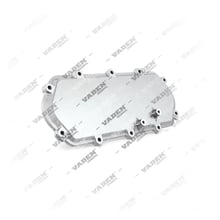
The main functions of the engine cover within the engine are as follows.
- Sealing: Together with the gasket underneath it, prevents oil and gas leakage and stops internal pressure from escaping.
- Protection: Protects the mechanism inside it (gears, chain, valves or oil separator elements) from dust, moisture and external impacts.
- Access point: Serves as a removable door that provides access to the relevant engine compartment during maintenance and repair.
- Structural support: In some applications it also serves as a mounting point for sensors, brackets or auxiliary equipment.
- Vibration damping: Working together with the engine body, it reduces the effect of external vibration on internal mechanisms.
What are the symptoms of an Engine Cover failure?
Problems originating from the engine cover generally appear as oil leakage and visible findings.
- Oil leakage: Oil traces seeping from the cover edges or gasket line, oil stains under the engine.
- Visible crack or deformation: Cracks on the cover surface, a broken corner, or enlarged bolt holes.
- Loose connection: Movement in the cover or a light rattling sound resulting from loosened bolts.
- Abnormal noise: Friction or knocking sound coming from the mechanism under the cover (especially on a timing gear cover).
- Excessive corrosion: Rusting and thinning of the cover surface due to prolonged moisture and salty environment exposure.
How is the Engine Cover checked?
Inspection should be done with the engine cold and, if possible, on a cleaned surface.
- Visual inspection: The cover surface, edges and bolt holes are examined for cracks, breaks and deformation.
- Leak tracking: After the cover is cleaned, the vehicle is run for a while and the gasket line is checked again.
- Bolt torque check: All fixing bolts are verified to be tightened to the manufacturer's torque value.
- Gasket condition: If the cover is removed, the gasket underneath is examined for hardening, tearing or crushing.
- Surface flatness: The mating surface of the cover against the engine body is checked for bending or warping.
What should be considered when replacing it?
Correct part selection and correct assembly sequence are decisive for sealing when replacing the engine cover.
- Correct compartment match: It must be precisely determined which engine compartment (top, side, front timing gear) the cover to be replaced belongs to.
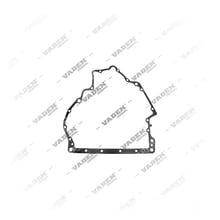
- Gasket renewal: The gasket must always be renewed together with the cover; the old gasket should never be reused.
- Surface cleanliness: Old gasket residue and oil traces on the engine body must be completely cleaned.
- Torque sequence: Bolts must be tightened gradually in the sequence and torque value specified by the manufacturer.
- Post-assembly test: The engine should be run briefly afterward and checked again for leaks.
How is the Engine Cover selected?
Selecting the right engine cover requires evaluating the engine compartment, material and gasket compatibility together.
Engine cover selection criteria| Criterion | Description |
|---|
| Engine compartment match | Correct application as top cover, side cover or timing gear cover |
| Material | Cast aluminum or sheet metal, strength suited to the engine type |
| Gasket dimensions | Exact match with the original gasket profile |
| Bolt hole count and layout | Complete match with the mounting points on the engine block |
| Surface finish quality | Smooth gasket seating surface for sealing |
Maintenance and service life
Since the engine cover has no moving parts, it has a long service life when correctly installed; the main factor limiting its life is the gasket underneath hardening over time or the bolts loosening. Periodic maintenance should include checking for oil leakage traces around the cover, bolt tightness, and surface corrosion. Renewing the gasket every time the cover is removed and reinstalled significantly reduces the risk of future leakage.
VADEN Engine Cover
VADEN manufactures engine covers suited to different compartments for heavy commercial vehicle engines, staying true to original dimensions and gasket profile. With the correct material and surface quality, it offers a reliable solution that preserves engine sealing over a long period.
Frequently Asked Questions (FAQ)
Should the gasket also be replaced when the engine cover is changed?
Yes, no matter how sound the cover looks, the gasket underneath must always be replaced with a new one at every removal and reinstallation; otherwise there is a risk of leakage.
Does a slight leak from the engine cover affect driving?
A small leak may not directly affect driving in the short term, but over time it leads to a drop in oil level and contamination around the engine, so early intervention is recommended.
Can a cover from a different engine model be fitted?
No, cover dimensions, bolt hole layout and gasket profile are specific to the engine model; fitting an incompatible cover leads to leakage and assembly errors.
In what order should engine cover bolts be tightened?
The sequence and torque value specified by the manufacturer should be followed; generally a gradual tightening method from the center outward is used, not full torque applied at once.
Does a small scratch on the cover surface require replacement?
Surface scratches that do not affect the gasket seating area generally do not cause a problem; however, a deep scratch or warping affecting the gasket seat calls for replacement.