What is the Engine Cylinder Head Cover Gasket?
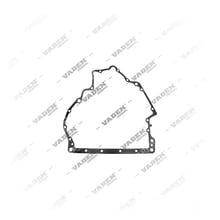
The Engine Cylinder Head Cover Gasket is a thin but high-strength sealing plate with cut-outs that individually surround the combustion chamber, oil gallery and coolant passages at the surface where the cover meets the block. Modern diesel engines typically use a multi-layer steel construction; the elastomer coating between the layers fills microscopic surface irregularities under the clamping force of the cover bolts to achieve a seal. On some engine types the cover gasket is a single piece, on others it is split into separate oil and coolant gaskets.
What are the functions of the Engine Cylinder Head Cover Gasket?
- Compression sealing: prevents pressure from the combustion chamber escaping through the cover surface.
- Oil-coolant separation: keeps the lubrication passages and coolant passages from mixing.
- Heat transfer balance: provides homogeneous contact between cover and block, reducing hot spots.
- Vibration damping: absorbs micro-movements that occur while the engine is running, protecting the mating surfaces from wear.
What are the symptoms of Engine Cylinder Head Cover Gasket failure?
The most obvious symptom is an oil stain seeping from the cover-to-block joint line, building up on the side surfaces of the engine block. If coolant is leaking into a passage, foaming may appear in the expansion tank, white smoke may come from the exhaust, or the engine oil may show signs of water/foam contamination. When compression is lost the engine runs unevenly at idle, power loss is felt, and ignition weakens in some cylinders. In advanced cases coolant can mix into the oil sump, turning the oil a brownish/dirty-white colour (a milkshake appearance) - this is a serious failure sign and the engine must be checked urgently.
How is the Engine Cylinder Head Cover Gasket checked?
Visual inspection involves cleaning the cover-to-block joint line and observing for leaks while the engine idles. A compression test measures the pressure difference between cylinders; an abnormally low value can point to a gasket leak. A cooling system pressure tester pressurises the system to locate the leak point. Finding water/glycol traces in an oil analysis is also treated as an indirect indicator. These tests should confirm the fault genuinely originates from the gasket before the cover is removed.
What should be considered during replacement?
The cover and block surfaces must be thoroughly cleaned, removing all old gasket residue and oil/water traces; if the surface has scratches or warping, a new gasket will leak too unless it is corrected first. The gasket must be fitted dry and in the correct orientation (with the TOP marking or arrow facing the correct direction relative to the engine). Cover bolts must be tightened in the sequence and staged torque values specified by the manufacturer (usually a crossing pattern); applying full torque in a single pass creates uneven pressure on the gasket and leads to premature failure. After assembly it is recommended to recheck bolt torque once the engine has been warmed up and cooled down.
How to choose the right Engine Cylinder Head Cover Gasket?
Gasket selection should be based on the engine code and cylinder head version; within the same engine family, gaskets can differ in layer count or hole positions. For high-performance or turbocharged engines, choosing a multi-layer steel (MLS) gasket over a composite one provides higher pressure and temperature resistance. VADEN cover gaskets are manufactured to exact OE dimensions and layer structure, guaranteeing a direct replacement fit.
Engine Cylinder Head Cover Gasket - general technical reference values| Parameter | Approximate range |
|---|
| Operating temperature | -30 degC ... +250 degC (combustion chamber zone) |
| Cover bolt tightening sequence | Centre to outside, crossing pattern |
| Torque application steps | 2-3 staged tightening passes recommended |
| Material type | Multi-layer steel (MLS) or composite |
| Reuse | Single-use, a removed gasket must be replaced |
The values in the table are general reference figures; for exact torque and tightening sequence the engine current OE service manual is authoritative.
Maintenance and service life
A correctly fitted and torqued cover gasket typically serves without issue until the next engine overhaul, often for hundreds of thousands of kilometres. Key factors that shorten its life include overheating, trapped air in the cooling system, loose or uneven bolt torque, and surface irregularity. Checking for leak traces around the cover during periodic maintenance is recommended for early detection before a major fault develops.
VADEN Engine Cylinder Head Cover Gasket
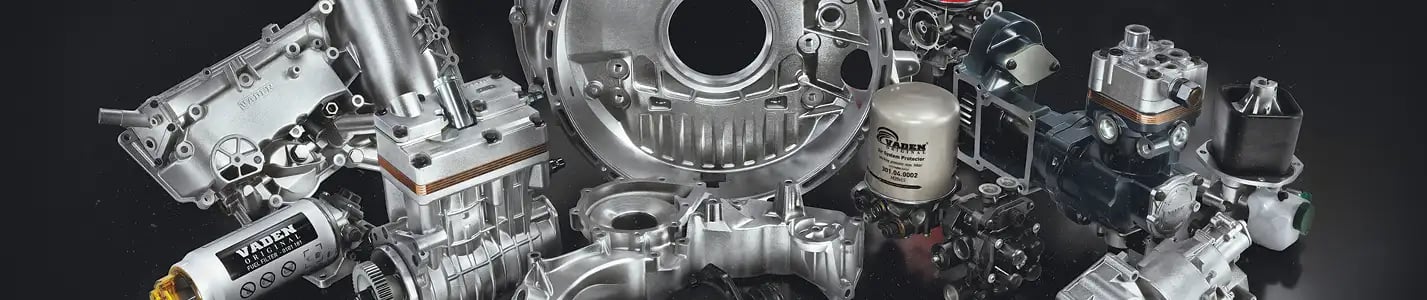
VADEN manufactures cylinder head cover gaskets to OE dimensions and layer structure for heavy-duty diesel engines, designed to provide reliable sealing under high temperature and pressure.
Frequently Asked Questions (FAQ)
Why does the engine cylinder head cover gasket need replacing
Over time it loses its clamping ability, hardens and develops micro-cracks, leading to oil or coolant leaks and loss of compression.
What happens if the cover gasket leaks
Oil or coolant leakage, white smoke from the exhaust, foaming in the engine oil, and power loss from lost compression can occur.
Can a removed gasket be reused
No, cover gaskets are single-use; the clamping property is permanently affected once the gasket is removed.
How should cover bolts be tightened
In the sequence specified by the manufacturer (usually centre to outside, crossing pattern) and with staged torque values, never full torque in one pass.
What does water mixing into the oil indicate
It usually indicates coolant is leaking into the oil system near the cover gasket or cylinder head area, and the engine should be checked urgently.
Related products — Engine: Cover (view all)