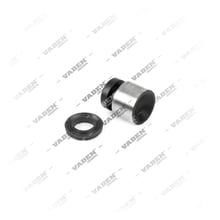
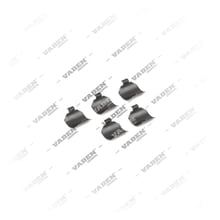
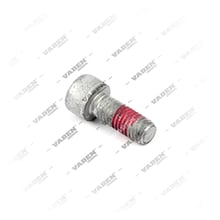
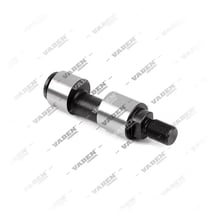
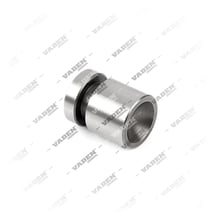
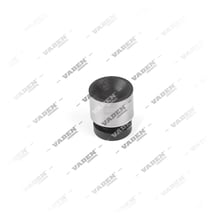
What Is a Caliper Adjuster Crank?
A Caliper Adjuster Crank is the metal arm inside a heavy commercial vehicle's disc brake caliper that transfers the rotational motion of the adjuster mechanism into the axial thrust that applies the brake pad. Sitting within the Brake Caliper > Caliper Mechanism chain, this component is often called the "adjuster arm," "caliper arm," or "mechanism lever" on the shop floor. It is the connecting link that carries motion from the adjuster spindle through to the pressure plate, keeping the adjustment system working correctly as the pad wears down. Without this arm, rotary motion cannot reach the pad, making it critical to transmitting brake application force. VADEN ORIGINAL Caliper Adjuster Crank arms are manufactured to match Knorr-Bremse and Wabco style calipers used on Mercedes-Benz, MAN, Scania, Volvo, DAF, and Iveco heavy-duty vehicles.
How Does a Caliper Adjuster Crank Work?
When the brake pedal is pressed, the drive mechanism inside the caliper engages and passes motion on to the adjuster spindle. The Caliper Adjuster Crank picks up the spindle's rotation and converts it into axial thrust applied to the pressure plate or bridge, pressing the pad evenly against the disc surface. As pad thickness decreases, clearance inside the mechanism increases; the crank compensates by picking up an additional rotation angle that keeps the pad-to-disc distance constant. The geometry of the crank arm sets the ratio between applied torque and the resulting axial force, so tolerances are specific to each caliper model. Wear on the arm leads to delayed brake response and uneven pad wear.
- Motion Transfer: Converts the adjuster spindle's rotation into axial thrust applied to the pressure plate.
- Clearance Compensation: Balances out the growing clearance inside the mechanism as the pad wears by adding rotation angle.
- Even Pressure Distribution: The arm's geometry ensures the pad contacts the disc surface with uniform pressure.
Caliper Adjuster Crank Technical Specifications
The Caliper Adjuster Crank is manufactured from high-strength forged or cast steel with a corrosion-resistant surface coating. The pivot connection is machined to tight tolerances so it does not develop play under repeated loading; otherwise clearance builds up inside the mechanism and adjustment accuracy is lost. Arm length and pivot angle vary by caliper model, so vehicle make, caliper type, and OEM reference number must be verified before ordering. Connecting bushings and pins are typically wear-resistant hardened steel, letting the arm move freely inside the caliper housing without play. Because torque and clearance values differ by manufacturer, the vehicle's current service manual should be treated as the authoritative source for exact figures.
Types and Subgroups of Caliper Adjuster Cranks
- Manually Adjusted Caliper Arm: A simpler design used where pad clearance is adjusted by hand at periodic intervals.
- Automatically Adjusted Caliper Arm: Built with an integrated adjustment mechanism that self-compensates as the pad wears.
- Single-Pivot Crank: A straightforward design with one connection point, preferred in light and medium-tonnage calipers.
- Dual-Arm (Roller Bearing) Crank: Built with bearing or bushing support to reduce friction in calipers operating under heavy load.
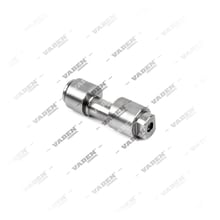
- Connecting Pin and Bushing Kit Crank: Supplied as a complete set that includes the arm itself along with the pin, bushing, and sealing elements.
- Sensor-Linked Crank: The version used in calipers with electronic warning systems, where the arm integrates with the pad wear sensor's trigger lever.
How to Choose the Right Caliper Adjuster Crank
Choosing the correct part starts with identifying the caliper brand (Knorr-Bremse, Wabco, etc.) and exact model code; arms that look identical can differ in pivot angle and length. Vehicle make, axle load, and caliper production year also affect compatibility. The table below summarizes the key criteria to check.
Caliper Adjuster Crank Selection Criteria| Criterion | Why It Matters |
|---|
| Caliper Brand and Model | Knorr-Bremse and Wabco arms differ in geometry and connection design |
| Arm Length and Pivot Angle | Incorrect geometry disrupts adjustment accuracy and brake response |
| Adjustment Mechanism Type | Manual and automatic adjustment systems require different arm designs |
| Connecting Pin/Bushing Fit | A loose fit causes vibration and premature wear |
| Axle Load and Vehicle Class | Heavier-tonnage vehicles require a higher-strength arm |
| OEM Reference Number | The most reliable way to confirm a correct match |
Caliper Adjuster Crank Maintenance and Key Precautions
- Pre-Installation Clearance Check: Always check the connection between the arm and the adjuster spindle for excessive play before fitting.
- Correct Lubrication: Use the lubricant recommended by the manufacturer at the pivot point and bushings, avoiding both over- and under-lubrication.
- Periodic Visual Inspection: During scheduled maintenance, check the arm surface for cracks, deformation, or excessive wear.
- Correct Tightening Torque: Tighten connecting pins and bolts to the torque value specified in the vehicle's service manual.
- Check Together with Pad Replacement: When replacing pads, test that the crank arm and adjustment mechanism move freely.
Common Failures and Solutions
- Delayed Brake Response: Caused by a worn or loose crank pin; replace the pin and bushing kit.
- Uneven Pad Wear: Distorted arm geometry or wear at the pivot point causes uneven pressure; inspect the crank arm and replace it if necessary.
- Adjustment Mechanism Locking Up: Insufficient lubrication or dirt buildup prevents the arm from moving freely; clean and re-lubricate, or replace the part if needed.
- Squeaking or Metallic Noise During Braking: Bushing wear at the connection point can be the source; replace the bushing and pin set.
- Pad Clearance Not Adjusting Automatically: An internal mechanism fault can occur in automatically adjusted arms; replace the complete crank and adjuster assembly.
Why Choose VADEN ORIGINAL?
- Manufactured to OE Dimensions: Arm geometry, pivot angle, and connection tolerances match original caliper specifications exactly.
- Broad OEM Coverage: Offers a product range that matches numerous reference numbers for Knorr-Bremse and Wabco caliper mechanisms.
- Durable Material and Workmanship: Hardened steel and corrosion-resistant coating deliver a long service life.
- Exported to More Than 100 Countries: Manufactured under quality control processes trusted by global fleet operators.
Conclusion
The Caliper Adjuster Crank is an unassuming but critical link within a disc brake caliper's adjustment mechanism; when it fails to transfer motion correctly, pad wear becomes uneven and brake response is delayed. Choosing the right brand, model, and size, combined with regular maintenance, directly affects both driving safety and maintenance costs. VADEN ORIGINAL Caliper Adjuster Crank parts, built to OE specifications, offer a dependable solution for heavy commercial vehicle fleets.
Frequently Asked Questions (FAQ)
What does a Caliper Adjuster Crank do?
A Caliper Adjuster Crank converts the rotation of the disc brake caliper's adjuster spindle into an axial thrust applied to the pad pressure plate. This keeps pad clearance consistent and ensures brake application force is transmitted evenly.
What happens when a Caliper Adjuster Crank fails?
When the arm wears or play develops at the connection point, brake response is delayed, pad wear becomes uneven, and squeaking noises can occur. If these symptoms appear, the arm and its connecting components should be inspected.
What is the difference between manually and automatically adjusted caliper arms?
On manually adjusted arms, pad clearance is set by hand at intervals, while automatically adjusted arms self-compensate internally as the pad wears. The two types are not interchangeable, so the correct type must match the caliper model.
What should be checked when replacing a Caliper Adjuster Crank?
Confirm the caliper brand, model code, arm length, and pivot angle, and tighten the connecting pin and bushings to the torque value specified in the vehicle's service manual. After installation, test that the mechanism moves freely.
Which vehicles is the VADEN ORIGINAL Caliper Adjuster Crank compatible with?
VADEN ORIGINAL arms are compatible with Knorr-Bremse and Wabco style disc brake calipers used on Mercedes-Benz, MAN, Scania, Volvo, DAF, and Iveco heavy-duty vehicles. It is recommended to confirm the caliper model code with technical support before ordering.
Related technical guide: Brake Caliper Mechanism: Camshaft, Bearings, and Return Spring