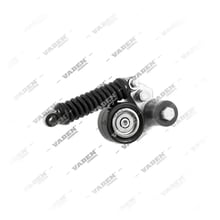
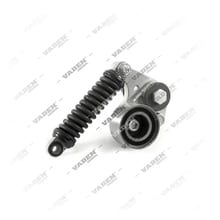
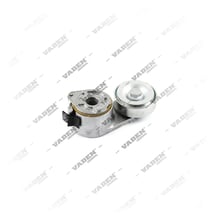
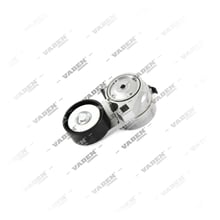
What Is a Fan Belt Tensioner?
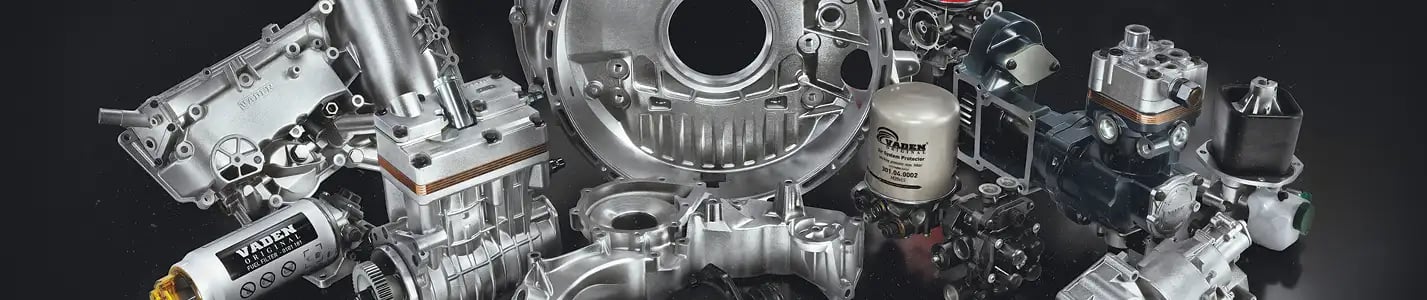
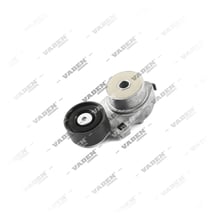
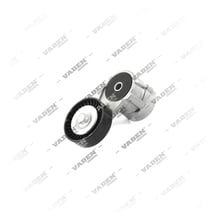
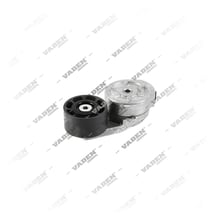
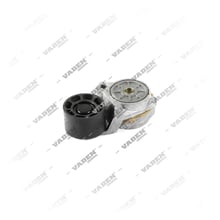
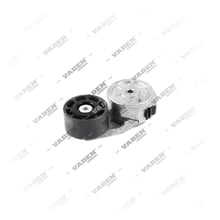
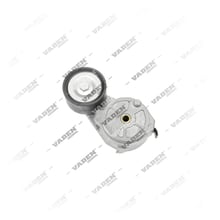
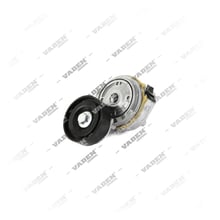
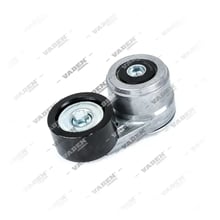
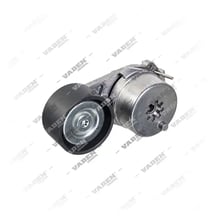
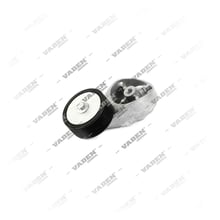
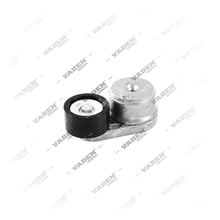
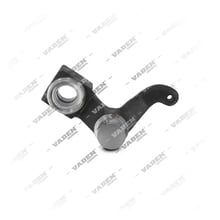
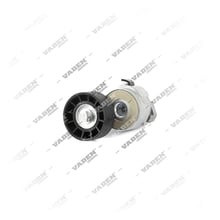
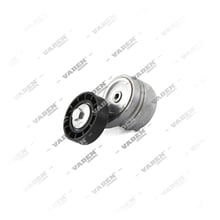
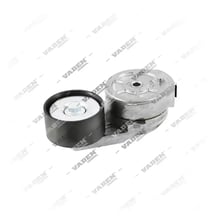
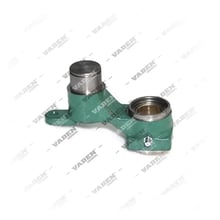
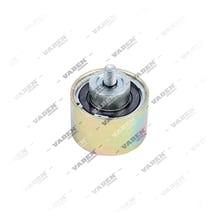
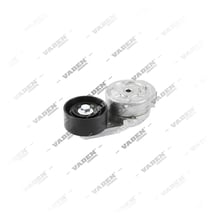
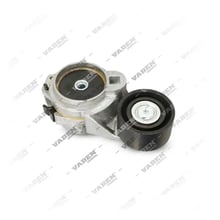
The fan belt tensioner is a mechanical component in the cooling system of heavy commercial vehicles that keeps the belt driving the fan and fan pulley at the correct tension. Mounted to the engine block or front cover, the unit consists of a spring-loaded arm with a bearing-mounted pulley at its tip, applying constant, balanced pressure to the belt. In the field it is also known as the fan tensioner bearing, tensioner arm, or belt tensioner pulley. Its place in the Cooling System and Fan chain shows that products in this category exist to keep engine cooling running without interruption.
How Does a Fan Belt Tensioner Work?
The unit sits on the slack side of the belt running from the crankshaft pulley to the fan pulley and presses inward on it with spring force. As engine speed changes and the belt stretches with heat, the resulting tension variations are absorbed by this spring motion. The belt then transmits torque without slipping, while not being overtightened to the point of straining the pulley bearings.
- Constant tension: The spring keeps the belt within the manufacturer's specified tension range throughout its service life.
- Vibration damping: The damping element absorbs belt oscillation from speed changes and prevents flutter.
- Stretch compensation: As the belt stretches with mileage, the arm angle changes and the resulting slack is taken up automatically.
- Load distribution: Balanced tension reduces side load on the fan pulley and water pump bearings.
- Cooling continuity: Because the belt does not slip, the fan turns at its designed speed and radiator airflow is maintained.
Fan Belt Tensioner Technical Specifications
Tensioner units are made from materials that withstand the high heat, constant vibration, and oil or coolant exposure found in the engine bay. The housing and arm are typically nodular cast iron, cast aluminum, or pressed steel, while the pulley is steel or reinforced polymer. Compatibility is set by pulley size, arm geometry, mounting hole, and belt profile.
- Material: Cast or pressed-steel housing, heat-treated spring, sealed ball bearing.
- Pulley size: Common outer diameter range for heavy-duty vehicles is roughly 60-110 mm; width varies with the number of belt ribs.
- Belt profile: Ribbed pulleys for multi-rib poly-V belts, flat-faced pulleys for classic V-belts.
- Operating temperature: Stable performance suited to engine bay conditions, roughly in the -40 °C to +150 °C range.
- Mounting and torque: Center bolt or flanged connection; tightening torque and spring preload vary by model — follow the manufacturer's current service manual.
Fan Belt Tensioner Types and Subgroups
- Spring-loaded automatic tensioner: The most common type, operating on a torsion spring and requiring no manual adjustment; standard on modern poly-V layouts.
- Hydraulically damped tensioner: Adds a damper element alongside the spring, suppressing belt flutter more effectively on high-torque engines.
- Manually adjusted tensioner: Tension is set by hand via an eccentric or screw adjustment; typically found on older V-belt engines.
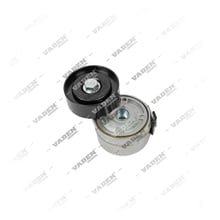
- Tensioner pulley: Standalone pulley fitted when the arm is sound but the bearing is noisy or has developed play.
- Idler pulley: Free-running pulleys that redirect the belt and increase its wrap angle around other pulleys.
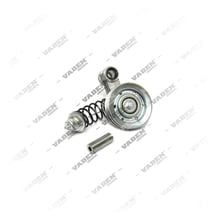
- Tensioner kits: Complete service kits bundling the arm, pulley, spring, bushing, and bolt.
How to Choose the Right Fan Belt Tensioner
The most reliable approach is to match the OE number stamped on the unit being removed. Even within the same engine family, air conditioning or an extra compressor can change the belt routing and tensioner geometry, so never decide on make and model alone. The table below summarizes the criteria that should be verified before ordering.
Criteria to verify when selecting a fan belt tensioner| Criterion | How to verify | If skipped |
|---|
| OE part number | Cross-reference the number stamped on the old housing | Wrong geometry |
| Engine code | Take it from the engine plate; the same series may use a different tensioner | Arm angle mismatch |
| Pulley size | Measure diameter and width with calipers and compare with the belt | Edge wear |
| Belt profile | Count the ribs; poly-V and V-belt pulleys are not the same | Slipping, squealing noise |
| Tensioner direction | Check the arm's working direction and stroke limit | Insufficient tension |
| Mounting type | Compare bolt size, dowel pin seat, and hole pattern | Unit fails to seat |
| Kit scope | Confirm the spring, bushing, and bolt are included in the package | Repeat failure in a short time |
Fan Belt Tensioner Maintenance and Points to Watch
The tensioner unit is a wear part, and its service life is closely tied to the belt's. For this reason, checking the tensioner whenever the belt is replaced is standard practice. Small installation mistakes are the most common reason a new part fails early.
- Assess it together with the belt: When replacing the belt, check the arm's freedom of movement and listen for noise from the pulley bearing.
- Verify pulley alignment: The crankshaft, fan, and idler pulleys must sit in the same plane; misalignment will also wear out a new tensioner quickly.
- Tighten to the correct torque: Tighten the center bolt to the manufacturer's specified value with a torque wrench; overtightening locks the arm.
- Eliminate leaks: Oil contamination on the pulley surface causes slipping; replacing the part without finding the leak source is not a permanent fix.
- Do not lubricate the pulley: The bearings are packed with grease for life; lubricating from the outside damages the seal and dilutes the grease.
Common Failures and Solutions
- Squealing on cold start: Tension has dropped or the spring has fatigued; check the stroke and, if necessary, replace the unit together with the belt.
- Constant humming or metallic rattling: The pulley bearing is worn; with the belt removed, turn the pulley by hand and check for play and roughness.
- One-sided belt edge wear: Pulley alignment is off or the arm bushing has developed play; check alignment and replace the bushed set.
- Engine overheating quickly: The belt may be slipping and fan speed dropping; check the tension and look for oil contamination on the pulley surface.
- Arm not moving at all: The spring has broken or the joint has seized; the unit should be replaced complete rather than repaired.
Why VADEN ORIGINAL?
VADEN manufactures fan belt tensioner products to OE dimensions, designed with reference to the original part's geometry and spring characteristics, so no additional adjustment is required after installation.
- Built to OE dimensions: Arm length, pulley diameter, mounting hole, and spring preload match the original unit.
- Broad OEM matching: Cross-referenced with tensioner part numbers used on Mercedes-Benz, MAN, Scania, Volvo, DAF, Iveco, Renault Trucks, BMC, and Ford heavy vehicles.
- Durable bearing and seal: Sealed bearings hold up reliably in dusty, muddy job-site conditions.
- Comprehensive range: Complete tensioner units, standalone pulleys, idler pulleys, and service kits are all in a single category.
- Exported to over 100 countries: Field-proven performance across a wide range of climates and roads.
Conclusion
Despite its small size, the fan belt tensioner directly determines whether engine cooling stays continuous. A unit that has lost tension first causes noise and belt wear, then a drop in fan speed. For the right product, start with the OE number and follow the manufacturer's torque values.
Frequently Asked Questions (FAQ)
What does a fan belt tensioner do?
The fan belt tensioner applies constant pressure to the belt driving the fan and fan pulley, allowing the belt to transmit torque without slipping. It automatically takes up the slack that develops as the belt stretches with heat and mileage. This keeps the fan turning at its designed speed and ensures engine cooling is never interrupted.
How can you tell a fan belt tensioner has failed?
The clearest signs are squealing on cold start, constant humming or metallic rattling, visible belt flutter, and one-sided wear on the belt edge. If the pulley shows play or turns roughly when spun by hand with the belt removed, that indicates bearing wear. An arm that does not move at all points to a broken spring.
Should the fan belt tensioner be replaced together with the belt?
Since the tensioner unit and the belt wear at a similar rate, service practice favors renewing both together. Running a new belt against a fatigued spring lowers tension and causes the new belt to wear out early. If the arm and spring are still sound, replacing only the pulley is also an option.
How do I choose the right fan belt tensioner?
The most reliable method is to cross-reference the OE part number stamped on the unit being removed. You should also verify the engine code, pulley diameter and width, number of belt ribs, tensioner direction, and mounting type. The presence of air conditioning or an additional compressor on the same model series can change the tensioner geometry.
Does the fan belt tensioner pulley need lubrication?
No. The bearings inside the tensioner pulley are packed with grease for life and sealed on both sides; applying oil or grease from the outside damages the seal and dilutes the existing grease. If oil or coolant has gotten onto the pulley surface, the source of the leak should be fixed first and the surface cleaned.
Related technical guide: Belt Tensioner: Failure, Replacement & Maintenance Guide
Related technical guide: Fan Belt Tensioner: Failure, Replacement & Maintenance