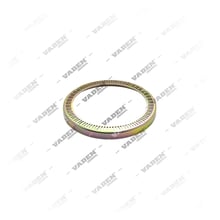
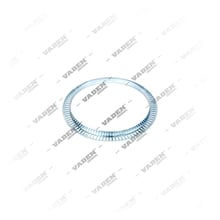
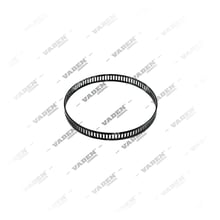
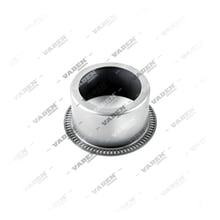
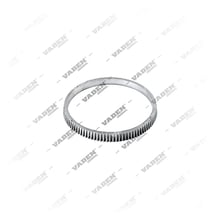
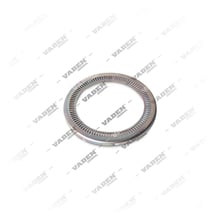
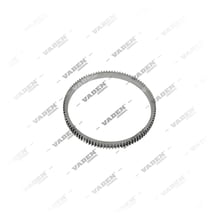
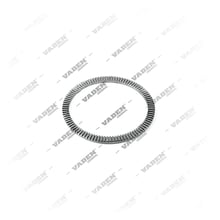
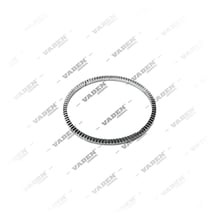
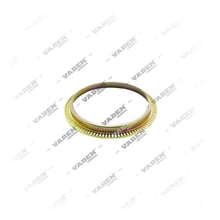
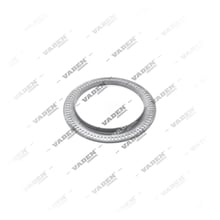
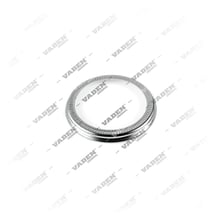
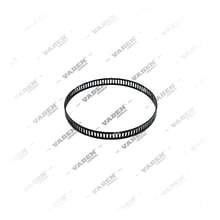
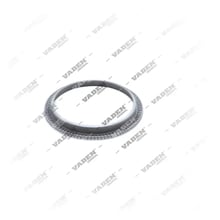
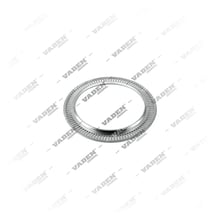
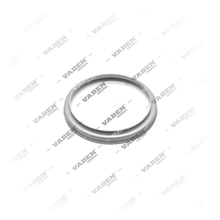
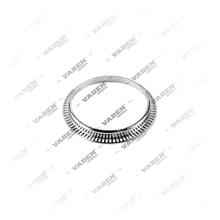
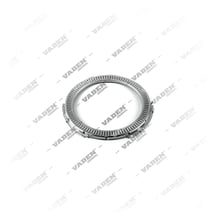
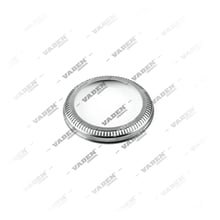
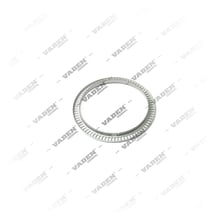
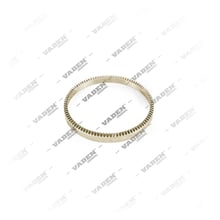
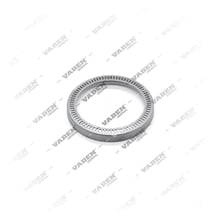
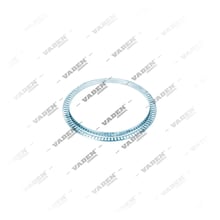
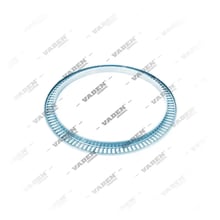
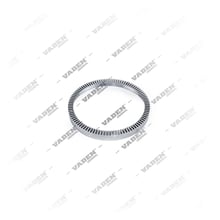
What Is an ABS Sensor Clip?
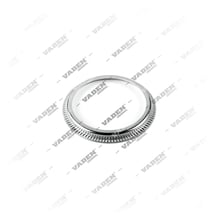
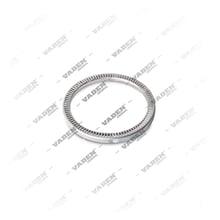
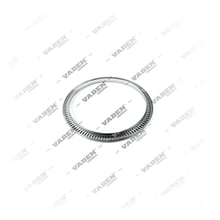
The ABS sensor clip is the spring-loaded metal retaining bushing that holds the ABS wheel speed sensor in its bore on the hub of a heavy commercial vehicle's braking system. In the field it also goes by names such as ABS sensor retainer, sensor bore bushing, or sensor sleeve. It is typically formed from stainless steel, and the ribbed profile on its inner surface grips the sensor body with continuous spring pressure. It carries a task every bit as critical as the sensor itself; when the clip fails to do its job, even a brand-new sensor cannot produce an accurate signal.
Trucks, tractor units, buses, and trailers all carry one ABS sensor — and one matching sensor clip — at every wheel station. Seated in the axle flange or the brake shoe carrier plate, this retainer keeps the air gap between the sensor tip and the tone ring constant despite vibration and brake dust. For this reason it plays an invisible but decisive role in the correct operation of ABS and EBS systems.
How Does an ABS Sensor Clip Work?
The sensor slides into the clip, and the clip's spring-loaded segments apply radial pressure to the sensor body. This pressure holds the sensor in place both axially and angularly. Road and braking shocks constantly push the sensor toward the bottom of its bore, and the friction force generated by the clip prevents it from creeping back out; as a result, the air gap stays within its specified narrow band.
- Radial grip: The ribbed spring segments clamp around the sensor body, preventing both axial slip and rotation.
- Air gap retention: The distance between the sensor tip and the tone ring stays constant, so signal amplitude does not drop.
- Vibration damping: The spring action reduces how much vibration is transmitted directly to the sensor body.
- Corrosion barrier: The stainless material delays rust from locking the sensor into the hub bore.
- Serviceable removal: It allows the sensor to be withdrawn without damage.
ABS Sensor Clip Technical Specifications
Sensor clips are manufactured to match standard sensor diameters. On heavy commercial vehicles, the most common ABS sensor body diameters fall in the 16 mm and 20 mm classes; the clip's inner dimensions are sized accordingly, while its length is split into short and long variants depending on bore depth. For exact dimensions and tolerances, the vehicle manufacturer's current service manual is the authoritative source — comparing against the removed part is far safer than guessing the size.
Stainless steel alloys are the preferred material, since the part is exposed to both road salt and brake heat. Service life hinges on the spring characteristic holding up under thermal cycling; low-quality clips loosen quickly and let the sensor creep back out. VADEN ORIGINAL products are classified for compatibility with ABS arrangements built on Wabco and Knorr-Bremse architecture.
ABS Sensor Clip Types and Subgroups
- 16 mm sensor clip: The narrower-diameter type used on medium-duty vehicles and some trailer axles.
- 20 mm sensor clip: The most common size on heavy truck, tractor, and bus axles; it delivers higher clamping force.
- Short-body type: Used with shallow hub bores, allowing the sensor to seat fully at the bottom of the bore.
- Long-body type: Supports the sensor body over a longer surface on deep-bore disc brake axles.
- Tapered-entry type: Eases the sensor's entry into the bore and prevents the segments from folding over.
- Service kits: Bundle the sensor, the clip, and mounting grease together.
How to Choose the Right ABS Sensor Clip
The first step in selection is the OE part number. If the number is legible, cross-reference matching should be used; if it isn't, work from the sensor diameter, bore depth, and axle type instead. Because even within the same vehicle model different clips can be fitted depending on the axle manufacturer, basing the choice on vehicle model alone is a mistake.
ABS Sensor Clip Selection and Compatibility Criteria| Criterion | How to Determine It | What to Watch For |
|---|
| Sensor body diameter | Measure the sensor; typically in the 16 mm or 20 mm class | A clip of the wrong diameter either won't grip or won't fit the bore |
| Bore depth | Measure the recess in the hub or carrier plate | A short type cannot support the sensor in a deep bore |
| Axle and brake type | Drum or disc brake, axle manufacturer information | Front and rear axles may use different types |
| OE reference | OE number of the removed part or the sensor | The most reliable method; eliminates guesswork |
| Material | Stainless steel alloy is preferred | A corroded clip locks up inside the bore |
| Brand application | Mercedes-Benz, MAN, Scania, Volvo, DAF, Iveco, Renault Trucks, BMC | Final confirmation should be done with the OE number |
ABS Sensor Clip Maintenance and Precautions
The sensor clip is not a maintenance item — it is a replacement part. The most common mistake seen in the field is leaving the old clip in the bore when the ABS sensor is replaced. Because a used clip has permanently lost part of its spring force, the new sensor creeps back out within a short time and the fault returns.
- Clean the bore: Once the old clip is removed, the bore must be cleared of rust and brake dust.
- Use the correct grease: A high-temperature, non-petroleum mounting grease delays seizing in the bore.
- Drive the clip in straight: It must be pushed in perpendicular to the axis; a clip inserted at an angle has its segments fold over and lose their clamping force.
- Push the sensor fully home: During the first few wheel rotations, the tone ring sets the sensor to its own air gap.
- Secure the cable: A cable not fastened with the original clips gets pulled out of its bore by suspension movement.
- Test after replacement: Wheel speed signals should be compared using diagnostic equipment.
Common Faults and Their Solutions
- ABS warning lamp on, no signal from one wheel: The sensor has crept back; both the sensor and the clip need to be renewed together.
- Intermittent signal at low speed: The air gap has widened; clean the bore and fit a new clip.
- Sensor won't come out of the bore: Corrosion has locked the clip and sensor into the bore. Forcing it will break the sensor body; use a proper puller tool.
- ABS engages too early under braking: A drop in signal amplitude can be misread as the wheel locking up; check the sensor's position.
- New sensor fails again quickly: The classic cause is leaving the old clip in place.
- EBS warning on a trailer: Clip corrosion progresses faster on trailer axles; the bore should be checked periodically.
Why VADEN ORIGINAL?
VADEN ORIGINAL ABS sensor clips are manufactured to OE dimensions and spring characteristics; inner-diameter tolerance and segment geometry are controlled to match the original part.
- Broad OEM coverage: A reference structure that can be cross-matched by OE number for common vehicle and axle applications.
- Dimensional consistency: Inner diameter and length tolerances are monitored, reducing the risk of segment fold-over during installation.
- Brake system integrity: Single-source access to ABS sensors, sensor clips, and other brake components.
- Exported to 100+ countries: A product range proven in fleets operating across a wide range of climates and road conditions.
Conclusion
The ABS sensor clip is a low-cost part with a decisive effect on the outcome. By holding the sensor in the correct position, it preserves the air gap and keeps ABS and EBS systems working reliably. Renewing the clip with every sensor replacement is the simplest way to prevent recurring ABS faults. For exact dimensions and tolerances, the vehicle manufacturer's current service manual remains the authoritative source.
Frequently Asked Questions (FAQ)
What does an ABS sensor clip do?
The ABS sensor clip is the spring-loaded metal retainer that holds the wheel speed sensor firmly in its bore on the hub. It keeps the air gap between the sensor tip and the tone ring constant. When that gap is disturbed, the sensor can no longer produce an accurate signal and the ABS warning lamp comes on.
Should the sensor clip be replaced along with the ABS sensor?
Yes, the clip should be renewed with every sensor replacement. Because a used clip has permanently lost part of its spring force, the new sensor creeps back out of the bore within a short time. This is the most common cause of recurring ABS faults.
What sizes does the ABS sensor clip come in?
The most common sensor body diameters on heavy commercial vehicles are in the 16 mm and 20 mm classes, and the clip's inner dimensions match accordingly. Length is split into short and long types depending on bore depth. For exact dimensions, the vehicle manufacturer's current service manual is the authoritative source.
What should be done if the sensor won't come out of its bore?
This is usually caused by corrosion locking the clip and sensor into the bore. Pulling it out by force will break the sensor body; a proper sensor puller tool should be used instead. Once the sensor is removed, the bore should be cleaned and a new clip must always be fitted.
Should grease be used when installing the sensor clip?
Yes, a high-temperature, non-petroleum mounting grease is recommended. Grease delays the clip and sensor from seizing with rust in the bore and makes removal easier at the next service. Care should be taken not to apply excess grease to the sensor tip.
Related technical guide: ABS Wheel Speed Sensor & ECU: Faults, Replacement & Care