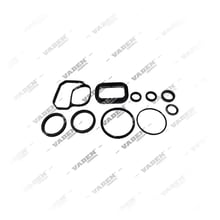
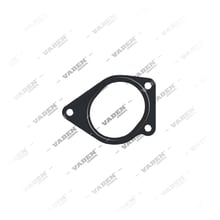
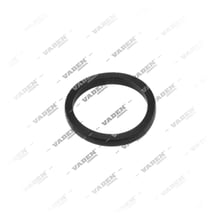
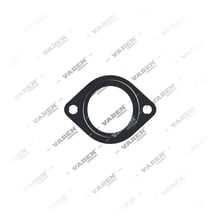
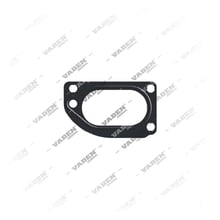
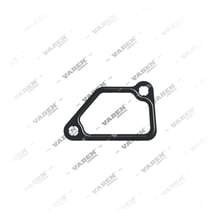
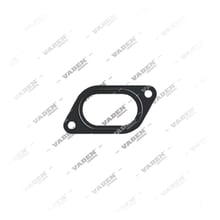
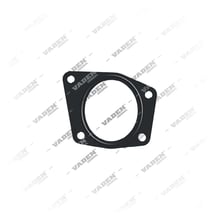
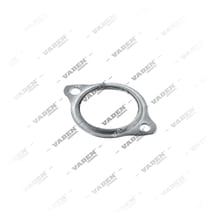
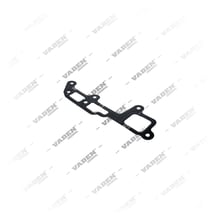
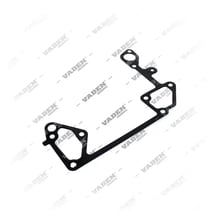
What are the functions of the water pump (coolant pump) gasket?
Although it may look like a simple interface part, the water pump (coolant pump) gasket performs several functions at once that matter for the engine's cooling performance and safety.
- Sealing: Fills the surface roughness between the pump housing and the engine block to prevent coolant from leaking out.
- Pressure resistance: Provides sealing capable of withstanding the flow pressure generated by the coolant pump.
- Temperature tolerance: Maintains its seal despite expansion and contraction at engine operating temperature.
- Channel routing: On some designs the gasket itself has an internal profile that directs coolant through the correct passage.
- Vibration damping: Absorbs micro-movement between the pump and the block, reducing wear on the mating surfaces.
What are the symptoms of a faulty water pump (coolant pump) gasket?
A fault in the water pump (coolant pump) gasket can cause coolant loss and, consequently, engine overheating, so early detection is important.
- Coolant leakage: Dripping or traces of green/orange fluid around the pump housing.
- Falling fluid level: Coolant level in the expansion tank keeps dropping without an obvious cause.
- Rising engine temperature: As the amount of fluid in the system decreases due to leakage, a temperature warning appears on the dash.
- Steam or odor: Coolant dripping onto a hot engine leaves a burnt smell and visible evaporation.
- Staining on belts: Fluid splashing near the pump onto nearby belts can cause squealing or premature belt wear.
How is the water pump (coolant pump) gasket inspected?
Inspection starts with a visual check while the engine is cold and is completed with a pressure test if needed.
- Visual inspection: Check around the pump housing for dried or fresh fluid traces and rust staining.
- Pressure test: Test the cooling system with a pressure tester to confirm whether the gasket is leaking.
- Bolt torque: Check whether the bolts securing the pump to the block are loose; a loose bolt is one of the most common causes of leakage.
- Surface condition: If the pump is removed, check the gasket seat surface for scratches or corrosion.
- Fluid level tracking: Monitor the expansion tank level over a period to confirm whether the leak is ongoing.
What should be considered during replacement?
The water pump (coolant pump) gasket is usually replaced together with the pump itself, and correct installation matters for the long-term reliability of the cooling system.
- Surface cleanliness: Fully clean old gasket residue from the engine block and pump surfaces without scratching them.
- Correct gasket type: Choose the gasket type — paper, rubber-coated metal, or silicone — matching the vehicle's OE design; mixing types causes leakage.
- Dry fit vs. sealant: Some OE designs do not require additional sealant; unnecessary sealant use can block the passages.
- Torque sequence: Tighten bolts in a crossing pattern, in stages, to the value specified by the manufacturer.
- Filling and bleeding: After installation, fill the system with the correct coolant and purge trapped air pockets.
How to choose the right water pump (coolant pump) gasket?
Correct selection depends on engine type and pump version; choosing by OE part number rather than brand reduces the risk of mismatch.
Water pump (coolant pump) gasket selection criteria| Criterion | Description |
|---|
| OE reference number | Use the number matching exactly the engine type and pump version |
| Material | Paper-fiber, rubber-coated metal, or silicone, matching the OE design |
| Thickness | Thickness tolerance matching the gap between pump and block |
| Channel profile | Compatibility of coolant flow ports with the pump housing |
| Additional sealant requirement | OE design difference between sealant-required and dry-fit types |
Maintenance and service life
The water pump (coolant pump) gasket by itself is not a part that requires periodic replacement; however, it must always be replaced with a new one when the pump is replaced, the coolant is changed, or a leak is detected. Running the cooling system with correctly concentrated, clean coolant extends the gasket's life. Always follow the coolant replacement intervals and gasket type information in the vehicle's current OE service manual.
VADEN water pump (coolant pump) gasket
VADEN offers OE-referenced water pump (coolant pump) gaskets for the heavy commercial vehicle cooling system as stocked spare parts. Products are matched by OEM number to engine type and pump version, allowing technical workshops to identify the correct part quickly.
Frequently Asked Questions (FAQ)
Should the water pump (coolant pump) gasket be replaced at every coolant change?
As a general rule it does not need to be replaced unless the gasket is disturbed; however, a new gasket must always be used whenever the pump is removed or a leak is detected.
How quickly can an engine overheat if the water pump gasket leaks?
It depends on the leak rate and driving conditions; with a significant leak the temperature gauge can rise within minutes, so the vehicle should be stopped as soon as a leak is noticed.
Can a silicone gasket be used instead of a paper gasket?
Only if the vehicle's OE design allows both types; otherwise differences in thickness and sealing behavior create a leak risk, so selection should follow the OE part number.
Is additional sealant needed when replacing the gasket?
It depends on the OE design; some gaskets are suited to dry installation while others require a thin layer of sealant, so follow the manufacturer's instructions.
Is the VADEN water pump (coolant pump) gasket a direct fit for the original part?
VADEN products are matched by OE reference number; when the correct OEM number is selected, thickness, channel profile, and dimensions match the original.
Related technical guide: Truck Water Pump Repair: Housing, Gasket and Water Pipe