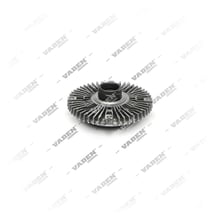
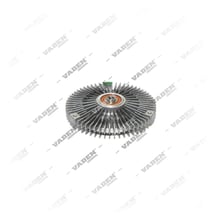
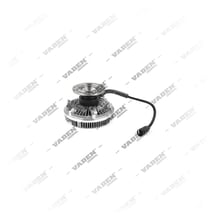
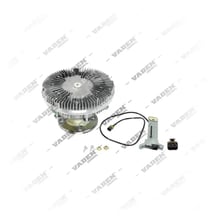
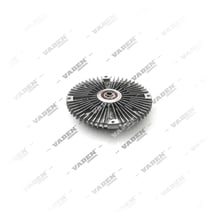
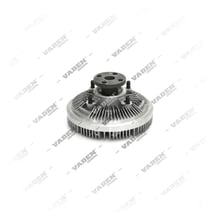
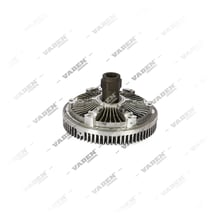
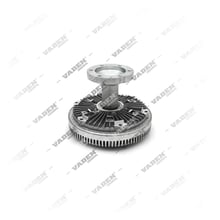
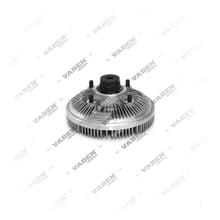
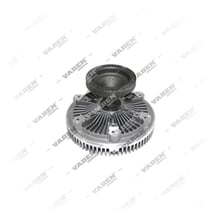
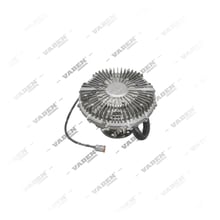
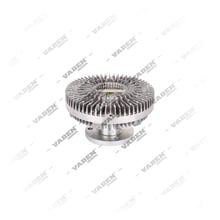
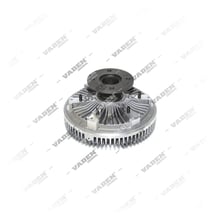
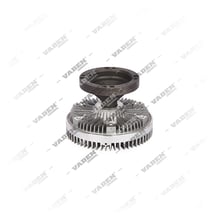
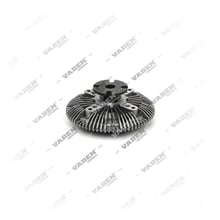
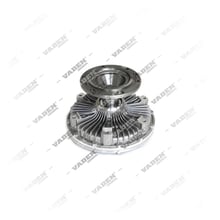
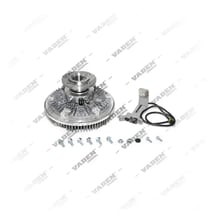
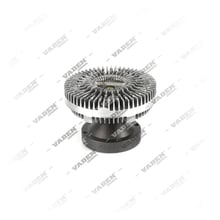
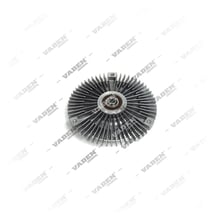
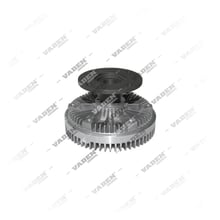
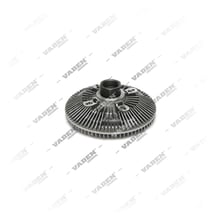
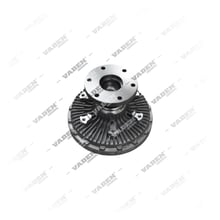
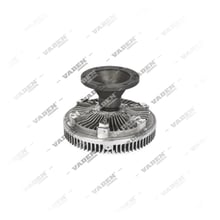
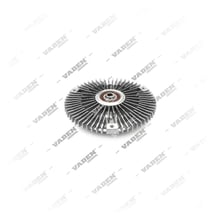
What is a fan viscous hub?
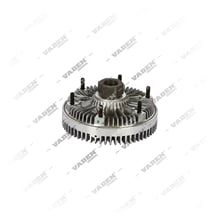
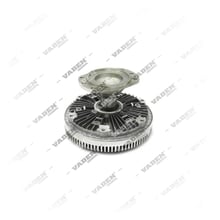
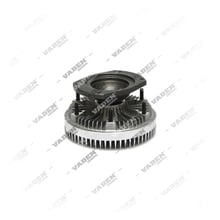
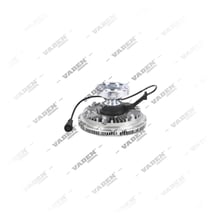
Its structure includes a drive plate, a housing-cover assembly, and a bimetal spiral on the front face. Inside the housing there is a working chamber and a reserve chamber. The bimetal spiral senses hot air and rotates the valve pin; when the valve opens, silicone oil fills the working chamber, slip decreases, and the fan speeds up. As the air cools, the pump plate pushes the oil back. In electronically controlled types, instead of a bimetal, an electromagnet driven by a PWM signal from the engine control unit performs the job.
What are the functions of the fan viscous hub?
The fan viscous hub does not just turn the fan; it is a control element that directly affects the engine's thermal balance and fuel consumption.
- Variable fan speed: Adjusts fan speed steplessly according to cooling need, preventing unnecessary full speed.
- Power and fuel savings: The coupling unloading at idle and low load reduces the power the fan draws from the engine.
- Fast warm-up: Disengages the fan on cold start, helping the engine reach operating temperature quickly.
- Shock damping: Transmission through silicone oil softens sudden speed changes, preserving blade and bearing life.
- Additional heat load support: Allows the fan to engage when the A/C condenser and retarder are active; also reduces continuous high-speed roar.
What are the symptoms of a fan viscous hub failure?
The viscous coupling fails in two directions: staying continuously disengaged (leaking oil) or staying continuously locked (valve stuck).
- Overheating: Gradual rise in water temperature during ramp climbing, loaded running, or with A/C on.
- Idle overheating: Heating while waiting in traffic and returning to normal upon driving shows the fan cannot deliver air.
- Continuous roar, increased fuel consumption: The fan spinning loudly even on a cold engine; a fan stuck locked draws power from the engine continuously.
- Silicone oil leakage: Oily dust buildup around the housing/cover gasket or on the inner surface of the blade.
- Wobble and vibration: The fan striking the shroud due to bearing play, contact marks on blade tips.
- Bimetal damage and fault code: Breaking of the front spiral; a fault code related to the fan control circuit on electronic types.
How is the fan viscous hub checked?
The check begins with a cold engine. The ignition should be off while working in the fan area; electronically controlled fans may still spin briefly with the engine off.
- Cold resistance test: The fan is turned by hand. Slight resistance is normal; no resistance at all or complete lock is suspicious.
- Warm-up behavior: The engine is brought to operating temperature; as air temperature in front of the radiator rises, the fan sound is expected to noticeably increase.
- Sealing: Silicone oil traces are looked for at the housing, cover, and shaft exit. Oil loss is an irreversible failure.
- Bearing play: The blade is held at the 12 and 6 positions and axial and radial play is probed; if noticeable wobble is present, the unit should be replaced.
- Electrical control: On PWM-controlled types, supply, signal, and ground are measured, and an actuator test is run from the diagnostic tool.
- Peripheral system elements: Core blockage, missing shroud, thermostat, and belt tension should be confirmed before blaming the coupling.
What should be watched for during replacement?
Replacement is not mechanically difficult, but installation errors quickly finish off the new unit. The most commonly overlooked headings in service practice are:
- Thread direction: In some applications, the hub nut has a reverse (left-hand) thread. The thread direction must be confirmed before forcing it.
- Blade check: The fan blade is inspected for cracks, broken tips, and balance; a damaged blade quickly finishes off the new hub's bearing.
- Clean seating surface: The pulley flange is cleared of rust, old gasket residue, and grease; if a spacer washer was used, the same one should be installed.
- Staged tightening: Bolts are tightened opposite and in stages with a torque wrench; tightening in one pass with an air gun stresses the housing.
- Do not touch the bimetal: The spiral on the front face must not be struck or used as a lever.
- Storage position: Viscous couplings are stored upright; a unit left lying down for a long time may behave temporarily locked on first start.
- Root cause: If the cause of overheating is the thermostat, blocked core, or water pump, a new hub will not solve the problem.
How is the fan viscous hub selected?
What is decisive in selection is not the vehicle model but the engine type and fan drive arrangement; even the same tractor's different engine options can have different dimensions. Select by the removed unit's OE number and dimensions, not by brand name. Units that look the same in Mercedes-Benz, MAN, DAF, Scania, Volvo, Iveco, and Renault applications may have different speed characteristics; the vehicle's current OE service manual is authoritative for final verification.
Fan viscous hub selection and inspection points| Inspection point | What is checked | General assessment |
|---|
| OE reference number | Number on the unit housing | Primary matching criterion; if unreadable, confirm from chassis number |
| Connection type | Flange bolted, center nut, or threaded shaft | The part will not seat if the type does not match |
| Bolt hole pattern | Hole count and hole circle diameter | Must exactly overlap with the fan blade |
| Thread direction | Right or left hand | Application-specific; requires a separate wrench for disassembly and installation |
| Total height | Between flange and blade seating surface | Determines the fan's axial position within the shroud |
| Control type | Bimetal thermostatic or electronic PWM | On electronic type, socket and pin layout must also be compatible |
| Speed characteristic | Coupling engagement start temperature and idle speed | Different characteristics may exist at the same size; OE data is authoritative |
| Tightening torque | Bolt or center nut | With a torque wrench at manufacturer's value; range varies by application |
Maintenance and service life
The fan viscous hub is a sealed unit; its silicone oil is not renewed, its bearing is not greased. Therefore maintenance relies on preserving the conditions around the unit. Keeping the cores clean, having shroud panels fully installed, and having sound belt and tensioner elements directly extend the coupling's life. On a vehicle with a blocked core, the coupling is forced to work at full speed constantly and fatigues prematurely.
In periodic maintenance, the fan's manual rotation resistance, blade cracking, oil traces around the hub, and bearing play should be checked visually. In dusty environments the inspection interval should be shortened; life varies by usage profile and is shorter in vehicles with heavy urban stop-start use and heavy load hauling. After replacement, with the vehicle at loaded conditions and warmed up, the fan's engagement and disengagement should be verified once more.
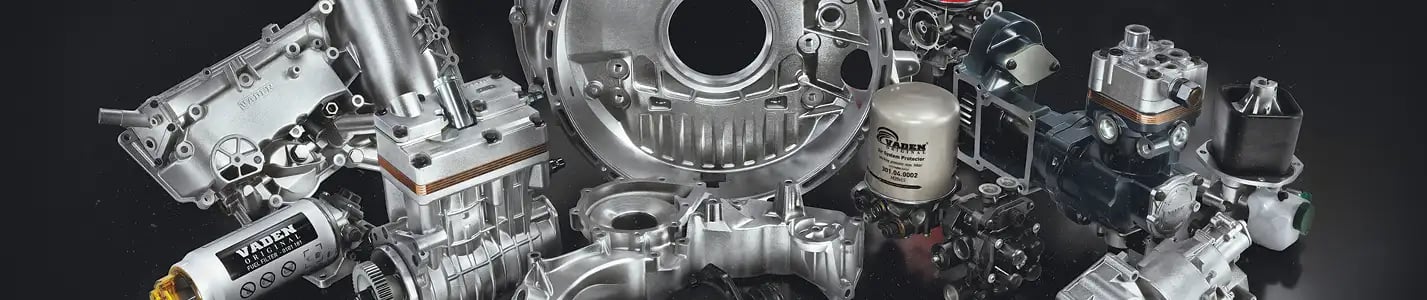
VADEN fan viscous hub
The VADEN fan viscous hub product group offers options in different connection and control types for heavy commercial vehicle applications; codes 529.01.0084, 529.02.0057, and 529.03.0060 are examples in this group. To reach the correct part, it is recommended to search by the removed unit's OE number and confirm dimensional compatibility before installation. The vehicle's current OE service manual should be the basis for the final suitability decision.
Frequently Asked Questions (FAQ)
Is the viscous hub the same as the fan viscous clutch?
Yes, it is the same part with different names. In the field it is commonly called viscous hub or fan viscous; its technical equivalent is the viscous fan clutch. It contains not mercury but high-viscosity silicone oil, and changes fan speed according to the temperature of the air passing through the radiator.
Does the vehicle overheat when the fan viscous hub stays disengaged?
Yes. When the coupling loses its silicone oil, the fan cannot reach the required speed and water temperature rises gradually, especially during ramp climbing, loaded running, or with A/C on. In vehicles that heat up at idle and return to normal upon driving, it is one of the first parts to be checked; however, the thermostat, blocked core, and water pump should also be confirmed.
Can the fan viscous hub be repaired, or does it need complete replacement?
The unit is manufactured sealed; its silicone oil is not renewed, its bearing is not greased. A hub that leaks oil, has a stuck valve, or has bearing play should be replaced completely. Checking the fan blade for cracks and balance during replacement prevents the new unit from finishing prematurely.
How do I choose the correct fan viscous hub?
Selection is made not by vehicle model but by engine type and fan drive arrangement. The OE number on the removed unit is read; then connection type, bolt hole pattern, thread direction, total height, and control type (bimetal or electronic PWM) are confirmed. The OE number and dimensions, not the brand name, should be the basis, and final confirmation should be made from the vehicle's current OE service manual.
Why does a newly installed fan viscous hub behave as if locked on first start?
Viscous couplings should be stored in an upright position. In a unit left lying down for a long time, the silicone oil can migrate to the working chamber and the fan may spin at full speed on first start. Behavior returns to normal after a short warm-up-cool-down cycle; if it continues, the valve and bimetal should be checked.
Related technical guide: Viscous Fan Clutch: Fault, Replacement & Maintenance Guide