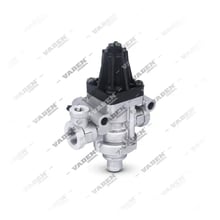
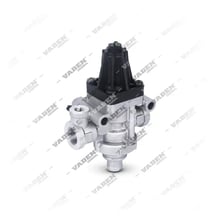
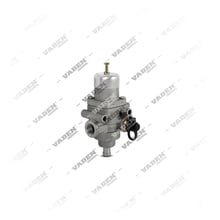
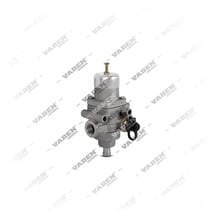
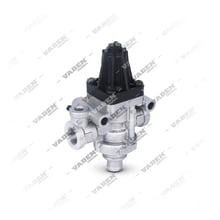
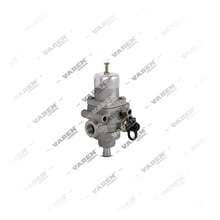
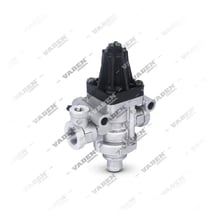
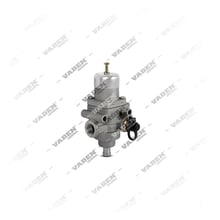
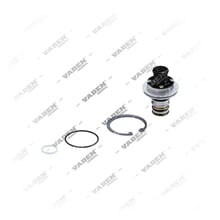
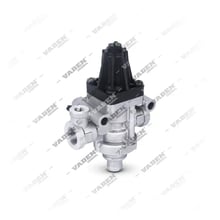
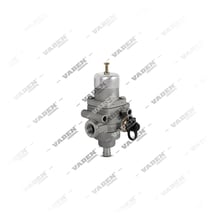
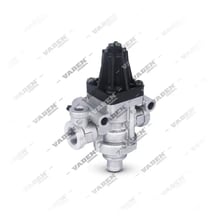
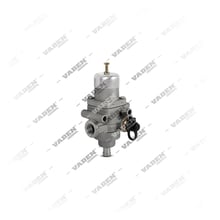
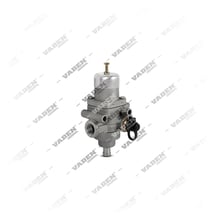
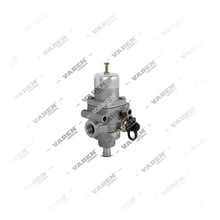
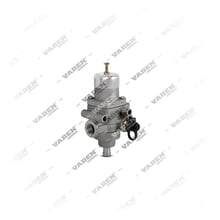
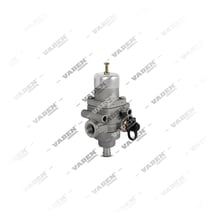
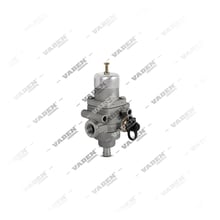
What Is an Air Tank Drain Valve?
An air tank drain valve is the complete valve unit in a heavy commercial vehicle's pneumatic brake system that releases condensed water, oil residue, and pressurized air collecting in the tank and lines. On the shop floor it is also called a drain valve, tank drain valve, or water drain cock. It mounts to the underside of air tanks, to bellows lines, and at return points in the brake circuit on trucks, tractor units, buses, and trailers. The category covers complete units, not individual seals: body, spring, seal set, and fitting ship as one assembly.
Functions and Operating Principle of the Air Tank Drain Valve
Air from the compressor is hot and humid; as it cools in the tank, moisture condenses and water and oil settle at the bottom. The drain valve removes this buildup and, when needed, releases line pressure. The principle is simple: sealed when closed, it discharges through a controlled orifice when opened.
- Condensate drainage: Expels the water-and-oil mix collecting at the tank bottom, cutting the risk of corrosion and freezing.
- Pressure release: Lets circuit pressure be bled off safely before service work.
- Fast response: Quick-release types vent brake-chamber air at the nearest point on release, shortening release time.
- Sealing: Closed, the spring-loaded seal holds system pressure and stops the compressor cycling needlessly.
- System protection: Leftover moisture and oil erode the dryer and chambers; regular draining extends the whole line's service life.
Types and Subcategories of Air Tank Drain Valves
This category holds complete units built on different operating principles. Fitting point and duty profile decide which type is needed, and the right choice directly affects how often faults recur.
- Manual drain valve: The classic, most economical type: threaded into the tank underside, opened by pushing the lever aside.
- Cable-operated drain valve: Actuated by a cable run to the chassis edge, so daily draining does not require going underneath.
- Automatic drain valve: Drains itself on pressure change, removing driver dependence; recommended for long-haul fleets.
- Quick-release valve: Fitted between the brake chamber and the main brake valve; vents air by the shortest path to speed brake release.
- Heated drain valve: A resistance-heated body stops freezing at low temperatures, suited to harsh winter conditions.
- Safety and pressure relief valve: Vents excess air once system pressure passes the set value, protecting the tank and lines.
How to Choose the Right Air Tank Drain Valve
Selecting a complete unit comes down to physical and functional equivalence with the part being replaced. Read the OE number on the old valve, then match thread size and actuation type. The table figures are general ranges; the vehicle manufacturer's current service manual always takes precedence.
Air Tank Drain Valve Selection and Compatibility Criteria| Criterion | What to Check | Typical Range / Notes |
|---|
| OE reference | Cast or stamped number on the valve body | The most reliable way to cross-match |
| Connection thread | Size and type of the tank or line connection | Common: metric M12-M22 or 1/4-1/2 inch |
| Working pressure | Continuous and peak circuit pressure | Typically 8-12.5 bar |
| Actuation type | Manual lever, cable, automatic, or heated | Selected by access and climate |
| Body material | Brass, aluminum alloy, or reinforced polymer | Affects corrosion and vibration resistance |
| Vehicle application | Make, model, and tank type | Mercedes-Benz, MAN, Scania, Volvo, DAF, Iveco, Renault Trucks, BMC, Ford |
Complete Replacement or Repair Kit?
Drain valves are small but high-cycle components; the seal set wears, the spring fatigues, and the body thread corrodes over time. Because this category is a complete-unit listing, the decision most often favors renewing the whole valve.
- Complete replacement needed when: the thread is crushed or corroded, the casting is cracked, the lever has snapped off, or an automatic valve's internal mechanism is clogged.
- Repair kit is sufficient when: a light leak stems from seal fatigue; if the body and thread are sound, renewing the seal set alone may be enough.
- Cost balance: Given labor and the risk of a second removal, complete replacement is usually more economical for a fleet.
- OE-equivalent matching: Thread size and actuation type must match exactly; forcing a different thread with an adapter raises leak risk.
- Batch replacement: On multi-tank vehicles the valves tend to share a similar cycle age, so replacing them together cuts downtime.
Air Tank Drain Valve Maintenance and Key Precautions
- Daily draining habit: In cold, humid weather, drain tanks at the end of every shift; standing water causes freezing and leaks.
- Relieve pressure first: Fully vent circuit air before removal; loosening a valve under pressure is dangerous.
- Thread sealing: Keep thread tape clear of the valve opening; tape caught inside causes blockages.
- Tightening torque: Overtightening small threads cracks the body; always use the torque value the manufacturer specifies.
- Drain outlet direction: Aim the outlet so the discharged water does not spray tires, wiring, or brake linings.
- Check the dryer too: If the tank keeps collecting excess water, check the air dryer cartridge as well.
Common Faults and Solutions
- Continuous air leak: Hissing and frequent compressor cycling point to seal fatigue; cycle the valve fully to flush it, and replace it if the leak persists.
- No discharge when opened: Frozen water, mud, or oil sludge is blocking the outlet; strip and clean the valve, or renew it if the mechanism is damaged.
- Lever feels stiff or loose: Points to spring fatigue or corrosion on the internal pin; complete replacement is recommended.
- Tank keeps producing water: Usually the dryer or compressor, not the valve; check the cartridge and look for an oil leak.
- Freezing in winter: Weak drainage plus a tired dryer; a heated type provides a lasting fix.
- Leak from the thread: Usually a wrong or damaged thread; check it and fit a valve of the correct size.
Why Choose VADEN ORIGINAL?
- Built to OE dimensions: Body, thread profile, and discharge bore match the original unit, so no adapter is needed.
- Broad OEM coverage: A cross-referenced number list covers common heavy vehicle and trailer applications.
- Durable sealing: Seal materials resistant to temperature and humidity swings hold tight through high cycle counts.
- Stock depth: Different thread sizes and actuation types are stocked under one roof.
- Exported to over a hundred countries: Continuous improvement driven by field feedback across climates and road conditions.
Conclusion
The air tank drain valve is one of the smallest yet most overlooked components in a pneumatic brake system. Regular draining extends the life of the valves, the air dryer, and the brake chambers, and prevents freezing-related failures. At replacement, weighing body condition, thread size, and actuation type together avoids a second service visit. Complete units matched by OE number deliver a fast, lasting fix.
Frequently Asked Questions (FAQ)
What does an air tank drain valve do?
An air tank drain valve controls the release of condensed water, oil residue, and excess pressure that build up in the air tank and brake lines. This prevents corrosion and freezing while allowing the circuit to be safely depressurized before servicing.
How often should the air tank drain valve be drained?
As a general rule, air tanks are drained at the end of every shift or at least once a day. In humid, cold climates this interval should be shortened; for the exact schedule, follow the vehicle manufacturer's current service manual.
Should I choose a manual or an automatic drain valve?
A manual valve is economical but relies on the driver draining it regularly. On long-haul, high-utilization fleets, an automatic drain valve is the more reliable choice because it removes that dependence on the human factor.
Should I replace the drain valve completely, or is a repair kit enough?
If the body thread, casting, and lever are sound, renewing just the sealing set may be enough. But if there is corrosion or cracking in the thread, or the internal mechanism is blocked, a complete unit replacement is both safer and more economical in terms of labor.
How do I find the correct air tank drain valve?
The most reliable method is to cross-match the OE number cast or stamped on the valve body being removed. In addition, the connection thread size and type, the actuation method, and the mounting orientation must match the original unit exactly.
Related technical guide: Quick Release Valve (QRV): Faults, Replacement & Care