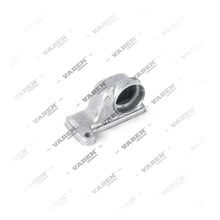
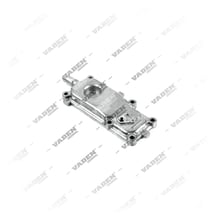
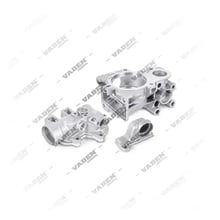
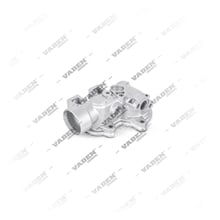
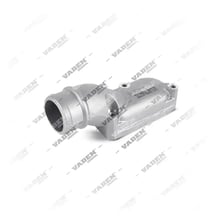
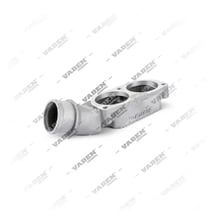
What Is a Thermostat Cover?
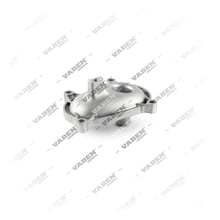
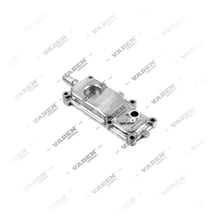
A thermostat cover is the metal component in the cooling system of heavy-duty commercial vehicles that closes off the thermostat housing and seals the thermostat pocket on the engine block or cylinder head against the outside environment. In the field it is also known as a "thermostat housing cover" or "thermostat retainer cap." The thermostat, which governs the thermal management of the cooling system, sits directly beneath this cover; the cover both holds the thermostat physically in place and keeps coolant from escaping the circuit. On trucks, tractor units, buses, and trailers, the thermostat cover is usually cast from aluminum or cast iron and is bolted to the engine block together with a gasket. When the cover fails or its gasket degrades, coolant leaks, air locks, and instability in engine temperature control can follow; although it looks like a small part, it plays a critical role in engine safety.
Thermostat Cover Functions and How It Works
- Providing a Seal: The gasket between the cover and the engine block keeps coolant from escaping under the system's operating pressure.
- Retaining the Thermostat: The cover holds the thermostat under pressure in its pocket so the spring can operate in the correct position.
- Maintaining Pressure Balance: It preserves the closed-loop pressure of the cooling system and helps raise the coolant's boiling point.
- Sensor Mounting Point: In many applications, the coolant temperature sensor or switch is mounted directly on this cover.
- Preventing Air Locks: A properly seated cover helps the system bleed air correctly after refilling.
Thermostat Cover Technical Specifications
A thermostat cover is manufactured to match the geometry of the thermostat pocket on a specific engine block, so bolt pattern, gasket face, and connection dimensions differ from one engine family to the next. Cast aluminum is the most common material; some heavy-duty engines also use cast iron or stamped steel covers. A rubber- or fiber-based gasket is fitted between the cover and the block for sealing, and some modern applications use an O-ring type sealing element instead. Tightening torque varies by vehicle manufacturer; overtightening can crack the cover, while undertightening can cause leaks, so the vehicle's current service manual is the authoritative source for the exact torque value. When checking compatibility, the engine code, chassis number, and OEM part number should all be verified together.
Thermostat Cover Types and Subcategories
- Cast Aluminum Thermostat Cover: The most common type on current heavy-duty engines thanks to its light weight and corrosion resistance.
- Cast Iron Thermostat Cover: Preferred on older-generation heavy-duty engines and applications exposed to high thermal loads.
- Thermostat Cover with Sensor Port: Includes a separate mounting boss for a coolant temperature sensor or switch.
- Thermostat Cover Kit with Gasket: The cover is supplied as a single set together with the correct sealing gasket.
- Cover Integrated with the Thermostat Housing: On some engine designs the cover is manufactured as a single piece with the thermostat housing.
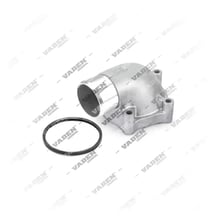
- Thermostat Cover with Hose Connection: A variant that includes an additional nipple to which the upper radiator hose connects directly.
How to Choose the Right Thermostat Cover
Choosing the correct thermostat cover starts with identifying the vehicle's engine code, model year, and chassis number, then matching that information to the OEM part number. The cover's material, bolt pattern, gasket face, and sensor port (if present) must correspond exactly to the original part being removed; otherwise sealing problems can appear during installation. The table below summarizes the key criteria to weigh during selection.
Thermostat Cover Selection Criteria| Criterion | Description |
|---|
| Material | Cast aluminum, cast iron, or stamped steel, depending on engine design |
| Gasket Match | A sealing gasket of the correct size and material must be used with the cover |
| Sensor Port | Correct position and thread size for the coolant temperature sensor or switch |
| Bolt Pattern | Must fully match the number and spacing of holes on the engine block |
| Connection Type | If an upper radiator hose nipple is present, its diameter and angle must match the original |
| Vehicle Compatibility | OEM reference confirmed against the engine code and chassis number |
Thermostat Cover Maintenance and Key Considerations
- Drain the System Before Removal: Do not remove the cover without properly draining the coolant first; hot fluid can cause burns and spills.
- Clean the Gasket Face: Before fitting a new cover, completely remove old gasket residue from the block surface.
- Follow the Torque Value: Tighten the bolts in the sequence and to the torque specified by the vehicle manufacturer; overtightening can crack the cover.
- Use a New Gasket: Never reuse a removed gasket; fit a new gasket of the correct size every time the cover is opened.
- Bleed the System: After installation, refill the cooling system and bleed it properly to prevent air locks.
- Check for Leaks: After the engine is started, visually inspect the area around the cover for leaks.
Common Failures and Solutions
- Coolant Leak Around the Cover: Usually caused by a degraded gasket or a cracked cover; replace the gasket and, if needed, the cover itself.
- Fluctuating Engine Temperature: A loosely seated cover or a compromised internal seal can cause the thermostat to operate erratically; remove the cover to check the seal and the thermostat.
- Air Lock in the Cooling System: Results from insufficient sealing or incorrect refilling; drain the system fully and refill it while bleeding out the air.
- Visible Cracking or Corrosion on the Cover: Caused by excessive tightening torque, aging, or freeze damage; replace the damaged cover with an OEM-quality part.
- Leak from the Sensor Port: Caused by a degraded sensor gasket or thread seal; remove the sensor and renew the gasket.
Why VADEN ORIGINAL?
- Manufactured to OE Dimensions: The gasket face, bolt pattern, and sensor port geometry match the original part exactly.
- Broad OEM Coverage: Offers a compatible alternative for a wide range of heavy-duty engines, led by Mercedes-Benz, MAN, Scania, Volvo, DAF, Iveco, and Renault Trucks.
- Strict Quality Control: Material quality and dimensional tolerances are audited during production for long service life.
- Wide Availability: VADEN ORIGINAL products are exported to more than 100 countries, giving fleets and workshops a solution that is readily available in stock.
Conclusion
Despite its small size, the thermostat cover is a critical component that directly affects the cooling system's sealing integrity and the thermostat's correct operation. When the right material, the right gasket, and OE-dimension manufacturing are chosen, engine temperature management can be maintained with confidence. VADEN ORIGINAL thermostat cover options are offered in OE quality and with broad vehicle compatibility to help heavy-duty commercial vehicle fleets safeguard the reliability of their cooling systems.
Frequently Asked Questions (FAQ)
What is a thermostat cover and what does it do?
A thermostat cover is the sealing component that closes off the thermostat pocket on the engine block and prevents coolant from leaking out at that point. It also holds the thermostat firmly in its pocket, helping the system operate correctly.
What symptoms appear when a thermostat cover fails?
The most common symptoms are coolant leaking around the cover, fluctuating engine temperature, and air locks in the cooling system. Visible cracking or corrosion on the cover also signals that it is time for a replacement.
Why does the gasket matter when replacing a thermostat cover?
The gasket is the element that seals the joint between the cover and the engine block. Reusing a removed gasket can compromise the seal, so a new, correctly sized gasket should be fitted at every replacement.
Which vehicles is the VADEN ORIGINAL thermostat cover compatible with?
The VADEN ORIGINAL thermostat cover fits a wide range of heavy-duty engines to OE dimensions, led by Mercedes-Benz, MAN, Scania, Volvo, DAF, Iveco, and Renault Trucks. Verifying the engine code and chassis number before ordering is recommended.
Why does tightening torque matter when installing a thermostat cover?
Overtightening the bolts can crack the cover, while undertightening can cause leaks. Because the exact torque value varies by engine model, the vehicle's current service manual should be consulted.
Related technical guide: Engine Coolant Thermostat: Faults, Replacement & Care