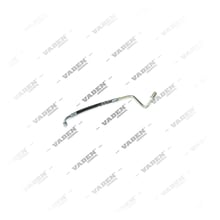
What is a Steering Pump Pipe?
It is secured with clamps at specific points to withstand engine vibration and chassis movement, and continues as hose in some sections to provide the necessary flexibility. Critical to steering system reliability and driver comfort, this pipe, despite being a low-stock part, is frequently requested especially in older vehicle fleets due to leaks or cracks. Since the steering pump on heavy commercial vehicles runs continuously in relation to engine speed, pressure within the line fluctuates constantly; the pipe material's long-term resistance to this fluctuation and to high-temperature hydraulic oil matters for the safe operation of the system.
What are the functions of a Steering Pump Pipe?
- Pressure delivery: Carries high-pressure hydraulic oil from the pump to the steering gear.
- Return flow: Ensures the used oil returns safely to the reservoir.
- System integrity: Supports keeping the hydraulic circuit closed and leak-free.
- Limiting vibration transfer: Reduces the effect of engine/chassis vibration on the pipe via mounting clamps.
- Heat dissipation: On some lines, routes oil to the cooler to help control system temperature.
- Safe routing: Provides a stable flow path that keeps steering response prompt and predictable.
What are the symptoms of a failed Steering Pump Pipe?
Pipe failures usually appear as leakage, hardening, or cracking, and directly affect steering feel. A small neglected leak can gradually empty the oil level completely and cause the pump to run dry and suffer permanent damage, which is why early diagnosis also matters for cost.
- Oil leakage: Visible hydraulic oil leak at the pipe connection points or body.
- Steering stiffness: Difficulty turning the steering wheel due to a drop in oil level.
- Noise: A whining or humming sound while turning, indicating a low oil level.
- Vibration: Pipe rattling against the engine compartment due to a loose clamp.
- Visible damage: Crushing, excessive bending, or corrosion marks on the pipe.
How is a Steering Pump Pipe checked?
Inspection is carried out with the engine running and stopped, through visual and functional tests.
- The pipe body and connection points are inspected for leaks, wetness, or oil buildup.
- Clamp tightness is checked and any loose ones are tightened.
- The steering hydraulic oil level and color are checked; foamy or darkened oil indicates a system problem.
- With the engine running, the steering is turned lock to lock to test for abnormal noise or stiffness.
- The pipe is visually and manually checked for crushing, excessive bending, or cracks.
What should be considered when replacing it?
- The new pipe's length, diameter, and fitting type must exactly match the original.
- Old O-rings or gaskets must be fully replaced before installation; the old part must not be reused.
- Ensure the pipe does not contact sharp edges when routed and is secured at the correct clamp points.
- After installation, the system must be bled and the oil level topped up to the manufacturer's specified level.
- Connections must be tightened to the manufacturer's specified torque; overtightening can damage the fitting.
How to choose a Steering Pump Pipe?
Selection is determined by vehicle model, steering pump type, and whether the pipe is a pressure or return line.
Steering Pump Pipe selection criteria| Criterion | Description |
|---|
| Line type | The pressure line must be high-pressure rated, the return line low-pressure design |
| Material | Steel or multi-layer metal pipe with a corrosion-resistant coating |
| Connection type | Fitting/flange size must fully match the existing pump and steering gear |
| Length and shape | Pipe geometry must exactly match the routing path in the vehicle chassis |
| Compatibility | Vehicle/engine fit must be confirmed via the OE cross-reference number |
Maintenance and lifespan
The steering pump pipe has a long service life with correct mounting and clean hydraulic oil use; however, vibration, heat, and corrosion over time create a fatigue risk, especially at connection points. Checking oil level and for leaks during periodic maintenance is important for early detection.
VADEN Steering Pump Pipe
VADEN offers steering pump pipes for heavy commercial vehicle hydraulic steering systems matching original dimensions and pressure values, manufactured to OE-referenced standards for correct flow and sealing.
Frequently Asked Questions (FAQ)
Why does the steering pump pipe leak
Leakage is usually caused by worn O-rings/gaskets at connection points, vibration-related loosening, or corrosion in the pipe body.
How does a pipe failure cause steering stiffness
When hydraulic oil level drops due to leakage, the pump cannot generate sufficient pressure, making it harder to turn the steering wheel.
What is the difference between the pressure line and return line pipe
The pressure line carries high-pressure oil from the pump to the steering gear, the return line carries used oil back to the reservoir at low pressure.
Why is bleeding necessary after replacing the pipe
Air entering the system causes delayed steering response and foaming, so bleeding must be performed after installation.
Which dimensions should be checked when choosing a pipe
Length, diameter, fitting type, and pipe geometry must exactly match the vehicle's original part.