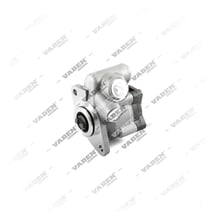
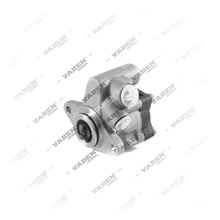
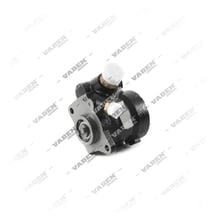
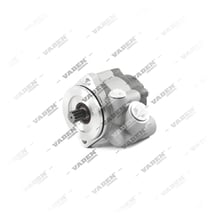
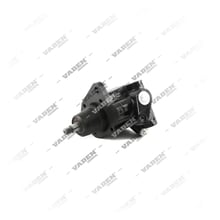
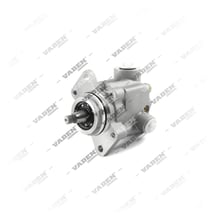
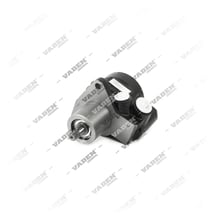
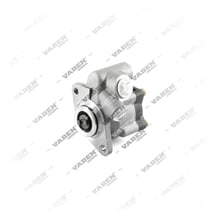
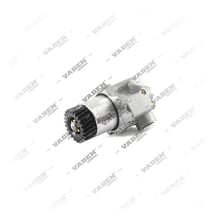
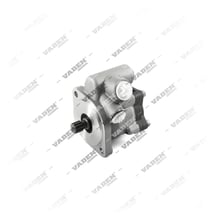
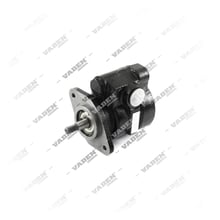
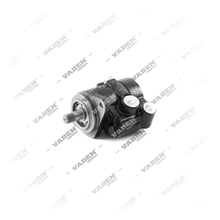
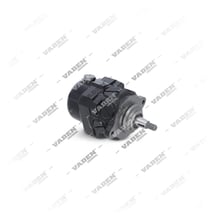
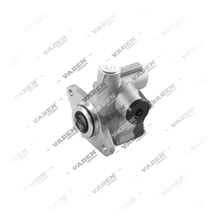
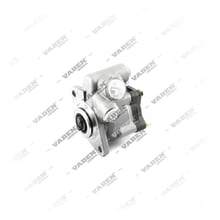
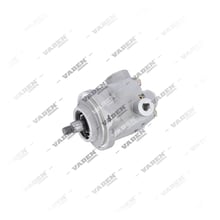
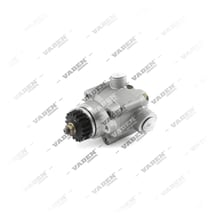
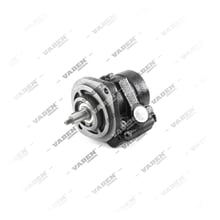
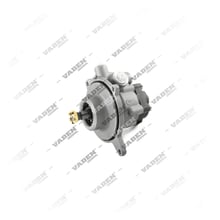
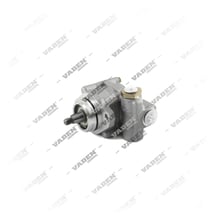
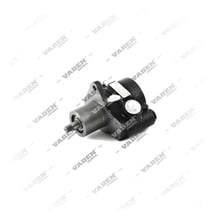
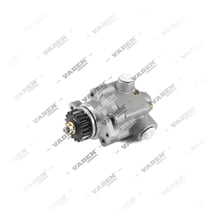
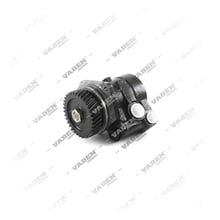
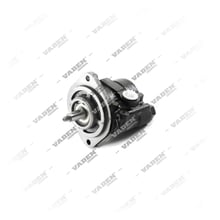
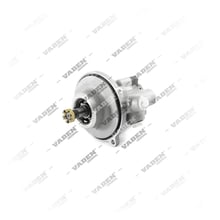
What is a power steering pump and what does it do?
The power steering pump is the pressure source of the hydraulic steering system on heavy commercial vehicles. Driven by a belt, a gear or a direct coupling from the engine, it draws hydraulic fluid from the reservoir and generates the pressure the system needs. That pressure is routed through the control valve inside the steering box onto the piston faces, multiplying the effort the driver applies at the steering wheel and turning the road wheels. Because the load carried on the front axle of a laden tractor unit is measured in tonnes, turning the steering at low speed without pump pressure is practically impossible.
In heavy-duty applications the pump rarely serves the steering box alone. On many trucks and buses the same hydraulic circuit also feeds the cab tilt unit, a steered trailer axle or a hydraulic fan drive. For that reason the flow rate and pressure limit of the pump depend on the equipment level of the vehicle and cannot be chosen at random.
What are the functions of the power steering pump?
- Pressure generation: Supplies the hydraulic pressure the steering box needs to multiply driver effort; working pressure is capped by a relief valve.
- Flow delivery: Produces enough fluid flow so the system does not run short when the wheel is turned quickly; flow is usually stabilised by a flow control valve.
- Fluid circulation: Keeps hydraulic fluid moving between reservoir, pump, steering box and cooler, balancing system temperature.
- Auxiliary circuit supply: Depending on specification, delivers pressure to secondary consumers such as cab tilt, hydraulic fan or an additional steered axle.
- Steering feel: Controlled flow keeps the steering neither excessively light nor heavy, preserving road feedback for the driver.
Which failure symptoms point to the power steering pump?
- Heavy steering during manoeuvring: Steering that stiffens at idle and during parking is the most typical sign of lost flow or pressure.
- Whine or moaning noise: Noise that rises as the wheel reaches full lock indicates air drawn into the pump or a restriction on the suction side.
- Foamy or discoloured fluid: Milky, bubbly fluid in the reservoir shows that air is being drawn in through the suction line.
- Shaft seal leakage: An oil trace between the pump housing and the pulley indicates a hardened shaft seal or increased bearing clearance.
- Pulley run-out and belt wear: When bearing clearance develops, the pulley runs off centre and the belt wears rapidly and squeals.
- Notchy steering: A stepped, sticky feel while turning suggests the flow control valve is contaminated and sticking.
- Rising fluid temperature: Overheated hydraulic fluid can indicate that internal leakage keeps the pump working at relief pressure.
How is a power steering pump inspected?
Inspection always starts with the simplest step: with the engine stopped and the vehicle on level ground, the hydraulic fluid level and condition are read. If the level is low, look for leaks first; if the fluid is foamy, check the suction hose, its clamps and the reservoir filter, because in a system drawing air the complaint continues even after the pump is replaced. Dark fluid with a burnt smell means the system has been overheating.
Mechanically, belt tension and pulley condition are examined; the pulley is gripped by hand to feel for radial and axial play, and any perceptible play means bearing wear. With the engine running, the steering is turned fully to both locks while listening for noise and change in resistance; holding briefly at full lock forces the system to relief pressure and exposes a weak pump.
For a definitive result, pressure and flow are measured: a test set with a gauge is connected to the pump outlet and the readings at idle and at a defined engine speed are compared. If measured pressure falls below the limit given in the vehicle's own documentation, either the pump or the relief valve has weakened. Working pressure and flow vary over a wide range across heavy commercial models, so comparison must always be made against the values in the vehicle's current OE service manual rather than an assumed general figure.
What should be considered during replacement?
Before removal, system pressure is released and the reservoir is drained. Prior to fitting the new pump, clean the hydraulic reservoir and renew the filter or strainer; if metal debris left by the old pump stays in the system, the new pump will fail the same way within a short time. A hardened suction hose must be replaced, because a hose collapsing internally is invisible from outside yet starves the pump.
If the pulley is a press fit, use a proper puller and never drive it on with a hammer; impact permanently damages the shaft bearing and the housing. Mounting bolts are tightened in a crosswise sequence and in stages, and pipe unions are seated without strain. Tightening torques vary with housing material and bolt size, so the figures must be taken from the vehicle's current service manual.
The bleeding step must not be skipped. With the engine off, turn the steering lock to lock several times, then repeat with the engine at idle and top up the fluid level again. The noise disappears once no bubbles remain; check the level once more after the first road run.
Which criteria decide power steering pump selection?
Even within the same vehicle family, pumps differ in drive type, mounting flange and flow class. The table below summarises the headings to compare when choosing the correct part.
Power steering pump selection criteria| Criterion | Why it matters |
|---|
| OE reference number | The only reliable basis for selection; it must match the number on the old pump exactly. |
| Drive type | Belt-and-pulley, gear-driven and compressor-mounted tandem versions are not interchangeable. |
| Direction of rotation | A pump only draws fluid in the direction it was designed for; the wrong direction produces no pressure and destroys the pump quickly. |
| Mounting flange and bolt spacing | Flange type and bolt hole spacing must seat fully on the housing and must not be forced with an adapter. |
| Flow and pressure class | Vehicles with extra consumers such as cab tilt or a hydraulic fan need the higher flow version. |
| Reservoir type | Integral-reservoir and remote-reservoir versions differ in suction connection and installed height. |
| Union size and thread type | Pressure and return line unions can use different thread standards; a mismatch leads to leakage. |
How is power steering pump life extended?
The strongest factor determining pump life is fluid cleanliness and correct level. At every service the fluid level and colour should be checked, and fluid and filter renewed at the interval defined by the manufacturer. Mixing hydraulic fluids of different specification can swell or harden the sealing elements.
Holding the steering at full lock for long periods keeps the system at relief pressure and heats the fluid rapidly; backing off a few degrees once the steering reaches the stop protects the pump noticeably. Periodic belt tension checks matter too: a slack belt slips and reduces flow, while an over-tensioned belt overloads the shaft bearing.
In cold weather, forcing the steering immediately after start-up puts a high load on the pump because the fluid is still thick. A short warm-up and gentle first manoeuvres visibly reduce early pump failures in fleet operations. On vehicles fitted with a hydraulic cooler, keeping the cooler matrix clean also lowers fluid temperature and extends service life.
VADEN ORIGINAL power steering pumps
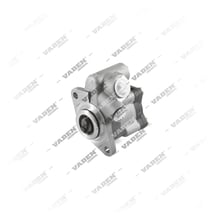
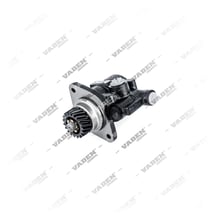
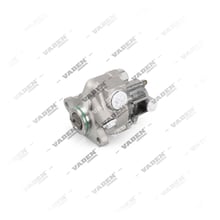
VADEN ORIGINAL power steering pumps are produced with the operating conditions of heavy commercial vehicles in mind; housing machining tolerances, shaft bearings and sealing elements are set to OE dimensions. The range covers the drive and flange types commonly used on truck, tractor unit, bus and construction machinery applications. To find the correct pump, compare the products in this category using your vehicle make and model together with the OE reference number on the existing part.
Frequently Asked Questions (FAQ)
When should a power steering pump be replaced?
There is no fixed mileage limit. The pump should be assessed if steering becomes heavy during manoeuvring, whine rises at full lock, fluid leaks from the shaft seal, or play can be felt at the pulley. The final decision comes from comparing measured pressure and flow against the vehicle's own service values.
If the steering whines, is the pump always at fault?
No. The most common cause of whine is air entering the system; a low fluid level, a loose suction clamp or a hardened suction hose produce the same noise. Before replacing the pump, check the fluid level, whether the fluid is foamy, and the tightness of the suction line.
Which hydraulic fluid should be used in the power steering pump?
The fluid type is specified by the vehicle manufacturer and varies by model. Mixing fluids of different specification can swell or harden the sealing elements. The vehicle's current OE service manual is the authority for the correct fluid class.
Should the reservoir and filter also be renewed when replacing the pump?
Yes, particularly if the failed pump has shed metal debris. A new pump fitted without cleaning the reservoir and renewing the filter or strainer can repeat the same failure quickly because wear particles remain in the system.
Can a pump with a different flow rate be fitted to the same vehicle?
It is not recommended. Flow and pressure class are matched to the steering box and to any additional consumers such as cab tilt or a hydraulic fan. A lower flow pump falls short during manoeuvring, while a higher flow pump heats the system unnecessarily. Selection should follow the OE reference number.
Related technical guide: Hydraulic Steering Pump: Failure, Replacement & Care Guide