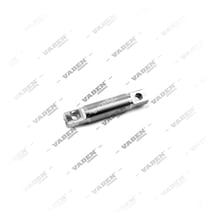
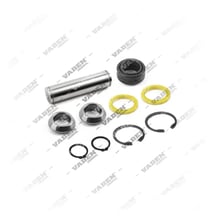
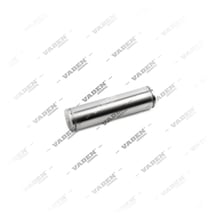
What Is a Clutch Fork Shaft?
The clutch fork shaft is the metal shaft-type component in the clutch system of heavy commercial vehicles on which the clutch fork pivots inside the transmission housing (clutch bell housing) and transfers its motion. Also referred to in the field as the "fork pivot shaft" or "fork pin shaft," this part forms the rotational axis that carries the motion generated when the clutch pedal is pressed toward the pressure spring via the fork. Although the clutch fork works alongside related components such as the complete fork assembly, the fork pin, and the repair kit, the clutch fork shaft is the independent shaft piece that carries only the pivoting motion. In manual-transmission models from heavy-duty truck brands such as Mercedes-Benz, MAN, Scania, Volvo, DAF, Iveco, Renault Trucks, and BMC, it sits journaled inside the clutch housing. When this shaft wears or develops play, the fork's movement becomes irregular, which directly affects the precision of clutch actuation.
How Does a Clutch Fork Shaft Work?
When the clutch pedal is pressed, the hydraulic or mechanical actuation system moves the clutch fork, and the fork pivots on this shaft like a lever. The shaft passes through both ends of the fork, anchoring it to the transmission housing and allowing it to swing only around this axis. This rotational motion pushes the release bearing at the fork's other end, compressing the diaphragm spring and disengaging the clutch disc from the flywheel. The shaft's centering accuracy and bearing clearance determine whether the fork's motion is transmitted in a straight, vibration-free manner. The moment excessive play develops on the shaft, the fork's movement begins to deviate, which the driver feels as inconsistent pedal sensation and irregular clutch engagement. This small but critical shaft therefore sits at the center of the mechanical chain that carries clutch actuation into the transmission.
Clutch Fork Shaft Technical Specifications
Clutch fork shafts are manufactured from high-strength steel and are usually surface-hardened to withstand continuous rotation and vibration loads. Shaft diameter and length vary by transmission model and clutch housing design, so verifying against the chassis number or OEM part number is recommended when ordering. The bearing bore tolerance is kept within a narrow range so the fork moves freely but without play; tolerances that are too tight or too loose accelerate both wear and loss of motion. For torque and installation clearance values, do not assume exact figures — instead refer to the factory values in the vehicle's current service manual. The shaft surface is typically coated against corrosion, and its ends usually feature circlip grooves or pin holes that secure the fork.
Clutch Fork Shaft Types and Subgroups
- Straight Shaft Type: A single-piece, constant-diameter shaft design used in classic manual-transmission heavy trucks.
- Stepped Shaft Type: Features different diameters at each end, centering the fork and bearing with separate tolerances; seen in some European-brand transmissions.
- Bushed (Bearing-Mounted) Shaft: A version that works together with a bushing or needle bearing inside the transmission housing to provide low-friction rotation.
- Circlip-Retained Shaft: A type featuring a circlip or safety pin groove at the end to prevent axial displacement.
- Lubrication-Channel Shaft: A variant machined with a channel that delivers oil to the bearing surface, used in certain heavy-duty applications.
How to Choose the Right Clutch Fork Shaft
When selecting the correct part, use the chassis number or the dimensions of the existing shaft as the reference, and match diameter and length tolerances to the original part exactly. Transmission type (manual, semi-automatic) and clutch housing model are the main criteria determining compatibility. The table below summarizes the key criteria to consider.
Clutch Fork Shaft Selection Criteria| Criterion | Why It Matters |
|---|
| Chassis / OEM part number | Shaft diameter and length vary by vehicle model; the wrong size prevents the fork from seating properly |
| Transmission and clutch housing type | Different housing designs require different bearing bore dimensions |
| Bearing / bushing type compatibility | Bushed or needle-bearing mounting directly affects the required shaft surface quality |
| Surface hardness and coating | Determines wear resistance against continuous rotation and vibration |
| Retaining element compatibility | Circlip, pin, or safety ring groove must match the original |
Clutch Fork Shaft Maintenance and Key Considerations
- Check Bearing Clearance Periodically: Regularly assess whether the fork has developed excessive play on the shaft.
- Pay Attention to Alignment During Installation: Make sure the shaft and the fork bore seat perfectly on axis; never force it into place.
- Do Not Neglect Lubrication Points: For lubrication-channel or bushed types, lubricate according to the manufacturer's recommendation.
- Renew Retaining Elements: Replace circlips or pins removed during disassembly with new ones if they are deformed.
- Evaluate Together with the Clutch Housing: If the bearing bore inside the housing is worn, replacing only the shaft may not fully resolve the issue.
Common Faults and Their Solutions
- Stiffness or Sticking in the Clutch Pedal: Caused by corrosion or excessive wear on the shaft; remove the shaft to inspect the surface, and replace it along with the repair kit if necessary.
- A Feeling of Play in Clutch Actuation: Excessive tolerance between the shaft and fork; replace the worn shaft with an original-dimension VADEN ORIGINAL part.
- Abnormal Noise During Gear Shifting: Dry friction or lack of lubrication on the bearing surface; clean the lubrication points and feed them with the appropriate lubricant.
- Clutch Disc Not Fully Disengaging: Bending of the shaft or restricted fork movement; inspect the shaft and fork together and replace any deformed parts.
- Premature Release Bearing Wear: Irregular fork motion caused by the shaft places extra load on the bearing; check the shaft first to eliminate the root cause.
Why VADEN ORIGINAL?
- Manufactured to OE Dimensions: Clutch fork shafts are produced with diameter and length that match original equipment tolerances exactly.
- Extensive OEM Matching: Options are offered that are compatible with manual-transmission models from brands such as Mercedes-Benz, MAN, Scania, Volvo, DAF, Iveco, Renault Trucks, and BMC.
- Durable Material and Surface Treatment: High-strength steel combined with proper surface hardening delivers a long service life under continuous rotational load.
- Exported to More Than 100 Countries: VADEN ORIGINAL parts are used with confidence in heavy commercial vehicle fleets worldwide.
Conclusion
Despite its small appearance, the clutch fork shaft is a critical component that directly determines the precision of clutch actuation. A worn or loose shaft negatively affects overall clutch performance, from pedal feel to gear shifting. Choosing a clutch fork shaft in the correct dimensions and OE quality also protects the service life of the fork assembly and the release bearing. VADEN ORIGINAL delivers the same reliability and OEM compatibility that heavy commercial vehicle fleets need in this product too.
Frequently Asked Questions (FAQ)
What does a clutch fork shaft do?
The clutch fork shaft is the pivot axis on which the clutch fork rotates inside the transmission housing. It carries the motion coming from the pedal through the fork to the release bearing and diaphragm spring, allowing the clutch disc to disengage from the flywheel.
Is the clutch fork shaft the same part as the clutch fork body?
No. The clutch fork body is the lever arm that contacts the release bearing, while the clutch fork shaft is the separate shaft on which that arm pivots. Although they work together, they are independent spare parts sold under different categories.
What symptoms appear when a clutch fork shaft wears out?
A feeling of play in the clutch pedal, abnormal noise during gear shifting, the clutch disc not fully disengaging, and premature release bearing wear are the most common symptoms. If any of these signs appear, it is recommended to inspect the shaft and fork together.
What should be considered when replacing a clutch fork shaft?
The shaft must be selected to match exactly, based on the vehicle's chassis number or the dimensions of the existing part. During installation, the shaft-to-fork alignment should be done without forcing it, and the retaining circlip or pin should be replaced if it is deformed.
Which vehicles is the VADEN ORIGINAL clutch fork shaft compatible with?
VADEN ORIGINAL clutch fork shafts are compatible with manual-transmission heavy commercial vehicle models from brands such as Mercedes-Benz, MAN, Scania, Volvo, DAF, Iveco, Renault Trucks, and BMC. For exact compatibility, verification using the chassis number or OEM part number is recommended.