What Is a Clutch Fork Pivot Pin?
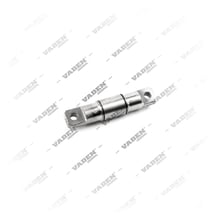
The clutch fork pivot pin is a precision-tolerance cylindrical fastening component that connects the clutch release fork to the release bearing mechanism and the fork's pivot bushing in heavy commercial vehicles. In the field it is also commonly referred to as the "fork pin," "fork pivot pin," or "clutch fork shaft." This pin forms the mechanical joint that transmits the motion generated when the clutch pedal is depressed smoothly and without play from the fork to the release bearing. The clutch fork itself does not carry a large load; however, even the smallest amount of play or wear in the pin creates a noticeable lag and vibration in clutch actuation. For this reason, the pivot pin is an independent component with its own distinct wear and replacement cycle, and it should not be confused with the complete fork assembly or the clutch/compressor group. VADEN ORIGINAL manufactures this pin to original equipment dimensions, targeting long service life for the fork mechanism.
Functions of the Clutch Fork Pivot Pin and How It Works
The clutch fork pivot pin forms the rotation axis at the fork's pivot point on the housing and allows the fork to move along a fixed axis as it changes angle. When the clutch pedal is pressed, the hydraulic or mechanical actuation system moves the fork; the pin guarantees that this motion is transmitted without deviation or lateral play. A correctly positioned, unworn pin keeps the force transferred to the release bearing aligned along the axial direction, contributing to smooth clutch disc disengagement.
- Establishing the Rotation Axis: Acts as the mechanical pivot that lets the fork rotate around a fixed point on the housing.
- Motion Transmission: Transfers motion from the pedal actuation to the release bearing without lateral deviation.
- Preventing Vibration and Play: A pin machined to the correct tolerance keeps clearance between the fork and bushing to a minimum.
- Load Distribution: Distributes the mechanical load generated during clutch engagement and disengagement evenly across the fork housing.
- Positioning: Fixes the fork's axial position within its bushing, preserving installation alignment.
Clutch Fork Pivot Pin Technical Specifications
Pivot pins are manufactured with diameter, length, and surface hardness values that vary according to the geometry of the fork housing and its bushing. The material is generally hardened steel, and an additional wear-resistant coating may be applied to the surface. When selecting the correct pin, the vehicle make, chassis number, and fork housing type must always be evaluated together; the vehicle's current service manual should be treated as the authority for exact diameter and tolerance values.
Clutch Fork Pivot Pin Technical Reference Table| Property | Description |
|---|
| Product Group | Clutch fork pivot/joint pin |
| Material | Hardened alloy steel, wear-resistant surface |
| Geometry | Cylindrical body, with a positioning groove or retaining-ring seat at the ends |
| Tolerance Class | Tight-tolerance precision fit (varies by vehicle) |
| Compatible Systems | Wabco and Knorr-Bremse clutch actuation mechanisms |
| Vehicle Compatibility | Mercedes-Benz, MAN, Scania, Volvo, DAF, Iveco, Renault heavy commercial vehicles |
| Quality Standard | OEM-equivalent VADEN ORIGINAL manufacturing |
Clutch Fork Pivot Pin Types and Subcategories
Pivot pins can have different end geometries and retention methods depending on the design of the fork housing they connect to. Choosing the correct variant matters both for ease of installation and for the long-term health of the mechanism.
- Retaining-Ring Pins: Feature a built-in retaining-ring groove at the ends, preventing axial displacement after installation.
- Tapered-End Pins: Have a tapered profile that eases entry into the bushing and reduces alignment tolerance.
- Ball-Joint-Type Pins: Used in fork designs that require multi-axis movement.
- Straight Cylindrical Pins: The standard type preferred in forks with simple bushing geometry.
- Pins with Lubrication Channels: Variants featuring a grease channel on the surface that require periodic lubrication.
- Sealed (Maintenance-Free) Pins: Closed-type pins lubricated at the factory that require no maintenance for their service life.
How to Choose the Right Clutch Fork Pivot Pin
The most critical step in selecting a pin is verifying it against the vehicle's chassis number and the clutch fork part number; even a sub-millimeter difference in diameter or length between visually similar pins can create noticeable play in the mechanism. Whether the fork housing is designed with a retaining ring or a tapered end directly determines which pin type should be selected. Counterfeit pins produced with dimensions that deviate from the original, or from softer materials, can wear oval-shaped within a short time and cause vibration throughout the fork mechanism.
Clutch Fork Pivot Pin Maintenance and Key Considerations
- Bushing Inspection Before Installation: Before fitting the pin, make sure the fork bushing shows no wear or oval deformation.
- Periodic Greasing for Lubrication-Channel Types: On pins with a lubrication channel, apply grease according to the manufacturer's interval.
- Integrity of Retaining Rings and Clips: Confirm that the retaining elements are fully seated and have not loosened.
- Axial Play Measurement: After replacement, check the clearance between the fork and pin to prevent excessive tolerance.
- Correct Torque During Installation: Tighten fasteners to the values specified in the vehicle's service manual; overtightening can crack the pin.
Common Failures and Solutions
- Stiffness or Sticking in the Clutch Pedal: Caused by a worn or unlubricated pin; inspect the pin, replace it if necessary, and grease it if it has a lubrication channel.
- Metallic Rattling During Clutch Actuation: Caused by excessive clearance between the pin and bushing; renew the worn pin and, if needed, the bushing together.
- Delay in Clutch Disengagement: Caused by loss of motion from oval wear on the pin; replace it with a part machined to original tolerances.
- Lateral Play in the Fork: Caused by a loosened or broken retaining ring; check both the retaining element and the pin together.
- Recurring Premature Wear: Caused by unsuitable material or an incorrect pin length; re-verify the part number against the chassis.
Why VADEN ORIGINAL?
- Manufactured to OE Dimensions: Diameter, length, and tolerance values match original equipment specifications exactly.
- Extensive OEM Cross-Reference Network: Covers numerous vehicle models compatible with Wabco and Knorr-Bremse clutch actuation systems.
- Durable Material Selection: Hardened steel construction delivers a long service life and low wear.
- Comprehensive Quality Control: Every production batch is tested for dimensional accuracy and hardness.
- Exports to More Than 100 Countries: A global service network ensures fast access to the right part.
Conclusion
Despite its small size, the clutch fork pivot pin is a critical joint component that directly determines the precision of clutch actuation. A pin manufactured to the correct dimensions from quality material prevents play and vibration in the fork mechanism, keeping clutch pedal operation smooth and predictable. VADEN ORIGINAL clutch fork pivot pins, produced to OE tolerances, deliver a reliable, long-lasting solution for heavy commercial vehicle fleets.
Frequently Asked Questions (FAQ)
What does a clutch fork pivot pin do?
The clutch fork pivot pin is the joint component that forms the fork's rotation axis on the housing. It transmits pedal motion to the release bearing without lateral deviation, ensuring smooth clutch disengagement.
What happens when a clutch fork pivot pin wears out?
A worn pin creates play between the fork and its bushing. This can cause vibration in the clutch pedal, a metallic rattling sound, delayed disengagement, and, over time, uneven release of the clutch disc.
Is the pivot pin the same part as the complete clutch fork?
No. The pivot pin is an independent joint component that connects the fork to its bushing; the complete fork housing, fork shaft, and repair kit are separate product groups. Usually only the pin wears out and can be replaced on its own.
Which vehicles is the VADEN ORIGINAL clutch fork pivot pin compatible with?
VADEN ORIGINAL pivot pins are compatible with the Wabco and Knorr-Bremse clutch actuation systems used in Mercedes-Benz, MAN, Scania, Volvo, DAF, Iveco, and Renault heavy commercial vehicles. Verification by chassis number is recommended before ordering.
How often should the clutch fork pivot pin be replaced?
There is no fixed replacement interval; the pin wears according to usage conditions and clutch usage frequency. If pedal stiffness, rattling noise, or a delay in disengagement is noticed, the pin should be inspected and replaced if necessary.