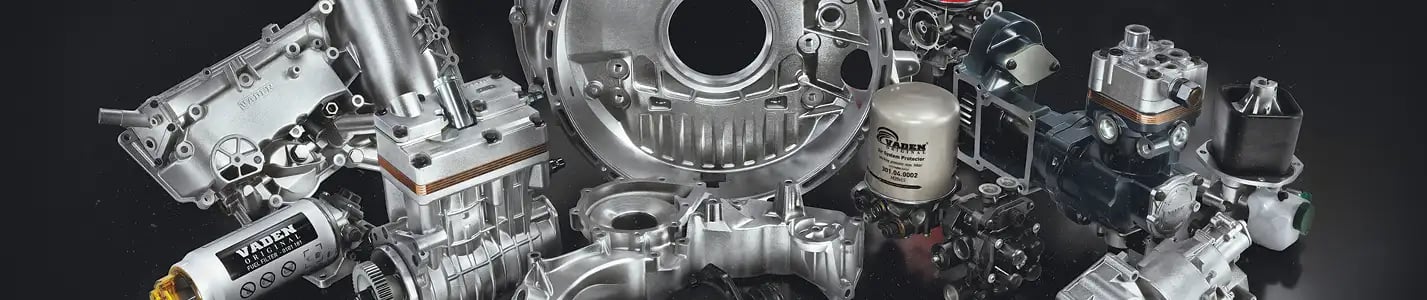
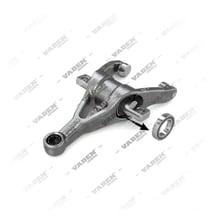
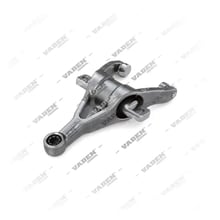
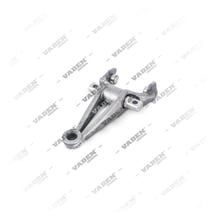
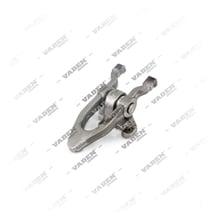
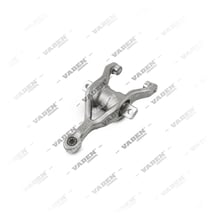
What Is a Complete Clutch Fork?
A Complete Clutch Fork is a full assembly kit for heavy commercial vehicles that combines the fork arm, which transmits mechanical or hydraulic motion to the pressure plate when the clutch pedal is pressed, together with the pivot ball seat, bushing, sealing element, and retaining pins it operates with. In the field it is also called a "clutch lever kit" or "release fork." The clutch fork sits inside the clutch housing and is one of the moving parts carrying the heaviest mechanical load in the clutch system. It is supplied as a complete set because the fork itself, its contact points, and its fastening elements wear together, and replacing individual parts on their own risks upsetting installation precision. The Complete Clutch Fork kit is a critical transmission element that ensures the clutch system engages and disengages accurately and repeatably.
How Does a Complete Clutch Fork Work?
When the driver presses the clutch pedal, motion is transmitted to one end of the fork through a cable or rod linkage in mechanical systems, or through the slave cylinder piston in hydraulic systems. The fork pivots around its fulcrum point inside the housing, and its other end applies pressure to the release bearing (clutch bearing). This pulls the pressure plate away from the flywheel, cutting off power transfer between the engine and transmission. When the pedal is released, spring force returns the fork to its resting position and the pressure plate re-engages the flywheel, restoring power transfer. The bushing and ball seat at the fork's pivot point let this rotation occur without friction or play; a worn seat shows up as slack in pedal feel and stiffness during gear changes.
Complete Clutch Fork Technical Specifications
The clutch fork body is manufactured from forged or cast steel to withstand high mechanical loads, and it houses a wear-resistant ball seat or a self-lubricating bushing at the pivot point. Arm length and lift angle vary with the vehicle's clutch housing and pressure plate/disc set, making overall length and profile dimensions decisive for compatibility. Retaining pins and clips keep the fork fixed within the housing without axial or radial play. The sealing boot (where fitted) protects the pivot point from dust and moisture. Because torque and contact force values differ by vehicle, always consult the vehicle's current service manual for exact dimensions and tolerances.
- Body Material: Forged or cast steel, providing resistance to high mechanical load and repeated motion.
- Pivot Seat: Ball seat or self-lubricating bushing, delivering low-friction movement.
- Arm Geometry: Length and lift angle are vehicle-specific, matched to the housing and pressure plate/disc set.
- Fastening Elements: Pins, clips, and retaining parts are supplied together within the complete set.
Complete Clutch Fork Types and Subgroups
- Mechanical Clutch Fork: Used in cable- or rod-linked systems, actuated directly by mechanical force.
- Hydraulic Clutch Fork: Operates via hydraulic pressure from the slave cylinder, giving a softer pedal feel.
- Ball-Seated Fork Assembly: Uses a ball seat at the pivot point, offering low friction and long service life.
- Bushing-Type Fork Assembly: Uses a self-lubricating bushing at the pivot point, a simpler and more economical design.
- Sealed Boot Kit: Includes a boot that provides extra protection against dust and moisture, preferred in harsh field conditions.
- Complete Pin and Clip Sets: Include the pins, clips, and retaining elements that secure the fork inside the housing.
How to Choose the Right Complete Clutch Fork
To make the right selection, the fork arm length and pivot type compatible with the housing and pressure plate/disc set must be determined based on the vehicle's make, model, and chassis number. Mechanical and hydraulic systems cannot be substituted for one another; the system type must always be verified. The table below summarizes the key criteria to consider during selection.
Complete Clutch Fork Selection Criteria| Criterion | Description |
|---|
| System Type | Mechanical (cable/rod) or hydraulic (slave cylinder) actuation |
| Arm Length and Angle | Geometric match with the housing and pressure plate/disc set |
| Pivot Seat Type | Ball-seated or bushing design |
| Fastening Elements | Pins, clips, and retaining parts included in the complete set |
| Sealing | Presence of boot or seal, dust/moisture protection |
| Vehicle Compatibility | Mercedes-Benz, MAN, Scania, Volvo, DAF, Iveco, Renault Trucks applications |
Complete Clutch Fork Maintenance and Key Considerations
- Replace the Entire Set at Installation: Changing the fork, seat, and retaining pins together preserves installation tolerances.
- Lubricate the Pivot Point: In bushing-type designs, lubrication per the manufacturer's recommendation prevents premature wear.
- Keep the Housing Interior Clean: Dust and metal debris cause premature wear on seat surfaces.
- Check Retaining Pins and Clips: Loose or worn retaining elements cause play in the fork.
- Monitor Pedal Feel Regularly: Slack, stiffness, or vibration can indicate early wear in the fork assembly.
- Use Parts with Original Dimensions: Forks with incorrect arm length or pivot geometry compromise full clutch engagement.
Common Faults and Solutions
- Play in the Clutch Pedal: Caused by a worn pivot seat or loose retaining pin; replace the seat and pin set completely.
- Stiffness During Gear Changes: Caused by insufficient lubrication at the fork's pivot point or bushing wear; replace the bushing and lubricate.
- Squeaking Noise from the Clutch: Caused by a dry or worn ball seat; lubricate the seat or replace it with a complete fork set.
- Clutch Not Fully Disengaging: Caused by a bent or broken fork arm; replace the fork with a new set at original dimensions.
- Vibrating or Unstable Pedal Movement: Caused by play in the retaining pins or clips; check and secure the retaining elements.
Why VADEN ORIGINAL?
- Manufactured to OE Dimensions: Arm length, pivot geometry, and connection points are produced to original equipment tolerances.
- Broad OEM Coverage: Offers a range suited to Mercedes-Benz, MAN, Scania, Volvo, DAF, Iveco, and Renault Trucks applications.
- Complete Set Approach: Because the fork, seat, and fastening elements are supplied together, installation precision is preserved.
- Exported to More Than 100 Countries: Delivers globally tested quality and a consistent manufacturing standard.
- Durable Material Selection: Body and seat materials resistant to high mechanical load provide a long service life.
Conclusion
The Complete Clutch Fork is a small-looking but functionally critical assembly that ensures the clutch system transfers pedal movement to the pressure plate accurately and reliably. Replacement with the correct arm length, pivot type, and complete fastening set preserves both driving comfort and the service life of the transmission and clutch system. VADEN ORIGINAL Complete Clutch Fork sets, built to OE tolerances with broad vehicle compatibility, offer a dependable solution for heavy commercial vehicle fleets.
Frequently Asked Questions (FAQ)
What does a clutch fork do?
The clutch fork transfers the motion created when the clutch pedal is pressed to the release bearing, separating the pressure plate from the flywheel. This temporarily interrupts power transfer between the engine and transmission, making gear changes possible.
Why is the Complete Clutch Fork sold as a set?
Because the fork arm, pivot seat, sealing element, and retaining pins wear together, replacing only the fork can upset installation tolerances. A complete set ensures all contact points are replaced in matching, correct dimensions.
What are the symptoms of a faulty clutch fork?
A slack feeling in the clutch pedal, stiffness during gear changes, squeaking from the clutch, incomplete clutch disengagement, and vibration in pedal movement are typical signs of wear or failure in the fork assembly.
What is the difference between a mechanical and a hydraulic clutch fork?
A mechanical fork is actuated directly by mechanical force through a cable or rod linkage. A hydraulic fork, by contrast, operates via hydraulic pressure from the slave cylinder and generally gives a softer pedal feel. The two systems cannot be substituted for one another.
Which vehicles is the VADEN ORIGINAL Complete Clutch Fork compatible with?
VADEN ORIGINAL Complete Clutch Fork sets are offered with options suited to many heavy commercial vehicle brands, including Mercedes-Benz, MAN, Scania, Volvo, DAF, Iveco, and Renault Trucks. Verification against the vehicle's chassis number is recommended before ordering.
Related technical guide: Clutch Fork: Fault, Replacement and Maintenance Guide