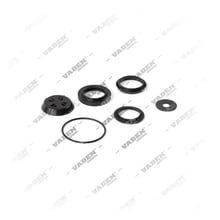
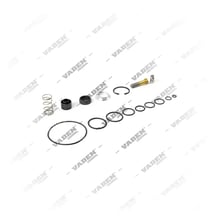
What are the functions of the pressure limiting valve repair kit?
The parts in the repair kit restore the valve's pressure-regulating function and sealing.
- Pressure control: The diaphragm and spring components ensure the output pressure is correctly limited according to axle load.
- Sealing: Seals and o-rings prevent air leaks in the valve body.
- Response sensitivity: A renewed diaphragm allows the valve to respond quickly and accurately to load changes.
- System protection: A properly functioning valve reduces premature wear of the rear axle brake groups and the risk of lock-up.
What are the symptoms of a faulty pressure limiting valve?
A valve fault directly affects brake balance and vehicle stability.
- Rear wheel lock-up: Rear wheels locking during hard braking on an empty or lightly loaded vehicle indicates the valve is passing too much pressure.
- Insufficient braking force: Inadequate brake pressure on a loaded vehicle can result from the valve restricting too much.
- Air leak noise: A continuous hissing sound from the valve body indicates diaphragm or seal damage.
- Inconsistent braking feel: Braking response that is inconsistent relative to the vehicle's load state.
- Dashboard warning: On some systems, valve pressure sensor mismatch can trigger a warning light.
How is the pressure limiting valve inspected?
Inspection should be carried out by simulating load conditions and using pressure measurement equipment.
- Inlet/outlet pressure test: Measure the valve's inlet and outlet pressures with a gauge under different load simulations.
- Air leak test: Apply soap solution over the valve body and connection points.
- Mechanical arm/spring check: Check that the spring connected to the load-sensing arm moves freely.
- Visual inspection: Check the body for cracks, excessive corrosion or damage at the connection points.
- Function test: Apply the brakes at different load positions and confirm the pressure change follows the expected curve.
What should be considered when replacing it?
Repairing the pressure limiting valve directly affects brake balance and must be done with precision.
- System bleeding: The air circuit must be completely emptied before disassembly.
- Correct diaphragm thickness: The original diaphragm specification must be followed; a part with different stiffness can distort the pressure curve.
- Calibration check: After repair, the valve's load-sensing arm must be positioned according to the manufacturer's reference setting.
- Cleanliness: The valve's internal surfaces must be completely free of dirt and old gasket residue.
- Progressive test: After installation, perform a brake test under different load scenarios to verify the pressure curve.
How to choose the right pressure limiting valve repair kit?
Choosing the correct kit requires clearly identifying the valve model and axle position. The table below summarizes the main criteria.
Pressure limiting valve repair kit selection criteria| Criterion | Description |
|---|
| Valve model | Match against the original valve code |
| Axle position | Front or rear axle pressure limiting application |
| Kit contents | Diaphragm, o-ring, seal, spring components |
| Material | Synthetic diaphragm resistant to pressure and heat |
| Pressure curve | Spring characteristic matching the original setting |
Maintenance and service life
The service life of the pressure limiting valve depends on the moisture content of the air system and maintenance of the mechanical arm linkage. Regular maintenance of the air dryer prevents premature deterioration of the diaphragm. Periodic greasing and rust inspection of the mechanical linkages connected to the load-sensing arm is recommended. Inspection intervals should be shortened for vehicles with frequent load changes, such as trailers and trucks. After any major suspension service or component replacement, the position of the valve's load-sensing arm should be rechecked, since changes in suspension geometry can affect the valve's reference point. Periodic pressure testing under different load scenarios helps ensure the valve's long-term accuracy.
VADEN pressure limiting valve repair kit
VADEN offers repair kits consisting of original-dimension diaphragms, o-rings and seals for the pressure limiting valves used in heavy commercial vehicle air brake systems, providing a faster and more economical repair option compared to replacing the complete valve. The diaphragm material in the kit is produced from synthetic rubber resistant to pressure fluctuations and temperature changes in the air system, while the spring components are manufactured to a stiffness matching the original pressure curve. Since load conditions change frequently on trailer and truck fleets, keeping this repair kit in periodic maintenance stock reduces the risk of failures caused by unexpected brake imbalance. VADEN subjects every kit to dimensional measurement and pressure testing before dispatch.
Frequently Asked Questions (FAQ)
When is a pressure limiting valve repair kit sufficient?
If there is no crack in the valve body or permanent deformation in the mechanical arm, air leakage and pressure imbalance can usually be resolved by replacing the diaphragm and seals. Complete valve replacement is required if the body is damaged.
Why is calibration important after valve repair?
The position of the load-sensing arm determines how much pressure the valve allows through. Incorrect calibration can cause excessive pressure when empty or insufficient braking force when loaded.
Is rear wheel lock-up always caused by this valve?
No, ABS/EBS system faults, pad condition or incorrect tire pressure can produce similar symptoms. However, repeated lock-up on an empty vehicle should raise suspicion of this valve first.
Does installing the repair kit require special test equipment?
A pressure gauge and a load simulation setup are recommended to verify the pressure curve. Repairs done without equipment cannot guarantee the accuracy of the pressure setting.
On which vehicle types is this valve especially critical?
For trucks, tractor units and trailer groups with frequently changing load states, correct valve operation is especially critical to maintaining brake balance both empty and loaded.
Related technical guide: Pressure Limiting Valve: Faults, Replacement & Maintenance