What Is an Injection Line Pipe?
An injection line pipe is the steel fuel line component in heavy commercial vehicle fuel systems that carries high-pressure fuel from the injection pump to the injectors. In the field it is also known as the injector pipe or the high-pressure fuel pipe. On truck, tractor unit, bus, and heavy equipment engines, the job of these pipes is to carry the fuel leaving the pump without losing pressure and without leaking. Because it is one of the most heavily stressed elements of the injection line, its material, inner diameter, length, and fitting geometry are all engine-specific.
How Does an Injection Line Pipe Work?
Although the high-pressure pipe looks like a passive conduit, it is actually part of the injection timing itself. The column of fuel inside the pipe flexes and experiences pressure fluctuation as it carries the pump's pressure wave to the injector. That is why pipe length and inner diameter are values calculated by the engine manufacturer.
- Pressurized fuel delivery: Carries the high-pressure fuel produced by the injection pump or the common rail supply pump to the injector inlet without loss.
- Transmission of the pressure wave: The wave generated during the pump stroke travels through the fuel column; pipe length affects when this wave reaches the injector, and therefore the injection timing.
- Sealing: The conical or spherical seating surface at the pipe end creates a metal-to-metal seal once the fitting is tightened; no separate gasket is used.
- Vibration management: The clamps and bends along the pipe damp engine vibration and delay the onset of fatigue cracking in the material.
- Return-line separation: The low-pressure return pipes that carry surplus fuel from the injector back to the tank are made with a different wall thickness and connection type than the high-pressure pipes.
Injection Line Pipe Technical Specifications
- Material: Typically seamless cold-drawn steel pipe; smoothness of the inner surface is critical because it reduces flow loss and cavitation risk.
- Surface protection: The outer surface is protected against corrosion with a phosphate, zinc, or similar coating; a pipe whose coating has broken down loses its durability.
- Pressure class: Operating pressure in common rail systems is markedly higher than in in-line pump systems, so wall thickness is increased accordingly.
- End form: The ends are strengthened by cold forming; the cone angle is the sole determinant of sealing.
- Fitment criteria: Outer diameter, inner diameter, overall length, bend geometry, and fitting size are all evaluated together; the vehicle's current service manual is authoritative for tightening torques.
Injection Line Pipe Types and Subgroups
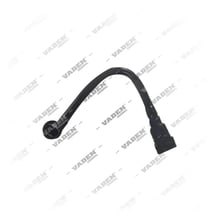
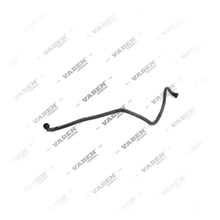
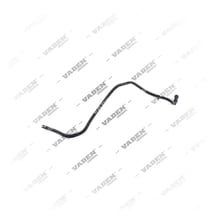
- In-line pump pipes: Bent steel pipes produced individually for each cylinder in engines with mechanical injection pumps.
- Common rail injector pipes: Short, thick-walled pipes running from the rail block to each injector; their ends are reinforced to withstand very high pressure.
- Pump-to-rail supply pipe: The single-piece pipe connecting the high-pressure pump outlet to the rail inlet, and the most heavily loaded line in the system.
- Injector return pipes: Low-pressure elements that carry surplus fuel leaking from the injector back to the tank; used with T-connections and short hoses.
- Connection components: Fittings, banjo connections, clamps, and brackets keep the pipe correctly positioned.
- Complete pipe sets: Sets offering all of an engine's cylinder pipes together; preferred for full replacement after an overhaul.
How Do You Choose the Right Injection Line Pipe?
The most reliable way to choose correctly is to cross-reference the OE number on the removed pipe. If the number cannot be read, work from the engine code, pump type, and cylinder position instead; even within the same model, different engine variants can use different pipe lengths.
Criteria to verify when selecting an injection line pipe| Criterion | Why it matters |
|---|
| OE part number | The shortest path to an exact match; it eliminates application errors. |
| Engine code and pump type | In-line pumps, unit injectors, and common rail systems each use a different pipe family. |
| Outer diameter and wall thickness | Determines pressure resistance; a thin-walled pipe can burst in a high-pressure system. |
| Inner diameter | Affects fuel flow rate and pressure wave speed, and therefore the injection itself. |
| Overall length and bend | The pipe must seat without strain; a stressed pipe cracks at the fitting. |
| End form and fitting size | A conical or spherical end provides the metal-to-metal seal; the wrong form causes leaks. |
| Cylinder position | On the same engine, each cylinder's pipe can differ; the sequence number must be verified. |
Injection Line Pipe Maintenance and What to Watch For
High-pressure pipes are among the most sensitive fuel system components to work on. Because even the smallest particle of dirt entering the system can cause injector and pump failure, connection areas should be cleaned before removal and open ends should be capped.
- One-time-use rule: Many manufacturers state that a removed pipe should not be reused; once the end section is tightened, it deforms permanently.
- Tighten in stages, to torque: Seat the fittings by hand first, then tighten to the torque value specified by the manufacturer; overtightening crushes the end cone and creates a leak.
- Fit clamps completely: A missing or loose clamp leaves the pipe free to vibrate and quickly produces a fatigue crack.
- Do not force-bend the pipe: A pipe that does not fit is a sign it is the wrong part; a pipe forced into place carries both leak and crack risk.
- Bleed the line: After replacement, the line must be properly bled of air, and connections should be visually checked under pressure at first start-up.
Common Failures and Solutions
- Fuel leaking at the fitting: Usually caused by a crushed end cone, overtightening, or a reused pipe; replace the pipe and check the seating surface.
- Cracking in the pipe body: A fatigue crack resulting from a missing clamp or a strained installation; the pipe must be replaced and support brackets completed.
- Engine hard to start: There may be air trapped in the line or a blocked pipe; bleed the line and remove the pipe to check it is clear.
- Power loss and rough idle: A pipe with the wrong length or wrong inner diameter can disrupt injection timing; re-verify the part number against the OE reference.
- Darkening and fuel smell around a connection: An early sign of a micro-leak; because fuel dripping onto a hot surface carries a fire risk, this should be addressed without delay.
Why VADEN ORIGINAL?
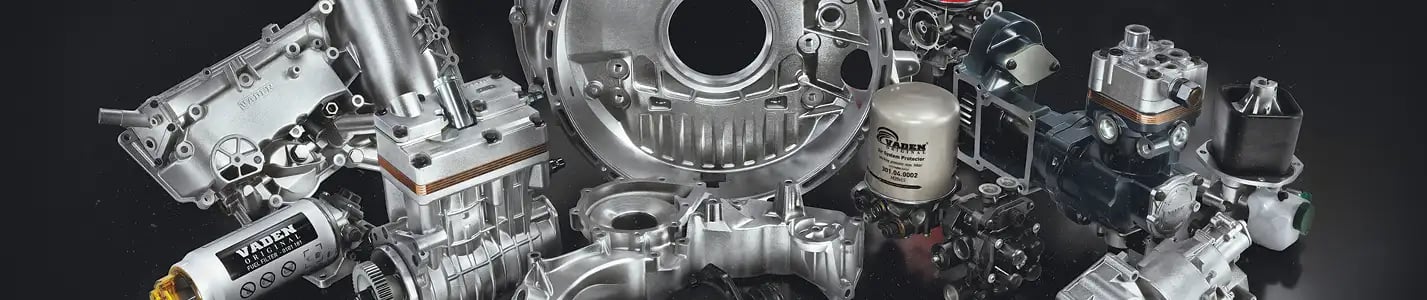
The VADEN ORIGINAL injection line pipe range is manufactured based on the original part's dimensions and material grade; length, bend angles, end form, and fitting sizes are cross-matched against the OE reference. The product range covers the common engine families used in Mercedes-Benz, MAN, Scania, Volvo, DAF, Iveco, Renault Trucks, BMC, and Ford heavy vehicles. VADEN exports heavy commercial vehicle spare parts to more than 100 countries; the same part number is available in different markets with the same dimensional and quality expectations.
Conclusion
The injection line pipe may look like a small part, but it directly determines the pressure integrity of the fuel system. A pipe chosen with the correct length, correct inner diameter, and correct end form means leak-free operation, stable injection timing, and a longer injector life. Work from the OE number when selecting, and follow torque and cleanliness rules during installation.
Frequently Asked Questions (FAQ)
What does an injection line pipe do?
It carries the high-pressure fuel leaving the injection pump or the common rail block to the injectors without dropping pressure. Because pipe length and inner diameter affect injection timing, it is manufactured to engine-specific dimensions. For this reason it cannot be substituted with a standard fuel hose or a hydraulic pipe.
Can a removed injection pipe be reused?
Most manufacturers state that the high-pressure pipe is single-use. Once the fitting is torqued down, the pipe's end cone deforms permanently and will not provide the same seal on a second installation. The safe approach is to replace the removed pipe with a new one; the vehicle's current service manual is authoritative for the exact procedure.
How can you tell an injection line pipe has failed?
The most common signs are fuel leaking around the fitting, darkening and fuel smell at the connection area, power loss, and hard starting. A fatigue crack in the pipe body leaks in a fine spray pattern. Because fuel dripping onto a hot surface carries a fire risk, these signs should be checked without delay.
What are the most common mistakes made when fitting a pipe?
The most common mistakes are overtightening, leaving clamps off, and force-bending a pipe that does not fit into place. Overtightening crushes the end cone and causes a leak, while a missing clamp leads to cracking from unchecked vibration. Fittings should be seated by hand first, then tightened to the torque value given by the manufacturer.
How do I choose the right injection line pipe?
The most reliable way is to cross-reference the OE part number on the removed pipe. If the number cannot be read, work from the engine code, pump type, and cylinder position; different engine variants on the same vehicle model can use different lengths. Be sure to confirm that outer diameter, inner diameter, overall length, bend geometry, and end form all match exactly.
Related technical guide: Diesel Injection Line & Fuel Pipe: Faults, Repair, Maintenance