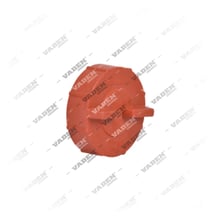
What is an Engine Oil Sump Cover?
- Location: On the engine oil sump, near the inspection or access point.
- Material: Sheet or cast steel, aluminum alloy in some models.
- Parts used together: Gasket or sealant, fastening bolts.
- Application: Heavy commercial vehicle engines with a separate inspection/access cover on the sump.
What are the functions of the Engine Oil Sump Cover?
The cover's primary function is to prevent the engine oil inside the sump from leaking out and to preserve internal pressure. It also provides controlled access to the inside of the sump during maintenance, facilitating replacement of parts such as the oil pump or strainer.
- Sealing: Prevents engine oil from escaping the sump.
- Access convenience: Provides access to components inside the sump without requiring full sump removal.
- Dirt and dust protection: Prevents dirt and moisture from the outside environment entering the sump.
- Pressure balance: Contributes to keeping the sump's internal pressure appropriate for engine operating conditions.
What are the symptoms of a faulty Engine Oil Sump Cover?
A cover fault usually shows itself as an oil leak caused by gasket hardening or cover deformation. An oil stain under the engine, an unexpected drop in oil level and soot accumulation around the cover are typical symptoms.
- Oil leak: Visible oil stain or dripping around the cover.
- Oil level drop: A faster-than-expected decrease in level on the dipstick.
- Soot and dirt accumulation: Leaking oil mixing with dust to form a dark residue around the cover.
- Visible deformation: Cracks, warping or corrosion marks on the cover.
- Oil pressure warning lamp: The oil level/pressure warning lamp lighting in advanced leaks.
How is the Engine Oil Sump Cover checked?
Checking starts with a visual inspection under the engine and around the cover; oil stains, soot accumulation and loose bolts are examined. Then the engine is run briefly to observe whether the leak is active.
- Visual inspection: Checking the cover surface and gasket line for leaks, cracks and corrosion.
- Bolt tightness check: Checking the fastening bolts with a torque wrench.
- Observation with the engine running: Detecting an active leak by briefly running the engine.
- Oil level monitoring: Checking the dipstick at regular intervals to track for an abnormal drop.
What should be considered when replacing it?
When replacing the cover, the engine oil must be drained and old gasket residue completely cleaned from the body surface. The new cover must be installed with the gasket or sealant specified by the manufacturer, and the bolts tightened in a crossing sequence.
- Oil drainage: The engine oil must be drained before removing the cover.
- Surface cleaning: No old gasket or sealant residue should be left on the body or cover surface.
- Correct sealing material: The gasket or sealant specified by the manufacturer must be used.
- Tightening torque: A general torque range should be applied to the bolts; the vehicle's current OE service manual should be treated as authoritative.
- Oil fill and check: After installation, the correct type and amount of oil must be filled, and a leak check performed by briefly running the engine.
How to choose the right Engine Oil Sump Cover?
The decisive criteria when choosing the correct cover are the engine model, sump type and gasket/sealant compatibility. A cover of a different size can compromise sealing and damage the body during installation, so a product matching OEM dimensions should be preferred.
Selection criteria for the Engine Oil Sump Cover| Parameter | Typical value / range |
|---|
| Material | Sheet/cast steel or aluminum alloy |
| Sealing type | Gasket or liquid sealant (depending on engine model) |
| Temperature resistance | -30°C to +150°C (engine oil temperature range) |
| Bolt class | High-strength bolts matching manufacturer torque specification |
| Compatibility | Exact match with engine model and OEM part number |
Maintenance and service life
The cover's service life depends on adherence to the correct tightening torque and the quality of the sealing material. On engines that run excessively hot, gasket material can harden faster. Visually inspecting the area around the cover during periodic oil changes helps detect a potential leak early. On vehicles that operate for extended periods at high engine temperature, such as heavy load towing or long grade driving, the service life of the sealing material can shorten, so increasing the check frequency is recommended for such usage profiles.
Using the wrong type or a low-quality sealing material can lead to renewed leakage within a short time, so it is important for service teams to prefer products approved by the engine manufacturer.
VADEN Engine Oil Sump Cover
VADEN bases its sump covers for heavy commercial vehicle engines on OEM dimensions and material standards. For the correct application, the VADEN product catalog and technical support line are available for reference.
Frequently Asked Questions (FAQ)
How dangerous is a sump cover leak for the engine?
A small leak does not directly affect the engine in the short term, but prolonged use without checking the oil level can lead to oil starvation and serious damage; early intervention is recommended.
Can sealant be used instead of a gasket?
Some engine models are manufactured from the factory with liquid sealant; which method to use should be determined according to the specification stated by the manufacturer.
Does all the sump oil need to be drained when replacing the cover?
Yes, since the cover is on the sump, the oil must be fully drained before removal; otherwise leakage and contamination will occur.
What problems can result from a cover tightened with incorrect torque?
Under-tightening can cause a leak, while over-tightening can cause cover deformation or damage to the body threads; the manufacturer's torque value should be followed.
Can the vehicle be driven immediately after installing the cover?
After installation, a leak check with a brief idle run is recommended before driving.