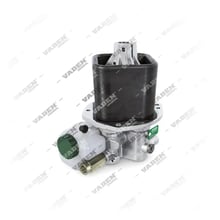
What Is a Shift Tower?
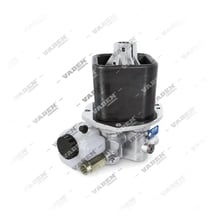
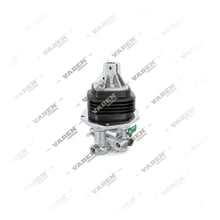
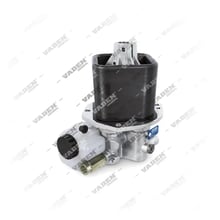
The shift tower is a complete unit mounted on top of the transmission housing that forms the gear-selection mechanism of manual and semi-automatic transmissions in heavy commercial vehicles. In the field it is also known as the "gearshift tower" or "transmission tower." It is the mechanical bridge that connects the gear lever in the cab to the shift forks and synchronizer assemblies inside the transmission, transferring the driver's lever movement directly into the transmission's internal mechanism. Inside it houses a selector shaft, a shift rail, interlock balls, springs, seals, and, in some models, pneumatic or electro-pneumatic auxiliary components. The shift tower products on this page are offered as complete, pre-assembled units rather than individual spare parts; repair kits are listed in a separate category. When the shift tower fails, gear changes become stiff, certain gears can no longer be engaged, or the gear lever goes loose in neutral — so the transmission's safe operation depends directly on the tower's integrity.
How Does a Shift Tower Work?
When the driver moves the gear lever, that motion is transmitted to the selector and shift rails inside the tower, which together carry out several core functions.
- Gear Rail Selection: The selector shaft determines which shift rail is activated.
- Shift Fork Actuation: The shift rail moves along the selected path, pushing the corresponding shift fork.
- Synchronizer Engagement: The shift fork moves the synchronizer ring, giving smooth engagement between gear and shaft.
- Double-Engagement Protection: Interlock balls and springs prevent more than one gear engaging at the same time.
- Air-Assisted Shifting: On some models, a pneumatic or electro-pneumatic air cylinder eases shifting, particularly in range-splitter transmissions.
Shift Tower Technical Specifications
Shift towers are manufactured with cast aluminum or steel housings, aiming for both light weight and mechanical durability. The selector and shift rails are made of hardened steel with surfaces specially treated to resist wear. Seal and gasket sets are designed to keep transmission oil inside the tower and dust or moisture out. When selecting a shift tower, the vehicle make, transmission model (for example ZF, Eaton, or transmissions with OEM manufacturer codes), and number of gears are the determining criteria; two towers that look identical can have different flange dimensions or shaft diameters. Bolt count and pattern on the mounting flange, the flatness of the sealing surface, and shaft length are all critical for compatibility. Rather than quoting an exact torque or pressure figure, installation should always follow the values in the vehicle's current service manual.
Shift Tower Types and Subcategories
- Standard Mechanical Shift Tower: A basic type operating entirely through mechanical selector and shift rails, with no pneumatic or electrical assistance.
- Pneumatically Assisted Shift Tower: Supported by air cylinders, easing gear changes particularly in transmissions with range and splitter groups.
- Electro-Pneumatic Shift Tower: An advanced type transmitting position data via electronic sensors, used in automated manual transmissions (AMT).
- Flange Connection Types: Model-specific variants mounted to the transmission housing with different bolt patterns and sealing surfaces.
- Towers with Gear Lever Linkage: Variants including the ball joint and rod end connecting directly to the cab's gear lever.
How to Choose the Right Shift Tower
The most important step when replacing a shift tower is verifying the OEM code and transmission type label on the removed part; ordering based only on vehicle make and model year can lead to a mismatch. The table below summarizes the key selection criteria.
Shift Tower Selection Criteria| Criterion | Why It Matters |
|---|
| Transmission Make and Model | Selector/shift rail layout varies by transmission family |
| OEM Part Number | Visually similar towers can have different internal mechanisms |
| Mounting Flange Size | Installation is impossible if bolt count and pattern do not match |
| Pneumatic Connection Present | Air-assisted models require additional hose/fitting ports |
| Number of Gears and Shift Pattern | Internal tower structure differs across 6, 9, 12, and 16-speed transmissions |
Shift Tower Maintenance and Key Considerations
- Pre-Installation Surface Cleaning: Old gasket residue on the transmission housing must be fully removed, with the sealing surface free of scratches and pitting.
- Correct Torque Value: Mounting bolts must be tightened to the value specified in the vehicle's service manual, in a cross-tightening sequence.
- Pneumatic Line Inspection: On air-assisted towers, hose connections should be leak-tested and the condition of fittings and O-rings verified.
- Oil Level Check: After installation, check the transmission oil level and top up with oil meeting the manufacturer's standard if needed.
- Gear Lever Alignment: The in-cab linkage must seat onto the tower's shaft at the correct angle, and any loose ball joints must be replaced.
Common Faults and Solutions
- Stiffness in Gear Changes: Usually caused by wear on the selector/shift rail or insufficient lubrication; the tower's internal mechanism should be inspected and, if needed, replaced as a complete unit.
- Specific Gear Cannot Be Engaged: A broken interlock ball or spring causes this symptom; the tower should be removed, its internals inspected, and the faulty part replaced.
- Play Felt in the Gear Lever: This occurs due to ball joint wear or movement in the tower's connecting shaft; check the linkage components and shaft bushings.
- Air Leak Noise (Pneumatic Type): Caused by a deteriorated gasket or O-ring; renew the sealing components and pressure-test the line.
- Transmission Oil Leak: Seen when the gasket between tower and housing deteriorates; replacing it and tightening to the correct torque resolves the issue.
Why VADEN ORIGINAL?
- OE Dimensions and Tolerances: Matches the removed original part exactly and installs without extra machining.
- Broad OEM Matching: Extensive coverage for vehicles fitted with transmissions from system manufacturers such as Wabco and Knorr-Bremse.
- Controlled Material Quality: Material hardness and surface treatments are audited against original part standards, preventing premature wear at the shaft and seal areas.
- International Reach: VADEN ORIGINAL products are exported to more than 100 countries, built for the long-haul conditions of heavy commercial vehicle fleets.
Conclusion
The shift tower is a critical unit that directly determines gear-selection accuracy and driving comfort. Correct OEM code matching, proper installation, and regular maintenance extend its service life and prevent unexpected gear-shift failures. VADEN ORIGINAL shift towers are built to OE quality, aiming to deliver reliable, uninterrupted shifting for heavy commercial vehicle fleets.
Frequently Asked Questions (FAQ)
What does a shift tower do?
The shift tower is the mechanical unit that connects the gear lever in the cab to the shift forks inside the transmission. It transfers the driver's movement of the gear lever through the selector and shift rails into the transmission's internal mechanism, ensuring the correct gear is engaged.
What symptoms appear when a shift tower fails?
The most common symptoms are stiffness in gear changes, a specific gear that cannot be engaged, a loose feeling in the gear lever, and, on pneumatic types, an air leak noise. If any of these symptoms are noticed, the tower's internal mechanism should be inspected.
What is the difference between a shift tower and a repair kit?
The shift tower is a complete, pre-assembled unit that includes the selector shaft, shift rail, interlock components, and housing. A repair kit, on the other hand, is a separate overhaul set containing individual wearing parts inside the tower, such as gaskets, seals, balls, and springs.
Which transmissions is a shift tower compatible with?
Compatibility depends more on the transmission model and shift pattern than on the vehicle make; different tower types exist for OEM transmissions such as ZF, Eaton, and similar manufacturers. Before ordering, the OEM code on the removed part should be verified to ensure a correct match.
When is a pneumatically assisted shift tower preferred?
Pneumatically assisted shift towers are used in multi-speed heavy commercial vehicle transmissions with range-splitter groups to reduce the shifting effort required. Thanks to their air cylinders, this type significantly reduces the physical force the driver needs to exert.
Related technical guide: Transmission Shift Tower: Faults, Replacement & Maintenance