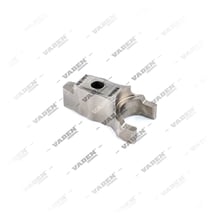
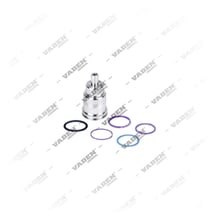
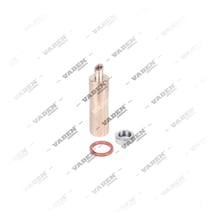
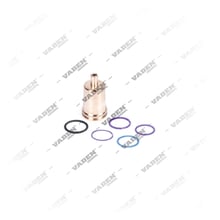
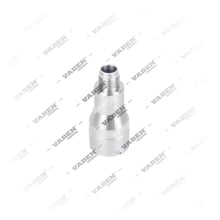
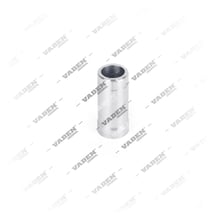
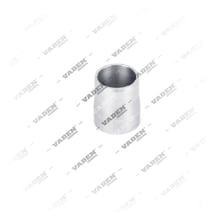
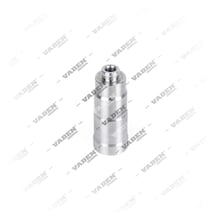
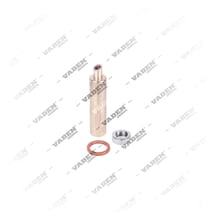
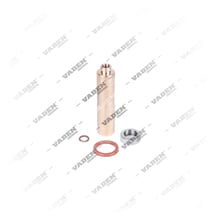
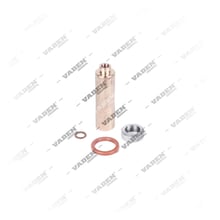
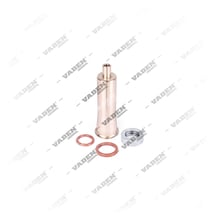
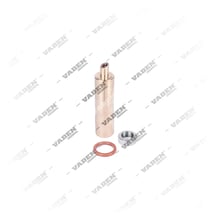
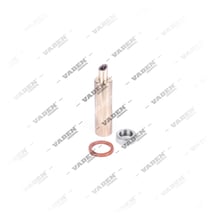
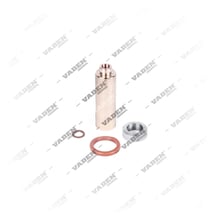
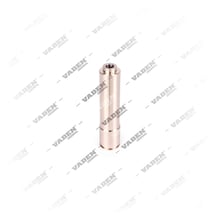
What Is a Cylinder Head Injector Clamp?
A cylinder head injector clamp is the fastening component in heavy-duty diesel engines that holds the injector in its bore on the cylinder head and transfers clamping force from the retaining bolt evenly onto the injector body. Since the injector is exposed to combustion recoil and thermal expansion on every cycle, the clamp absorbs these forces and keeps it from lifting, leaking, or shifting off-axis. Bolted directly onto the head, it is the load-bearing link in the sealing arrangement between head and injector.
In the field, the same part is also called an injector hold-down clamp, injector bridge, injector fork, or injector bracket. It is used on trucks, tractor units, buses, and heavy equipment, from mechanical pump to common rail systems. This category covers common variants fitted to Mercedes-Benz, MAN, Scania, Volvo, DAF, Iveco, and Renault Trucks engines.
How Does a Cylinder Head Injector Clamp Work?
The working principle relies on controlled force distribution. Force from the bolt passes through the contact face onto the injector, seating it against the copper sealing washer and forming a leak-tight seat. That force must be sufficient and symmetrical; otherwise the injector sits at an angle and the spray cone is distorted.
- Generating axial clamping force: The tightened bolt creates elastic preload in the clamp, continuously pressing the injector into its bore.
- Distributing the force: The contact face is machined to spread the load over a wide area, avoiding any notch effect in the body.
- Sealing: The copper washer deforms under the clamping load and prevents combustion gas from escaping.
- Thermal movement: Head, injector, and clamp expand at different rates; the cross-section absorbs this difference without losing preload.
- Vibration resistance: Needle impact loads pass through the clamp into the head; a sound clamp keeps the bolt from working loose.
Cylinder Head Injector Clamp Technical Specifications
Injector clamps are made from forged or precision-cast steel; variants that must hold preload at high temperature use heat-treated alloy steel. Machining quality of the contact face directly affects sealing life. Compatibility is determined by bolt-hole center distance, clamp height, bore-engagement diameter, and pressing-face angle. Tightening torque varies by engine family and is typically applied in two stages, initial torque followed by angle-of-turn tightening; follow the vehicle manufacturer's current service manual for the exact value.
Cylinder Head Injector Clamp Types and Subgroups
Products fall into a few main types depending on injector-mounting architecture. Choosing the correct type is decisive for fit and clamping behavior; two similar-looking clamps can still have different pressing heights.
- Fork (clip) type clamps: Grip the injector from two arms, secured with a single bolt; common on mechanical pump engines.
- Bridge type clamps: Seated between two bolts, pressing the injector down from the center; preferred on high-pressure common rail engines.
- Flanged clamp feet: Seat directly on the injector flange, usually secured with bolts at two points.
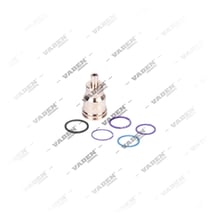
- Bolt and sealing kits: Fasteners sized to the specified torque, supplied with the copper sealing washer.
How to Choose the Right Cylinder Head Injector Clamp
The most reliable approach is to work from the OE number stamped on the removed part. If unreadable, check engine code, cylinder head type, and clamp geometry together, since the same model can use a different clamp depending on engine variant.
Cylinder Head Injector Clamp Selection and Compatibility Criteria| Criterion | Why It Matters | How to Verify |
|---|
| OE reference number | Most reliable indicator of compatibility | Match the stamped code to the cross-reference |
| Engine code | Same-series engines can use different geometry | Check the data plate code and chassis info |
| Clamp type | Fork, bridge, and flanged types are not interchangeable | Compare gripping style and bolt count |
| Bolt-hole spacing | Incorrect spacing stresses the head surface | Measure old and new parts with calipers |
| Pressing height | A mismatch disrupts preload and sealing | Measure both parts side by side on a flat surface |
| Tightening torque | Under-torque risks leaks, over-torque risks breakage | Follow the manufacturer's current service manual |
Cylinder Head Injector Clamp Maintenance and Points to Watch
The clamp is not a scheduled wear item, but its condition should be assessed every time an injector is removed. Refitting a deformed, cracked clamp, or one with a crushed pressing face, results in a leak within a short time.
- Clean the contact faces: Carbon left in the bore causes the injector to seat at an angle.
- Renew the copper washer: A washer already crushed once cannot seal the same way twice.
- Use a torque wrench: Tightening by feel leads to leaks or a snapped bolt.
- Do not reuse the bolt: A bolt near its elongation limit cannot hold preload once retightened.
- Check after start-up: Once warm, check for soot marks, leaks, and any hissing sound.
Common Failures and Solutions
Problems traced to the clamp are often mistaken for injector failure, yet the symptoms point to this connecting area instead. The pairings below guide field diagnosis; a leak or pressure test should confirm the final call.
- Soot marks around the injector: A gas leak from insufficient torque or a fatigued clamp; renew clamp, bolt, and washer and clean the bore.
- Hissing sound when cold: A crushed pressing face cannot seal before the engine warms up; check for flatness and replace.
- Recurring bolt loosening: The clamp has lost preload or the bolt is wrong; retighten in sequence with a new bolt of the original size.
- Damage in the head bore: Excessive torque or wrong geometry has stressed the head; have the bore measured and switch to a correctly referenced part.
Why VADEN ORIGINAL?
VADEN ORIGINAL, a manufacturer specialized in heavy-duty commercial vehicle spare parts, produces injector clamps to OE dimensions. Products are listed under separate references by pressing geometry and bolt layout, avoiding mix-ups between similar parts.
- Manufactured to OE dimensions: Bolt-hole spacing, pressing height, and gripping geometry are machined against the original part.
- Broad OEM matching: Common types for Mercedes-Benz, MAN, Scania, Volvo, DAF, Iveco, and Renault Trucks engines are matched by cross-reference.
- Thermal-fatigue-resistant material: Material and heat treatment are selected to hold preload through cylinder head temperature cycling.
- Exports to 100+ countries: A product range used across an international service network ensures supply continuity.
Conclusion
Despite its small size, the cylinder head injector clamp directly governs the sealing integrity and combustion quality of a diesel engine. Selecting the correct type, keeping contact faces clean, and following the tightening procedure protect both injector life and head integrity. For torque and dimensional values, follow the vehicle manufacturer's current service manual.
Frequently Asked Questions (FAQ)
What does a cylinder head injector clamp do?
It holds the injector in its bore on the cylinder head and transfers the clamping force from the retaining bolt evenly onto the injector body. This pressure lets the copper washer beneath the injector form a leak-tight seat, preventing combustion gas from escaping onto the head surface. The clamp also stops the injector from shifting under the recoil forces generated during injection.
How can you tell if an injector clamp has failed?
The clearest sign is soot or carbon buildup around the injector, along with a hissing sound that is especially noticeable on a cold engine. Recurring bolt loosening, an uneven idle, and cylinder imbalance can also point to a clamp that has lost its preload. When these symptoms appear, check the pressing face for flatness and inspect it for cracks.
Can an injector clamp and its bolt be reused?
The clamp can be considered for reuse if it shows no deformation, cracking, or a crushed pressing face, but the retaining bolts should not be reused since they operate near their elongation limit on most engines. A copper sealing washer that has already been crushed once will not provide the same seal a second time either. For a safe installation, renewing both the bolt and the washer is recommended.
What torque should the injector clamp bolt be tightened to?
Tightening torque varies significantly by engine family and clamp type, and is usually applied in two stages: a low initial torque followed by an angle-of-turn tightening. Because of this, quoting a single fixed figure would be misleading; the vehicle manufacturer's current service manual is always the reference. Tightening should always be done with a torque wrench and in the specified sequence.
How do I choose the right injector clamp for my vehicle?
The most reliable method is matching the OE number on the removed original part against the catalog cross-reference. If the number cannot be read, the engine code, clamp type, bolt-hole spacing, and pressing-face height must all be verified together. Since the same vehicle model can use a different clamp depending on engine variant, model information alone is not enough.
Related technical guide: Engine Cylinder Head Group: Faults, Replacement & Maintenance