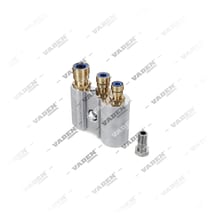
What Is a Transmission Housing Valve?
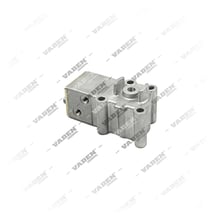
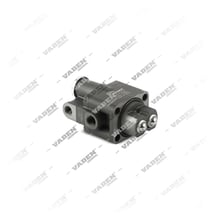
A transmission housing valve is a pneumatic control component mounted on the transmission housing of heavy commercial vehicles, responsible for managing gear shifts and range selection. Truck, tractor unit and bus transmissions rely on air-pressure-actuated forks and piston assemblies to change ranges; the unit that decides which line receives air, and when, is the transmission housing valve. In the field this part is also referred to as the transmission valve, shift valve or range valve.
How Does a Transmission Housing Valve Work?
The valve receives dried and regulated supply air and, based on the signal coming from the driver or the control unit, directs this air to the relevant working line. When the signal is cut, the line vents through the exhaust port and the piston returns to its initial position under spring force. This makes every shift a repeatable movement.
- Supply: The valve takes in clean air that has already passed through the air dryer and the protection valve, via the supply port.
- Direction: The spool or diaphragm assembly shifts position and routes air into the relevant chamber of the fork piston.
- Locking: Once the range change is complete, it holds pressure steady, preventing the gear from jumping out under vibration.
- Exhaust: When the signal is cut, the line vents through a calibrated exhaust orifice; shift firmness is tied to this orifice.
- Venting: Vented-type valves release the pressure build-up inside the housing, preventing the seals from leaking oil.
Transmission Housing Valve Technical Specifications
Valve bodies are generally manufactured from aluminium alloy or brass, while the spool and spring elements are made from heat-treated steel. Since the part is exposed to both compressed air and oil vapour at the same time, sealing elements are typically NBR- or FKM-based elastomers chosen for their heat and oil resistance. In heavy commercial vehicle pneumatic circuits, working pressure generally falls within the 8-12.5 bar range, and valves are designed to operate between roughly -40 and +100 degrees Celsius. These figures are general guidance only; for thread connection, port count and tightening torque, the vehicle manufacturer's current service manual is the authoritative source.
Transmission Housing Valve Types and Subgroups
- Range Valve: Controls the planetary range that links the high and low gear groups; the type most frequently replaced on long-haul tractor units.
- Splitter Valve: Manages the intermediate (split) gear change; if half-step shifts are delayed, this valve should be checked first.
- Gear Selector Control Valve: Distributes the signal coming from the gear lever or the control unit to the working cylinders inside the housing.
- Lock and Auxiliary Control Valves: Manage the air supply for the lock and auxiliary functions at the transmission output.
- Vent Valve: Balances internal housing pressure with atmospheric pressure, limiting the ingress of water and dust.
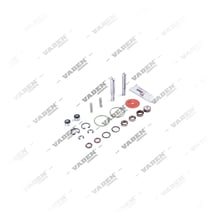
- Valve Repair and Seal Kits: Where the body is still sound, these allow just the sealing elements and springs to be renewed.
How to Choose the Right Transmission Housing Valve
Choosing correctly starts with identifying the vehicle's transmission type and control architecture. Even within the same make, port layout and thread size can differ between transmission series, so selecting purely by vehicle model is a mistake. The most reliable method is to use the type code on the transmission tag together with the OE number on the old valve. The table below summarises the criteria to check.
Transmission Housing Valve Selection and Compatibility Criteria| Criterion | What to Check | Practical Note |
|---|
| Transmission type | Type and series code on the housing | The same model may use different transmission series |
| OE reference | Original number on the removed valve | The most reliable data for cross-referencing |
| Port count and thread | Supply, working and exhaust ports plus thread size | Even a single port difference makes the part incompatible |
| Control type | Pneumatic-signal or electro-pneumatic design | On electric types, the connector and coil voltage must also match |
| Working pressure | Circuit's regulated supply pressure | General range for heavy commercial vehicles is 8-12.5 bar |
| Vehicle application | Mercedes-Benz, MAN, Scania, Volvo, DAF, Iveco, Renault Trucks | The list is a guide only; confirm with the OE number |
Transmission Housing Valve Maintenance and Key Points to Watch
The single biggest factor determining valve life is the quality of the air supplying it. Damp, oily air causes resin-like deposits to form on the spool surface; the valve first slows down, then sticks. Maintenance should therefore start at the air dryer.
- Protect air quality: Replace the dryer cartridge on schedule and regularly drain water from the reservoirs.
- Keep the installation area clean: Clean around the valve before removal; do not let dirt or gasket debris fall into the housing.
- Renew the gasket every time: Never refit a used gasket or O-ring; this is the most common cause of leaks.
- Respect torque values: Overtightening an aluminium body will crack it; for the correct tightening value, the vehicle manufacturer's current service manual is the authoritative source.
- Mark the air lines: On multi-port valves, number the hoses before removal; a reversed connection causes range faults.
- Test after replacement: Charge the system to working pressure, check for leaks, and try every range with the vehicle stationary.
Common Faults and Their Solutions
- Gear shifts slowly or not at all: Caused by a contaminated spool or a drop in supply pressure; measure line pressure and check both the valve and the supply line.
- Range jumps out on its own: Caused by deteriorated internal sealing; renew the sealing elements with a repair kit, or replace the valve if necessary.
- Persistent air leak: Caused by an aged O-ring or a worn spool bore; identify whether the leak comes from the exhaust port or the body, then act accordingly.
- Transmission housing losing oil: Caused by internal pressure build-up from a blocked vent valve; clean or renew the valve and check the seals.
- Harsh, jerky shifts: Caused by a narrowed exhaust orifice due to dirt, or the wrong valve type being fitted; confirm the OE reference and fit the correct valve.
- Fails to operate in cold weather: Caused by water collecting in the line and freezing; check the dryer and the reservoir drain valves.
Why VADEN ORIGINAL?
- Manufactured to OE dimensions: The body, spool and spring elements are machined to the original part's dimensional and tolerance logic, preserving port layout.
- Broad OEM cross-referencing: A cross-reference number list is provided for Mercedes-Benz, MAN, Scania, Volvo, DAF, Iveco and Renault Trucks references.
- Oil-resistant sealing: Elastomers suited to the transmission housing environment are used, reducing early failures caused by leaks.
- Continuous production and stock: The product group is manufactured on an ongoing basis, shortening part wait times in fleet maintenance.
- Exported to more than 100 countries: Field feedback from a wide range of climates and load conditions feeds back into production.
Conclusion
A transmission housing valve is a small but decisive pneumatic component that ensures gear shifts happen at the right moment and in a repeatable way. Behind complaints of gears not shifting, ranges jumping out, or the housing losing oil, there is usually not an expensive transmission overhaul but a contaminated or leaking valve. Choosing the right part means verifying the transmission type code, the OE reference and the port configuration together, renewing the gasket during installation, and respecting torque values. VADEN ORIGINAL transmission housing valve products give workshops that follow these checks a solution built to OE dimensions with broad application coverage.
Frequently Asked Questions (FAQ)
What does a transmission housing valve do?
A transmission housing valve directs pressurised air from the pneumatic circuit to the working cylinders that carry out the gear shift, and holds pressure once the range change is complete. Vented types also balance internal housing pressure, preventing the seals from leaking oil. In short, it determines the timing and stability of gear shifts.
What are the symptoms of a faulty transmission housing valve?
The most common symptoms are gears shifting late or not at all, ranges jumping out on their own, a constant hissing air leak around the valve, and oil seeping from the housing. Shifts becoming harder in cold weather points to moisture collecting in the line and the valve sticking. When these symptoms appear, supply pressure should be measured first, followed by a check of the valve itself.
Should I replace the transmission housing valve completely, or is a repair kit enough?
If the body and spool surface are not scored, leaks are usually caused by aged O-rings and gaskets, in which case a repair kit is an economical and adequate fix. If the spool is worn or the body has a crack or thread damage, the valve should be replaced completely. The part should be removed and the sealing surfaces inspected visually to decide.
How do I find the correct transmission housing valve?
The most reliable method is to use the OE number on the removed valve together with the type code on the transmission housing. Choosing by vehicle make and model alone can be misleading, since the same model may use different transmission series. Port count, thread size and control type also need to match.
What shortens the life of a transmission housing valve?
The biggest factor is air quality; when the dryer cartridge is not replaced on time, moisture and oil build up on the spool and cause sticking. Failing to drain water from the reservoirs regularly, and fitting a used gasket during installation, also noticeably shorten its life. For maintenance intervals, the vehicle manufacturer's current service manual is the authoritative source.
Related technical guide: Transmission Housing Repair Kit & Valve: Faults & Replacement