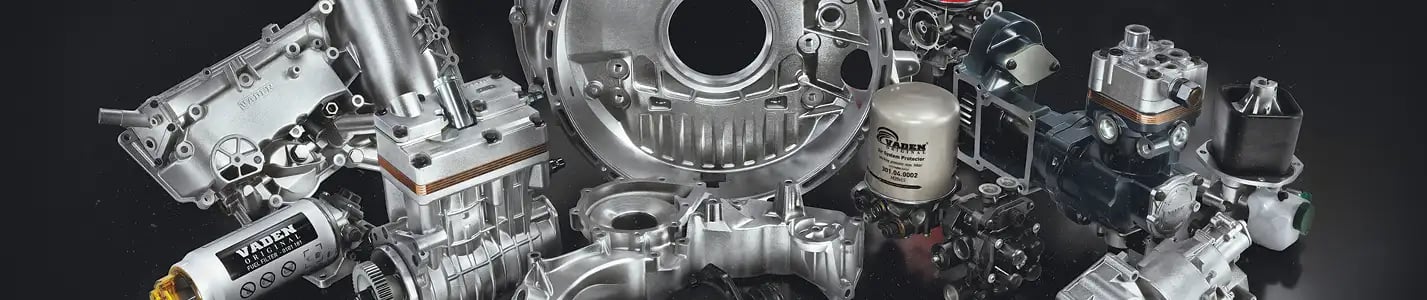
What Is a Gearbox Housing Repair Kit?
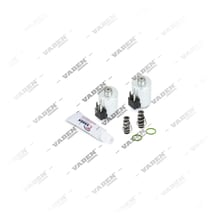
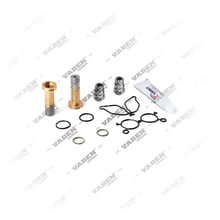
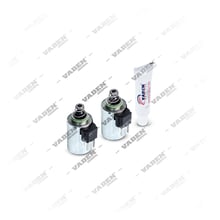
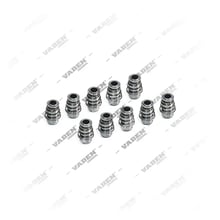
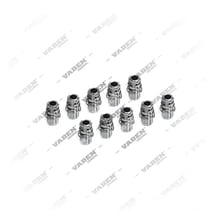
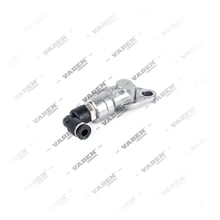
A Gearbox Housing Repair Kit is a service set that combines the sealing, bushing, and locking components of the gearbox housing and its shift mechanism in a single package for heavy commercial vehicles. It typically includes the gasket and seal set, O-rings, bushings, pins, springs, detent balls, and circlips — every consumable part that should not be reused once the housing is opened, supplied ready to fit. In the field it is also known as a gearbox repair kit, transmission cover repair kit, or shift mechanism kit. On trucks, tractor units, buses, and trailer-towing vehicles, a worn bushing or a failed seal can be fixed with this kit alone, without a full gearbox overhaul.
How Does a Gearbox Housing Repair Kit Work?
The gearbox housing transfers motion from the gear lever or the pneumatic shift actuator to the selector shafts and shift forks inside the transmission. Correct transmission of that motion requires shaft clearance within tolerance, working locking details, and an oil-tight housing. The repair kit restores all three functions.
- Motion transfer: The selector shaft and fork pins direct gear-lever movement to the synchronizer assemblies.
- Clearance control: Bushings keep the shaft running without play; a worn bushing causes stiff, notchy shifting.
- Locking: Springs, detent balls, and locking pins hold each gear in position and stop two gears engaging at once.
- Sealing: The gasket, seal, and O-ring set stops oil leaks and keeps out dust, water, and dirt.
- Pneumatic applications: In air-shift setups, the sealing elements prevent air loss and keep shift speed consistent.
Gearbox Housing Repair Kit Technical Specifications
Kit materials are matched to the temperature and chemical conditions of the operating environment. The sealing elements are elastomers resistant to gearbox oil and to temperatures around 120 degrees Celsius; bushings and bearing elements are made from low-friction bronze, steel, or composite materials. Springs and locking elements are spring steel. What matters most dimensionally is the fit tolerance between shaft diameter and housing bore, together with gasket surface geometry — if these are off, the housing keeps leaking even after the kit is fitted. These ranges are for general guidance only; for torque and tolerance values, the vehicle manufacturer's current service manual is the authoritative source.
Gearbox Housing Repair Kit Types and Subgroups
- Gasket and seal kits: Cover only the sealing elements; the right choice when oil leaks appear but the mechanical parts are still sound.
- Shift mechanism kits: Include selector shaft bushings, fork pins, and the spring-and-ball set; used for stiff shifting and gear jump-out.
- Full housing overhaul kits: Combine sealing and wear parts in one kit; the right choice on high-mileage vehicles when the housing is fully stripped down.
- Pneumatic shift repair kits: Cover the cylinder sealing elements and piston consumables in the air-shift assembly.
- Mounting hardware sets: Contain single-use bolts, washers, and locking plates that secure the housing to the transmission body.
How to Choose the Right Gearbox Housing Repair Kit
The most reliable way to choose the right kit is to work from the OE reference number on the removed housing. Even within the same vehicle model, the kit changes whenever gearbox type or number of speeds changes. Before ordering, verify the type plate, number of speeds, whether the shift is mechanical or pneumatic, and the shaft diameter.
Gearbox Housing Repair Kit selection and compatibility criteria| Criterion | Why it matters | How to verify |
|---|
| OE reference number | The most reliable indicator of compatibility | Read the number on the housing or gearbox tag |
| Gearbox type and number of speeds | The selector shaft layout changes with the number of speeds | Compare the type plate with the technical documentation |
| Shift system | Kit contents differ between mechanical and pneumatic shift | Check the housing for an air-line connection |
| Shaft and bore diameter | Wrong tolerance causes play or binding | Measure the removed shaft and bore |
| Vehicle make application | The same gearbox type may use a different housing | Check the Mercedes-Benz, MAN, Scania, Volvo, DAF, Iveco application list |
| Kit contents | Missing parts mean a second order | Compare against the list of parts removed |
Gearbox Housing Repair Kit Maintenance and Points to Watch
How lasting the repair is depends as much on installation discipline as on part quality. Once removed, mating surfaces must be cleared of old gasket residue, the housing checked for cracks, and oil passages cleaned. During assembly, seals should be lubricated before fitting and bolts tightened in stages, following the manufacturer's sequence.
- Never reuse consumable parts: Gaskets, seals, O-rings, and circlips are single-use; refitting the old ones causes a leak within a short time.
- Pay attention to surface cleanliness: Leftover gasket material or burrs stop the new gasket from seating properly and are the most common cause of leaks.
- Take torque values from the manual: Overtightening strips threads in an aluminum housing; undertightening causes leaks — for exact figures, the vehicle manufacturer's current service manual is the authoritative source.
- Check the shift setting: After assembly, try every gear and verify neutral position and reverse-gear lockout.
- Top up the oil level: Top up drained gearbox oil to the type and level specified by the manufacturer, or replace it entirely if contaminated.
Common Faults and Their Solutions
- Oil leaking around the housing: Caused by a hardened gasket, worn shaft seal, or loosened bolt. Clean the mating surfaces and renew the gasket-and-seal set.
- Stiff gear changes: Caused by a worn selector shaft bushing or insufficient lubrication. Replace the bushings and check the shaft surface for wear.
- Gear jump-out: Typically caused by a fatigued locking spring or a worn detent ball or pin. Replace the spring, ball, and pin set, and verify fork clearance.
- Slow pneumatic shifting: Deteriorated sealing elements cause air loss. Renew the O-rings and piston elements, and check the air lines for leaks.
- Metallic noise from the housing: A sign of excessive shaft play or a broken locking element. Inspect the internal components and check the gearbox oil for metal debris.
Why VADEN ORIGINAL?
- Manufactured to OE dimensions: Every part is produced to the dimensions and tolerances of the original unit, requiring no extra machining on installation.
- Broad OEM coverage: OE reference cross-matching covers the housing types most common on heavy commercial vehicle gearboxes.
- Complete contents: All consumable parts needed for the overhaul come in a single package, so there is no waiting on a missing part.
- Durable materials: Sealing elements are chosen for resistance to gearbox oil and heat, mechanical parts for continuous load.
- Exported to over 100 countries: VADEN ORIGINAL products are used in more than a hundred countries, and field feedback feeds directly into product development.
Conclusion
The Gearbox Housing Repair Kit is an economical solution that restores shift quality and gearbox sealing on heavy commercial vehicles without a complete unit replacement. Selection should weigh the OE reference number, gearbox type, shift system, and kit contents together. Renewing the consumable parts, keeping surfaces clean, and following the manufacturer's torque specifications make the repair last.
Frequently Asked Questions (FAQ)
What parts are included in a Gearbox Housing Repair Kit?
Contents vary by kit type, but a kit generally includes the gasket-and-seal set, O-rings, selector shaft bushings, fork pins, locking spring and balls, and circlips. Full overhaul kits also add mounting hardware. Before ordering, the most reliable approach is to compare the kit contents against the list of parts removed from the vehicle.
Oil is leaking from the gearbox housing — do I need to replace the entire gearbox?
In most cases, no. As long as the housing itself is not cracked or warped, the leak is largely caused by a hardened gasket or a worn shaft seal, and a repair kit will fix it. Component replacement should only be considered if the housing is damaged or the shaft bore shows significant wear.
Will a repair kit fix a gear jump-out problem?
Gear jump-out is most often caused by a fatigued locking spring or a worn detent ball or locking pin, and these parts are all included in the repair kit. However, if the problem lies in the shift fork or the synchronizer assembly, the kit alone will not be enough. That is why the internal components should also be inspected once the housing is opened.
How do I determine the right Gearbox Housing Repair Kit for my vehicle?
The most reliable method is to use the OE reference number on the removed housing or on the gearbox tag. You should also confirm the gearbox type, the number of speeds, whether the shift is mechanical or pneumatic, and the shaft diameter. Even within the same vehicle model, different gearbox types can call for different kits.
What tightening torque should be applied during installation?
The gearbox housing mounting bolts should be tightened in stages, following the sequence specified by the manufacturer. On aluminum housings, overtightening strips the threads, while undertightening causes leaks. For exact torque values, the vehicle manufacturer's current service manual is the authoritative source.
Related technical guide: Transmission Housing Repair Kit & Valve: Faults & Replacement