What is an Exhaust Manifold Repair Kit?
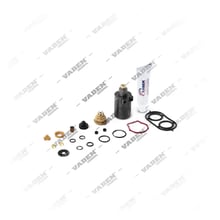
The repair kit is intended to supply, in a single package, the consumable parts needed every time the manifold is removed and reinstalled or the gasket is replaced, preventing the reuse of old, heat-fatigued bolts and gaskets. Critical for engine performance and exhaust sealing, this kit is a frequently requested category in engine maintenance and repair work despite its low stock level, with dozens of variants specific to different engine types sharing the same name. During engine speed changes, the exhaust manifold is exposed to a temperature swing of hundreds of degrees within seconds; this expansion-contraction cycle concentrates the greatest mechanical stress at the bolt connection points. That is why the heat resistance of the bolts and gasket material in the repair kit must be far higher than that of an ordinary fastener; using standard steel bolts can lead to loosening or breakage in a short time.
What are the functions of an Exhaust Manifold Repair Kit?
- Sealing: Prevents exhaust gas leakage at the contact surface between the manifold and the cylinder head.
- Secure connection: Keeps the manifold fixed and secure to the engine block despite thermal expansion.
- Thermal cycle resistance: Provides fasteners resistant to loosening under high temperature fluctuations.
- Noise and vibration control: Prevents rattling and exhaust leak noise caused by loose connections.
- System integrity: Supports lossless gas flow to downstream systems such as the turbocharger and catalytic converter.
- Maintenance convenience: Supplies all consumables needed for manifold removal and installation in a single package.
What are the symptoms of a failed Exhaust Manifold Repair Kit?
Symptoms indicating worn manifold fasteners usually appear as exhaust leaks and noise. If neglected, exhaust gas leaking into the engine compartment can be reflected as an odor in the driver's cab and increase the thermal load on nearby electrical/electronic components, creating grounds for indirect faults.
- Exhaust leak noise: Ticking or hissing noise from the manifold area at idle or when accelerating.
- Burning smell: Exhaust gas or burning odor coming from the engine compartment.
- Power loss: Drop in turbo boost pressure and performance loss due to the exhaust leak.
- Visible soot marks: Soot buildup or leak marks around the manifold flange.
- Loose/broken bolts: Manifold bolts loosening, breakage due to corrosion.
How is an Exhaust Manifold Repair Kit checked?
Inspection starts with opening the engine cover for a visual check and a listening test, and is detailed further by removing the manifold if necessary.
- With the engine idling, the area around the manifold is listened to for leak noise.
- Flange surfaces are visually inspected for soot buildup or burn marks.
- Bolts are checked with a torque wrench to identify any that are loose.
- The gasket is removed and checked for hardening, cracking, or crushing.
- Manifold surface flatness is measured with a straightedge if needed; a warped manifold compromises gasket sealing.
What should be considered when replacing it?
- All bolts, nuts, and gaskets in the kit must exactly match the original dimensions and material.
- Bolts should be tightened in a cross pattern, in stages, to the torque value stated in the vehicle's current service manual.
- Using a heat-resistant anti-seize compound makes future removal of the bolts easier.
- Gasket surfaces must be cleaned, with old gasket residue fully removed.
- After installation, run the engine and check for exhaust leak noise.
How to choose an Exhaust Manifold Repair Kit?
Selection is determined by engine type, cylinder count, and manifold design; kits that look identical may differ in bolt length and gasket thickness.
Exhaust Manifold Repair Kit selection criteria| Criterion | Description |
|---|
| Engine type | The kit is specific to the engine family and should be confirmed with the OE part number |
| Gasket material | Multi-layer steel (MLS) or graphite gasket, must be heat-resistant |
| Bolt material | Heat-resistant alloy steel with a corrosion-resistant coating |
| Kit content | Bolts, nuts, washers, and gasket must be complete |
| Compatibility | Cylinder count and manifold flange pattern must exactly match the vehicle |
Maintenance and lifespan
The exhaust manifold repair kit is a consumable item; it is recommended to renew it every time the manifold is removed and reinstalled, since reusing bolts and gaskets carries a sealing risk. Because it is exposed to a high thermal cycle, visually checking bolt tightness and gasket condition during periodic engine maintenance helps with early detection of exhaust leaks.
VADEN Exhaust Manifold Repair Kit
VADEN offers the exhaust manifold repair kit for heavy commercial vehicle engines with original dimensions and heat-resistant material specifications, manufactured to OE-referenced standards for correct sealing and long service life.
Frequently Asked Questions (FAQ)
When is an exhaust manifold repair kit used
It is used when the manifold is removed and reinstalled, when an exhaust leak is detected, or when bolts/gaskets need renewal during periodic engine maintenance.
Can old bolts and gaskets be reused
Not recommended, bolts and gaskets exposed to a high thermal cycle lose their elasticity over time and compromise sealing.
In what order should the bolts be tightened
In a cross pattern and in stages, to the torque value stated in the vehicle's current service manual.
What causes exhaust leak noise
Usually loose or corroded manifold bolts combined with a hardened or cracked gasket.
What should be considered when choosing a repair kit
Make sure the engine type, cylinder count, gasket material, and bolt length match the vehicle's original manifold connection.