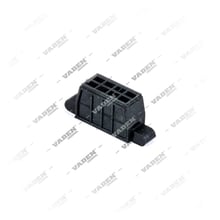
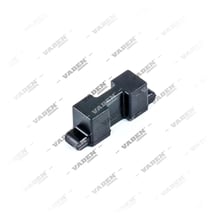
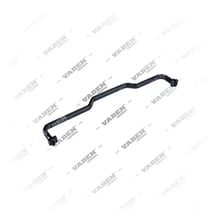
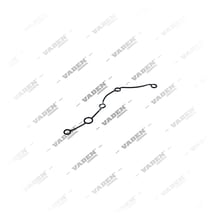
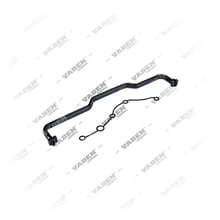
What Is a Camshaft Gasket?
The camshaft gasket is a precision engine component fitted between the camshaft housing (bore) and the engine block or cylinder head in heavy commercial vehicle engines, sealing against oil and pressure loss. In the field it is also called the "camshaft housing gasket", "cam bore gasket" or "camshaft bearing gasket". The camshaft drives the valves in the engine's timing system and, on some engines, also drives the fuel injection pump and auxiliary units; its housing must be fitted to the engine block with a fully leak-tight connection. The camshaft gasket prevents oil leaks at this joint face, keeps lubrication pressure from dropping, and lets the camshaft bearing run on a continuous, adequate oil film. On Mercedes-Benz, MAN, Scania, Volvo, DAF, Iveco and Renault Trucks heavy-duty engines, it should be routinely renewed during an engine overhaul or camshaft replacement.
How Does a Camshaft Gasket Work?
During operation the camshaft rotates continuously and is lubricated through its bearing by high-pressure engine oil. At this moving-to-stationary interface, the camshaft gasket acts as a physical barrier that keeps engine oil from escaping. Fitted with the correct clamping torque, the gasket material fills the microscopic surface irregularities of the housing face and forms a stable sealing line even under pressure.
- Oil Sealing: Prevents oil leakage at the interface between the camshaft housing and the engine block, keeping the oil level maintained.
- Pressure Retention: Helps keep pressure in the lubrication circuit stable, guaranteeing that the camshaft bearing receives adequate oil flow.
- Vibration and Thermal Expansion Compensation: Maintains sealing integrity despite the thermal expansion and vibration that occur while the engine is running.
- Contamination Barrier: Blocks dust, moisture and dirt from the outside environment from entering the lubrication system.
- Protection of Metal Surfaces: Reduces wear by preventing direct friction between the contact faces of the camshaft housing and the engine block.
Camshaft Gasket Technical Specifications
Camshaft gaskets are manufactured in different materials and geometries depending on the engine family. Common constructions include high-temperature-resistant elastomer compounds, metal-reinforced gasket bodies, or multi-layer sealing materials, keeping the seal intact against fluctuations in oil temperature and pressure. Because dimensions and fitting tolerances are specific to each engine module, confirming the correct part number and vehicle compatibility is essential. Clamping torque should always follow the values given in the vehicle's current service manual.
Camshaft Gasket Types and Subgroups
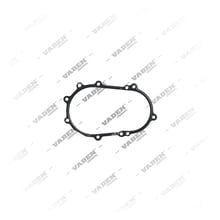
- Camshaft Housing Gasket: A flat or profiled gasket fitted between the main housing where the camshaft seats and the engine block.
- Camshaft Front Cover Gasket: A gasket type that seals between the cover on the timing gear side and the engine block.
- Metal-Reinforced Gasket: A sealing element with a steel carrier used on engine models exposed to high pressure and temperature.
- Elastomer-Based Gasket: A sealing material that also offers vibration damping at fitting points requiring flexibility.
- Camshaft Gasket as Part of a Full Gasket Set: The version supplied together with other gaskets within engine overhaul kits.
How to Choose the Right Camshaft Gasket
Choosing the right camshaft gasket depends on dimensional and material compatibility, which varies by engine brand, engine module and production year. A gasket in the wrong size or the wrong material can quickly lead to oil leakage and loss of lubrication pressure. When selecting a gasket, it is advisable to check the following criteria in order.
Camshaft Gasket Selection and Compatibility Criteria| Criterion | Description |
|---|
| Engine Brand and Module | Dimensions specific to the engine family: Mercedes-Benz, MAN, Scania, Volvo, DAF, Iveco, Renault Trucks |
| Gasket Material | High-temperature and oil-resistant elastomer or metal-reinforced construction |
| Fitting Position | Main camshaft housing gasket, front cover gasket, or overhaul set component |
| OEM Reference Match | Dimensions and profile matching the original part number exactly |
| Clamping Torque | Based on the torque values specified in the vehicle's current service manual |
Camshaft Gasket Maintenance and Key Considerations
- Clean the Surfaces: Before fitting, completely remove old gasket residue and oil traces from the housing face.
- Apply the Correct Torque: Tighten the bolts in the sequence and to the torque value specified in the vehicle's service manual; over-tightening can deform the gasket.
- Check Surface Flatness: Inspect the contact faces of the camshaft housing and engine block for warping or scoring.
- Pay Attention to Oil Quality: Extend gasket life by using engine oil of the viscosity and quality recommended by the manufacturer.
- Perform Periodic Leak Checks: During engine servicing, visually inspect the camshaft housing area to catch leaks at an early stage.
Common Failures and Solutions
- Oil Leak Around the Camshaft Housing: Caused by an aged or hardened gasket; replace it with a new one of the original dimensions and check the surfaces.
- Unexpected Drop in Oil Level: Caused by micro-leaks that are not visible to the eye; check the camshaft gasket area under pressure.
- Engine Oil Pressure Warning: Pressure loss caused by a gasket that has lost its seal; renew the gasket and the adjacent sealing elements.
- Oil Stains in the Engine Bay: Caused by a loosened bolt or a deformed gasket; reapply the correct torque and replace the gasket if necessary.
- Recurring Leak After Overhaul: Caused by an incorrect fitting sequence or unsuitable gasket material; repeat the fitting steps according to the service manual.
Why VADEN ORIGINAL?
- Manufactured to OE Dimensions: Camshaft gaskets are produced to match original equipment dimensions and tolerances exactly.
- Broad OEM Coverage: Offers extensive cross-reference coverage for Mercedes-Benz, MAN, Scania, Volvo, DAF, Iveco and Renault Trucks engine families.
- High Temperature and Oil Resistance: The materials used provide long-lasting sealing under heavy-duty engine operating conditions.
- Exported to More Than 100 Countries: Delivers the quality and consistency preferred by global fleet operators and service centers.
- Complete Product Range: Enables sourcing within full system integrity, alongside other components of the camshaft group.
Conclusion
Although the camshaft gasket is a relatively small part, it plays a critical role in the engine's lubrication integrity and in keeping the camshaft bearing running smoothly. A gasket fitted in the correct size, material and torque value prevents oil leaks, maintains lubrication pressure and helps engine overhauls deliver lasting results. VADEN ORIGINAL camshaft gasket options, with OE-quality manufacturing and broad vehicle compatibility, provide the reliable sealing solution heavy commercial vehicle fleets need.
Frequently Asked Questions (FAQ)
What does a camshaft gasket do?
A camshaft gasket seals oil and pressure at the joint face between the camshaft housing and the engine block. This prevents engine oil from leaking out and allows the camshaft bearing to run continuously on an adequate oil film.
When does a camshaft gasket need to be replaced?
The camshaft gasket should be renewed when there is visible oil leakage around the camshaft housing, an unexpected drop in oil level, or during an engine overhaul or camshaft replacement. An aged or hardened gasket loses its sealing capability.
What problems can incorrect camshaft gasket fitting cause?
A camshaft gasket tightened to the wrong torque value or fitted in an unsuitable size can quickly cause oil leakage, loss of lubrication pressure and recurring leak problems. Fitting must be carried out according to the vehicle's current service manual.
Which vehicles are VADEN ORIGINAL camshaft gaskets compatible with?
VADEN ORIGINAL camshaft gaskets offer broad compatibility with Mercedes-Benz, MAN, Scania, Volvo, DAF, Iveco and Renault Trucks heavy-duty engines. Before ordering, it is recommended to confirm the engine module and OEM reference number.
Are the camshaft gasket and the camshaft seal the same part?
No, they are different parts. The camshaft gasket seals between two stationary surfaces (the housing and the engine block), while the camshaft seal provides dynamic sealing at the rotating end of the shaft. Both are necessary for the integrity of the lubrication system.