What is a distributor valve?
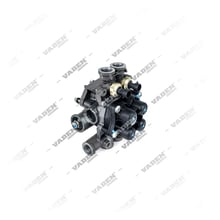
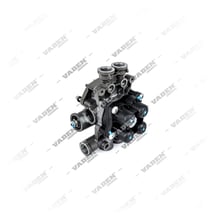
A distributor valve is a pneumatic control component in heavy vehicle air brake systems that routes compressed air from the reservoir to the axles and separate brake circuits the instant the brakes are applied. It reads the driver's demand at the brake pedal and directs brake pressure evenly between the front and rear axles and the trailer circuit. The result is coordinated, controlled braking at every wheel, with sudden pressure spikes and circuit-to-circuit imbalance kept in check.
What does a distributor valve do?
- Distributes brake pressure: Delivers compressed air from the reservoir to the front, rear and trailer circuits in a balanced way.
- Maintains braking balance: Sets the pressure ratio between axles to reduce wheel lock-up and jackknifing.
- Preserves circuit separation: Keeps the remaining circuits working if one circuit develops a leak, improving safety.
- Shortens response time: Senses the brake demand quickly and transfers pressure without delay to improve stopping distance.
- Stabilises pressure: Smooths out pressure fluctuations in the system for a consistent, predictable brake feel.
Distributor valve technical specifications (summary table)
| Feature | Description |
|---|
| Material | High-strength aluminium/cast body with durable elastomer diaphragm and seal set |
| Vehicle type | Trucks, tractor units, buses, trailers and heavy commercial vehicles |
| System | Compressed-air (pneumatic) brake system |
| Compatibility | Heavy vehicle platforms such as Mercedes-Benz, MAN, Scania, Volvo, DAF, Iveco, Renault, BMC and Ford |
| OE-equivalent approach | Designed to match OE function and connection dimensions; compatible with Wabco / Knorr-Bremse system logic |
| Installation | Fitted by qualified service technicians via standard connection ports |
| Maintenance | Periodic seal and pressure checks; overhaul with a repair kit |
What are the types and sub-components of a distributor valve?
- Dual-circuit distributor valve: Controls the front and rear brake circuits independently so braking continues if one circuit fails.
- Load-sensing (laden/unladen) distributor valve: Adjusts the pressure sent to the rear axle according to vehicle load for balanced braking.
- Trailer control distributor valve: Coordinates brake pressure between the tractor unit and trailer for even, harmonised stopping across the whole combination.
- Repair kit: Contains the wearing internal parts such as the diaphragm, seals, O-rings and springs, offering an economical overhaul instead of replacing the complete valve.
What to watch for when maintaining a distributor valve
- Leak checks: Inspect the connection ports and body periodically for any air leaks.
- Pressure measurement: Measure the outlet pressures of the circuits with a gauge to confirm the values are within spec.
- Moisture and contamination control: A healthy air dryer and filters keep moisture and particles out of the valve.
- Overhaul with a repair kit: Renew worn diaphragms and seals promptly with a repair kit rather than delaying the job.
- Use genuine parts: Choose OE-standard products such as VADEN ORIGINAL for reliable braking.
Common distributor valve problems and their solutions
- Braking imbalance or vehicle pulling: Usually caused by a pressure difference between circuits; measure the valve outlet pressures and overhaul with a repair kit or replace the valve if needed.
- Persistent air leak: Caused by a worn diaphragm, seal or O-ring; renew the sealing elements, and replace the valve if the body is cracked.
- Delayed brake response: Caused by internal contamination, moisture or blockage; clean the system, check the air dryer and overhaul the valve.
- Brakes binding or not releasing: Caused by a stuck spring or piston; inspect the internal mechanism and renew the parts with a repair kit.
- Low pressure: May stem from the reservoir, compressor or an internal valve leak; check the pressure line end to end to pinpoint the faulty component.
Why choose a VADEN ORIGINAL distributor valve?
- OE-standard compliance: Built to match original-equipment function and connection dimensions for safe fitment and operation.
- Durable material and sealing: A high-strength body and quality elastomer seals deliver long-lasting, leak-free performance.
- Wide vehicle coverage: Options to suit a broad range of heavy vehicle platforms, including trucks, buses, tractor units and trailers.
- Repair kit support: Genuine repair kits that enable an economical overhaul instead of full replacement.
- Technical support: Expert VADEN ORIGINAL guidance on correct part selection and installation.
Frequently Asked Questions (FAQ)
What does a distributor valve do?
A distributor valve splits the compressed air stored in the air brake system evenly across the axles and brake circuits the moment you brake. This gives coordinated, controlled braking at every wheel, improving stopping distance and overall driving safety.
What happens when a distributor valve fails?
When the valve fails, braking becomes unbalanced, the vehicle may pull to one side, and you can get air leaks and delayed brake response. These symptoms lengthen stopping distance and compromise safety, so the valve should be inspected as soon as possible.
Can a distributor valve be repaired or does it need replacing?
Wearing internal parts such as the diaphragm, seals and O-rings can be renewed with a repair kit to overhaul the valve. However, if the body is cracked or there is serious internal damage, the complete valve must be replaced.
Which vehicles use a distributor valve?
It is used in the air brake systems of trucks, tractor units, buses, trailers and other heavy commercial vehicles. Equivalents are available for many platforms, including Mercedes-Benz, MAN, Scania, Volvo, DAF, Iveco, Renault, BMC and Ford.
Is a distributor valve the same as a relay valve?
Both are pneumatic valves that manage pressure in the air brake system, but their jobs differ. A distributor valve splits pressure between the axles and circuits, while a relay valve rapidly feeds pressure to remote brake chambers to shorten response time.
When should a distributor valve be replaced?
Have the valve checked if you notice persistent air leaks, braking imbalance, delayed brake response or low pressure. During routine brake servicing, measure the sealing and pressure values and overhaul with a repair kit or replace the valve as required.
Conclusion
The distributor valve is the foundation of safe, controlled braking in heavy commercial vehicle air brake systems, distributing brake pressure evenly across the axles and circuits. Regular maintenance, accurate pressure checks and the use of genuine parts both improve safety and lower maintenance costs. For dependable braking performance, choose VADEN ORIGINAL distributor valves.
Related technical guide: Four-Circuit Protection Valve: Faults, Diagnosis & Replacement