What Is a Cylinder Head Gasket?
The Cylinder Head Gasket is a critical engine component fitted between the cylinder block and the cylinder head in heavy commercial vehicle engines, creating a sealed connection between the two parts. In the field it is often simply called the "head gasket," and it works at the point in the engine exposed to the highest pressure and temperature. It separates the combustion chamber, the coolant passages, and the lubrication galleries from one another at the same time, guaranteeing that these three separate circuits operate without mixing. Compressed between the two metal surfaces by the clamping force of the head bolts, the Cylinder Head Gasket is engineered to withstand thousands of heating-cooling cycles. Manufactured to match the block geometry of Mercedes-Benz, MAN, Scania, Volvo, DAF, Iveco, and Renault Trucks engines, this gasket is a part that must always be renewed during engine overhauls.
How Does a Cylinder Head Gasket Work?
The Cylinder Head Gasket fills the microscopic surface irregularities between the cylinder head and the block to achieve full contact and prevent pressurized combustion gases from escaping. Its multi-layer steel or composite structure deforms elastically when the head bolts are torqued down, tolerating differences in thermal expansion. A Cylinder Head Gasket fitted without the correct tightening torque and sequence can quickly lead to pressure loss or fluid cross-contamination. The three separate circuits routed through the gasket are as follows:
- Combustion Chamber Perimeter: The zone carrying the highest mechanical and thermal load; typically reinforced with a steel ring.
- Coolant Passage Openings: Align the cooling channels and prevent coolant from entering the combustion chamber.
- Oil Passage Openings: Allow engine oil to pass through the correct channels and keep it from mixing with the coolant.
Cylinder Head Gasket Technical Specifications
Material selection in Cylinder Head Gasket manufacturing is determined by the engine's power output and combustion pressure; today's heavy-duty diesel engines mostly use a multi-layer steel (MLS) construction, while some applications still use composite fiber-based gaskets. Because gasket thickness directly affects the engine's compression ratio, the original thickness and number of layers must be matched exactly; a gasket of a different thickness can adversely affect performance and emission values. Cylinder bore diameter, bolt hole positions, and the number of water and oil passage holes vary according to the vehicle's engine code. Tightening torque and sequence differ by engine manufacturer; for the exact value, the vehicle's current service manual should be treated as authoritative.
Cylinder Head Gasket Types and Subgroups
- Multi-Layer Steel (MLS) Gasket: Made up of several thin steel layers, widely used in modern high-pressure diesel engines.
- Composite Fiber-Based Gasket: A gasket type seen in older-generation engines, produced from fiber-reinforced material.
- Reinforced Ring-Zone Gasket: A version with an additional metal frame around the combustion chamber perimeter, specially strengthened for the zone carrying the highest thermal load.
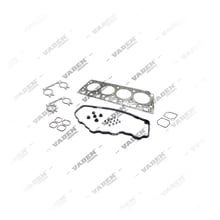
- Full Gasket Set Kit: A complete repair package that includes the Cylinder Head Gasket together with the valve cover and manifold gaskets.
- Engine-Code-Specific Hole Configuration: Even within the same engine family, variants exist with different numbers of holes depending on cylinder displacement or turbo application.
How to Choose the Right Cylinder Head Gasket
Choosing the right Cylinder Head Gasket should be based primarily on the vehicle's chassis number and engine code; brand and model information alone is often not enough, because more than one gasket variant can exist within the same engine family. Gasket thickness, number of layers, material construction, and hole configuration must match the original part exactly; otherwise the compression ratio can be thrown off or the fluid passages may not align. The table below summarizes the selection criteria.
Cylinder Head Gasket Selection Criteria| Criterion | Why It Matters |
|---|
| Engine Code and Chassis Number | Needed to correctly distinguish between different gasket variants within the same model |
| Material Construction (MLS / Composite) | Provides sealing performance suited to the engine's pressure and temperature level |
| Gasket Thickness and Number of Layers | Directly affects the compression ratio and engine performance |
| Water and Oil Hole Positions | Guarantees correct alignment of the cooling and lubrication circuits |
| Number and Position of Bolt Holes | Determines correct tightening-torque distribution and surface pressure |
| OEM Reference Number Match | Prevents compatibility errors and increases installation safety |
Cylinder Head Gasket Maintenance and Points to Note
- Strictly Follow the Tightening Torque and Sequence: Head bolts must be tightened in stages, following the torque value and sequence specified in the service manual.
- Clean and Inspect the Surfaces: Before installation, the block and head surfaces must be cleared of old gasket residue and checked for scratches or warping.
- Verify Surface Flatness: If deformation is suspected, a flatness measurement should be taken before installation; otherwise even a new gasket can leak.
- Do Not Reuse the Bolts: Head bolts are generally single-use parts that stretch as they are tightened; they should be renewed as recommended by the manufacturer.
- Renew the Coolant and Oil: When replacing the gasket, old fluids should be drained, air should be bled properly, and the correct fluid type should be used.
Common Failures and Their Solutions
- Oil or Foam Appearing in the Coolant: Caused by the gasket losing its seal between the water and oil holes; requires gasket replacement and a surface check.
- White Smoke from the Exhaust: A sign that coolant is leaking into the combustion chamber; the gasket and surface flatness must be checked immediately.
- Water Mixing into the Engine Oil (Milky Appearance): Caused by a failed seal at the gasket's oil-channel area; requires gasket replacement and system cleaning.
- Compression Loss Between Cylinders: Occurs when the gasket area is pierced or burned through; should be confirmed with a compression test and the gasket replaced.
- Coolant Loss Without a Visible Leak: Can result from coolant seeping into the combustion chamber and burning off; the gasket and surface should be examined in detail.
Why Choose a VADEN ORIGINAL Cylinder Head Gasket?
- Manufactured to OE Dimensions: Thickness, layer structure, and hole positions are produced to match the original engine code, preserving the compression ratio and sealing performance.
- Broad OEM Coverage: Offered with correct reference matching for the Mercedes-Benz, MAN, Scania, Volvo, DAF, Iveco, and Renault Trucks engine range.
- High Temperature and Pressure Resistance: Material selection and manufacturing quality are engineered to withstand repeated thermal cycles in the combustion chamber.
- Export Experience to More Than 100 Countries: Large-scale production and quality-control processes deliver performance tested under a wide range of operating conditions.
Conclusion
The Cylinder Head Gasket is an invisible yet critical sealing component that safely keeps the engine's combustion chamber, cooling circuit, and lubrication system working together. A Cylinder Head Gasket chosen with the correct material, correct thickness, and a hole configuration matching the engine code both preserves engine performance and prevents costly failures. With its OE-dimension Cylinder Head Gasket range, VADEN ORIGINAL delivers a reliable, long-lasting repair solution.
Frequently Asked Questions (FAQ)
What does a Cylinder Head Gasket do?
The Cylinder Head Gasket sits between the engine block and the cylinder head, separating the combustion chamber, coolant passages, and oil galleries from one another. This prevents combustion pressure from escaping and stops the fluids from mixing with each other or with the combustion chamber.
What are the symptoms of a failed Cylinder Head Gasket?
Oil or foam in the coolant, white smoke from the exhaust, water mixing into the engine oil, power loss, and unexplained coolant loss are the most common symptoms. If any of these signs appear, the vehicle should always be inspected.
What should be considered when replacing a Cylinder Head Gasket?
The head bolts should be tightened in stages, following the torque value and sequence specified in the service manual, and the block and head surfaces should be cleaned and checked for flatness. The bolts are generally single-use and should be renewed as recommended by the manufacturer.
Is the same Cylinder Head Gasket used for every engine?
No. Gasket thickness, number of layers, material construction, and water/oil hole positions vary by engine code. The correct choice should be based on the vehicle's chassis number and engine code, not ordered from brand and model information alone.
Which vehicles is the VADEN ORIGINAL Cylinder Head Gasket compatible with?
The VADEN ORIGINAL Cylinder Head Gasket range is manufactured to OE dimensions for Mercedes-Benz, MAN, Scania, Volvo, DAF, Iveco, and Renault Trucks heavy commercial vehicle engines. It is recommended to verify the engine code and OEM reference number before ordering.