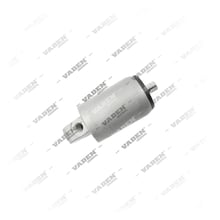
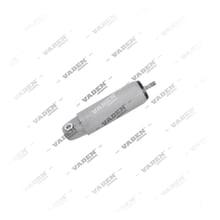
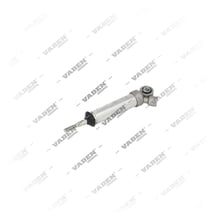
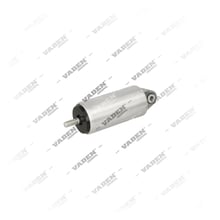
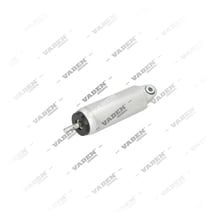
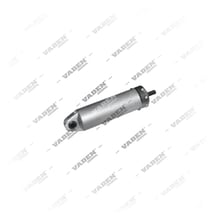
What Is an Exhaust Brake Cylinder?
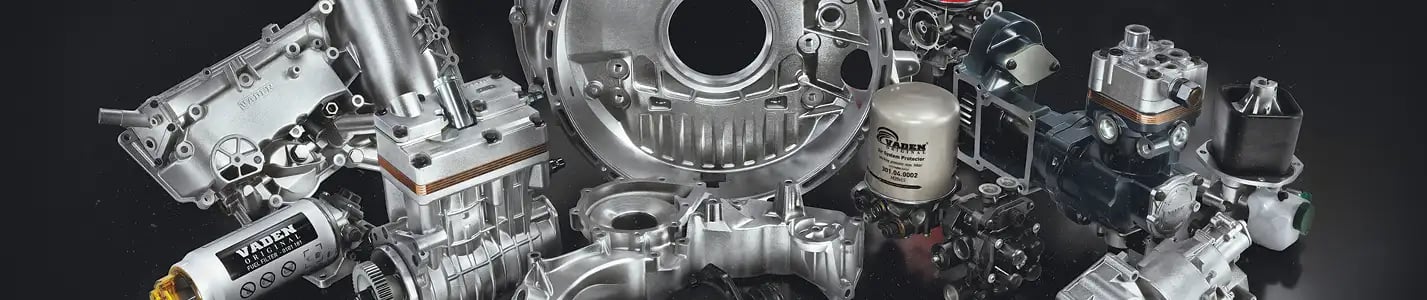
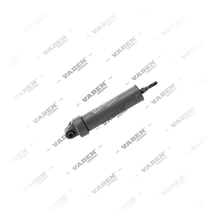
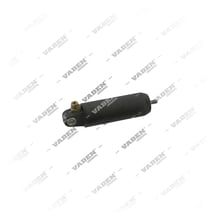
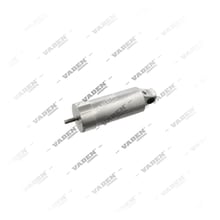
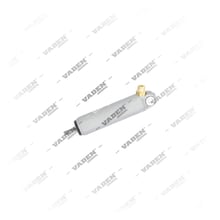
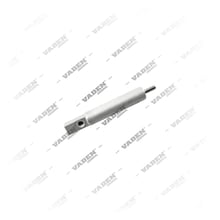
The exhaust brake cylinder is the pneumatic actuator in a heavy commercial vehicle's engine exhaust brake system that closes the butterfly flap in the exhaust line. When the driver engages the exhaust brake, compressed air from the air tank is directed to the cylinder; the piston moves forward and, through the push rod and linkage arm, brings the flap to the closed position. In the field it is also known as the exhaust brake bellows, engine brake cylinder, or flap cylinder. Sitting in the Engine > Exhaust Brake > Cylinder chain, this group is the motion-generating component that works together with the exhaust brake valve and flap housing; it should not be confused with the compressor cylinder or a wheel brake chamber.
The exhaust brake is an auxiliary retarding system that reduces how often the service brakes engage on long descents. When the cylinder fails, the flap either does not close at all or closes only partway; the engine-brake effect is not felt, and brake pad and drum temperatures rise. So although it is a small part, it directly affects braking safety and operating cost.
How Does an Exhaust Brake Cylinder Work?
- Demand signal: The driver switches on the exhaust brake switch; once the throttle is released, the system's switches confirm the signal.
- Air routing: The solenoid valve opens, and compressed air from the auxiliary air circuit reaches the cylinder's inlet port.
- Piston movement: The piston slides inside the housing, compressing the spring; the push rod rotates the linkage arm and closes the flap.
- Back pressure: The closed flap restricts exhaust gas outflow; the back pressure that builds up in the engine generates retarding torque.
- Return stroke: When the signal is cut, air is vented through the exhaust port, the spring pulls the piston back, and exhaust flow is released again.
Exhaust Brake Cylinder Technical Specifications
Because exhaust brake cylinders operate right next to the exhaust line, they are designed to withstand high temperatures, vibration, and road salt. The housing is made of cast aluminum or protected steel, and the piston and push rod are coated against corrosion. For exact values, the vehicle manufacturer's current service manual is authoritative.
- Operating pressure: Works within the mid-pressure range of the auxiliary air circuit; supply pressure varies by vehicle architecture.
- Stroke and bore: Piston bore and stroke length determine the force and angular travel needed for the flap to close fully.
- Connection type: Flanged, lug-mounted, or threaded housing connections with metric-threaded air inlet ports are common.
- Temperature resistance: Because it is mounted close to the manifold, heat-resistant gasket and seal materials are used.
- Compatibility criteria: OE number, engine type, and linkage arm geometry are evaluated together.
Exhaust Brake Cylinder Types and Subgroups
- Pneumatic piston type: The most common solution; uses a piston that advances under air pressure with spring return.
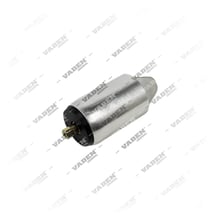
- Bellows (diaphragm) type: Uses a flexible bellows instead of a piston; preferred for short-stroke applications with limited installation space.
- Electro-pneumatic group: Carries an integrated solenoid valve and is controlled directly by wiring.
- Double-acting cylinder: Uses air force in both the closing and opening direction; provides stable return in applications with a high risk of soot build-up.
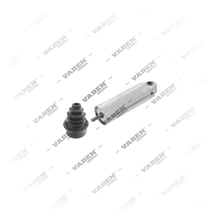
- Repair and seal kits: Allow economical renewal of seals, springs, and sealing elements when the housing itself is still sound.
- Connection components: Complementary parts such as the push rod, ball-joint head, clip, and bracket.
How to Choose the Right Exhaust Brake Cylinder
The most reliable approach is to start from the OE reference number on the removed original cylinder. If the number cannot be read, compare housing dimensions, piston stroke, air inlet thread size, and push rod end type. Because different cylinders can be used within the same engine family depending on emission level, the engine code and model year must also be verified.
Exhaust Brake Cylinder Selection and Compatibility Criteria| Criterion | What to Check | Why It Matters |
|---|
| OE part number | Reference marking on the removed unit | The most reliable method for cross-matching |
| Engine code | Engine type, model year, emission level | The cylinder changes by variant even within the same model |
| Piston bore and stroke | Housing diameter and rod travel distance | Insufficient stroke means the flap will not close fully |
| Air inlet port | Thread size, port orientation, fitting type | The wrong orientation kinks the hose and creates leaks |
| Push rod end | Ball joint, fork, or bored end and pin size | Ensures the linkage seats without play |
| Mounting interface | Flange bolt spacing, bracket angle | Lets the cylinder seat at the correct angle |
| Brand application | Mercedes-Benz, MAN, Scania, Volvo, DAF, Iveco | The same function is met with a different housing by brand |
Exhaust Brake Cylinder Maintenance and Key Points to Watch
- Check the flap lever by hand: Move the lever while the engine is cold; if soot has built up, the flap will not close fully even if the cylinder itself is sound.
- Inspect the air line: Hoses hardened by heat crack over time; small leaks first show up as sluggish response, then as an ineffective brake.
- Verify the push rod adjustment: Rod length and linkage clearance must allow the flap to close and open fully.
- Tighten to the correct torque: Over-tightening distorts the flange, while under-tightening leads to loosening; take torque values from the manufacturer's documentation.
- Renew gaskets and seals: Sealing elements that have gone through heat cycling will leak.
- Clean out soot: Build-up in the flap housing puts extra load on the cylinder and must be cleaned before installation.
Common Faults and Solutions
- Exhaust brake does not work at all: The solenoid valve fails to open, or air does not reach the cylinder. Measure pressure at the valve outlet; if pressure is present, the fault is in the cylinder.
- Braking effect is weak or delayed: Air leakage, a worn piston seal, or a misadjusted push rod. Run a leak test and confirm the flap closes fully.
- Flap does not return to the open position: Broken spring, soot build-up, or a blocked exhaust port. This causes power loss and excessive exhaust temperature, and requires immediate attention.
- Continuous hissing air leak: The piston seal or housing gasket has failed; if a repair kit is not sufficient, replace the unit complete.
- Metallic knocking and vibration: A sign of linkage play or a loose bracket. Check the pin, clip, and bracket connections.
- New cylinder fails again quickly: An uncleaned flap housing or an incorrect adjustment keeps overloading the cylinder.
Why VADEN ORIGINAL?
- Manufactured to OE dimensions: Housing, piston bore, stroke, and connection interfaces are made to match the original part.
- Broad OEM matching: Cross-referenced against widely used part numbers across truck, tractor unit, bus, and trailer applications.
- Heat-resistant materials: Housing and sealing materials are selected for the temperature and vibration conditions found in the exhaust area.
- Service-focused range: Alongside the complete cylinder, repair and gasket kit options are offered.
- International reach: VADEN products are exported to more than 100 countries.
Conclusion
The exhaust brake cylinder, as the motion-generating element of the engine's exhaust brake system, directly determines retarding performance. When it works properly, it reduces the load on the service brakes during long descents, extends pad and drum life, and improves driving safety. When choosing the right product, OE reference, engine code, stroke, and connection interface should all be evaluated together, and after installation the flap should be confirmed to close and open fully. For torque, pressure, and adjustment values, the vehicle manufacturer's current service manual is authoritative.
Frequently Asked Questions (FAQ)
What does an exhaust brake cylinder do?
The exhaust brake cylinder closes the butterfly flap in the exhaust line using air pressure, causing back pressure to build up in the engine. This back pressure slows the vehicle and reduces how often the service brakes need to engage on long downhill grades. As a result, brake pad and drum temperatures stay lower.
How can you tell an exhaust brake cylinder is faulty?
The clearest sign is that the retarding effect is not felt at all, or is noticeably weak, when the exhaust brake is engaged. A continuous hissing air leak from the cylinder, the flap failing to return to the open position, and metallic knocking around the linkage are also typical symptoms. Pressure at the solenoid valve outlet should always be measured during diagnosis.
Is the exhaust brake cylinder the same part as a brake chamber?
No. A brake chamber operates the service brake system at the wheel and generates braking force directly. The exhaust brake cylinder, on the other hand, closes the exhaust flap on the engine and only provides auxiliary retardation. The two work in different circuits with different functions.
How do I choose the right exhaust brake cylinder?
The most reliable method is to match the OE part number on the removed original cylinder. If the number cannot be read, compare piston bore, stroke length, air inlet port thread size, push rod end type, and mounting flange dimensions. The engine code and emission level should also be verified.
Can an exhaust brake cylinder be renewed with a repair kit?
If the housing and piston surface are still sound, renewing it with a seal and gasket kit is an economical solution. However, if the housing has cracks, corrosion, or deep scoring on the piston surface, replacing the unit complete is the better option. In either case, soot in the flap housing should be cleaned out.
Related technical guide: Exhaust / Engine Brake: Faults, Replacement & Maintenance Guide