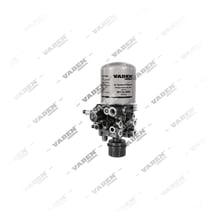
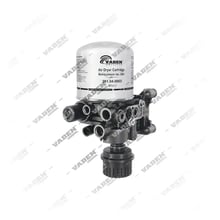
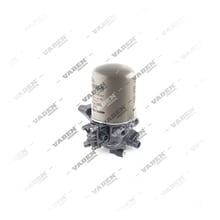
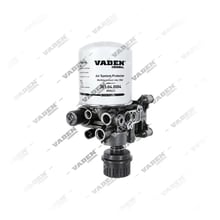
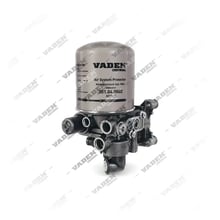
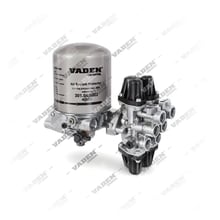
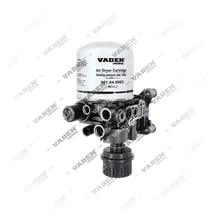
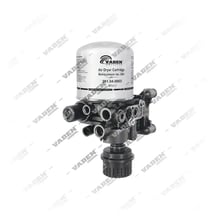
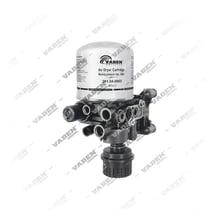
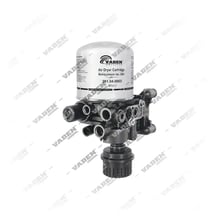
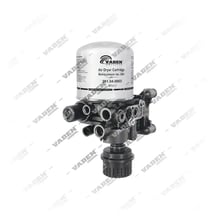
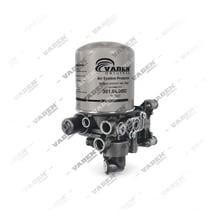
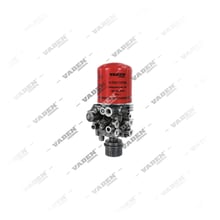
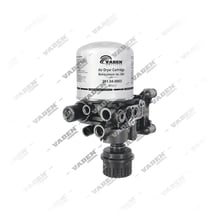
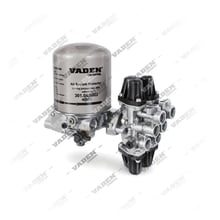
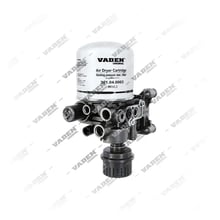
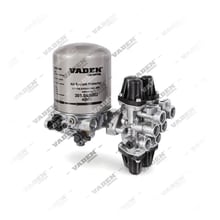
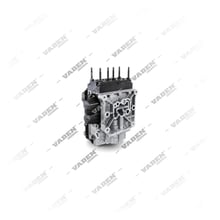
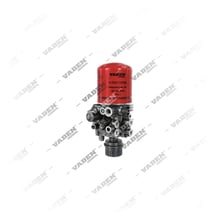
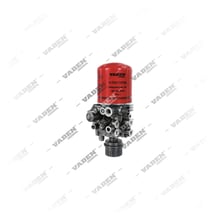
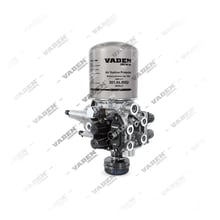
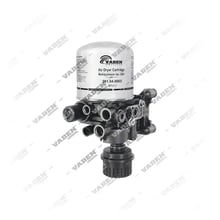
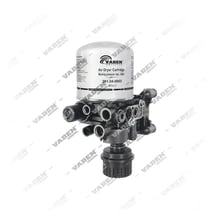
What is a Complete Air Processing Unit?
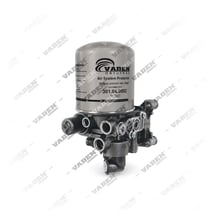
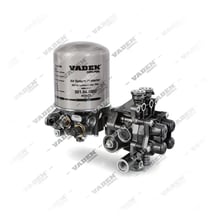
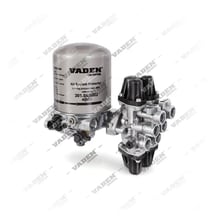
The pressure regulator, air dryer, four-circuit protection valve, and in some applications the pressure-limiting function, which are found separately in classic systems, are combined in a common aluminum housing in the complete air processing unit structure. This reduces the pipeline and number of connections, lowers leak risk, and saves space on the chassis. The majority of Euro 5 and Euro 6 vehicles use electronically controlled versions, and the unit communicates with the vehicle electronics. Since the dryness and pressure of the air coming out of this unit determines the safety of the entire brake system, the unit should be considered a safety component.
What are the functions of the Complete Air Processing Unit?
- Moisture removal: Retains the water vapor of the hot and humid air coming from the compressor in the desiccant bed of the dryer cartridge, sending dry air to the tanks.
- Oil and particle separation: Filters out oil vapor and carbon particles overflowing from the compressor, preventing contamination of valves and bellows.
- Pressure regulation: Unloads the compressor when the system reaches upper pressure, re-loads it at the lower limit; keeps tank pressure within a narrow band.
- Regeneration: At the moment of unloading, passes dry air from the tank through the dryer in the reverse direction, expelling moisture and making the cartridge usable again.
- Circuit protection: Isolates the front brake, rear brake, parking, and auxiliary circuits with the integrated protection valve; when there is a leak in one circuit, protects the pressure of the others.
- Pressure limiting and heating: Reduces air going to the auxiliary circuit to that circuit's operating pressure; the heater resistance in the discharge area prevents freezing.
What are the symptoms of a Complete Air Processing Unit failure?
Complete air processing unit failures usually develop gradually and are not noticed by the driver in the initial stage. The following symptoms direct toward service:
- Water accumulation in tanks: Water or a milky emulsion coming from the drain cock indicates the cartridge is saturated or regeneration is not working.
- Continuous air leak sound: Uninterrupted air discharge from the purge port while the engine is running indicates the regulator piston or a sealing element is leaking.
- Pressure filling late: Even though the compressor is sound, a lengthened time to reach operating pressure means a blocked cartridge or internal leakage.
- Compressor not unloading: The compressor continuing under load even after reaching upper pressure and the safety valve popping off is a failure in the regulator section.
- Pressure dropping while parked: A decrease in circuit pressures while the vehicle is stationary shows internal leakage in the integrated protection valve sections.
- Freezing in winter and warning light: Heater failure causes freezing at the purge port; on electronically controlled units, a low pressure or unit fault warning appears on the panel.
How is the Complete Air Processing Unit checked?
The check should be done with the vehicle safely chocked and the engine at idle. Connections must always be drained before being disassembled.
- Fill cycle measurement: The compressor's load-in and unload pressures are monitored with a manometer. The exact engagement and cutoff values are per the vehicle's current OE service manual.
- Unloading test: A short and clear discharge sound from the unit at upper pressure indicates regeneration has started; if there is no sound or it is continuous, there is a fault.
- Moisture test: The tank drain cock is opened and the dryness of the exiting air is checked; water coming out requires cartridge replacement.
- Leak scanning: Housing joint seams, cartridge seating surface, and fitting connections are scanned with foamy water.
- Circuit isolation test: When one circuit is controlled-drained, the other circuits are expected to maintain their pressure; if not, the protection valve section is leaking.
- Electrical and diagnostics: The heater resistance's resistance, supply voltage, and fuse are measured; on electronic units, fault codes are read with a diagnostic tool. Since an oil-leaking compressor kills the cartridge quickly, compressor health should also be confirmed.
What should be watched for during replacement?
- System pressure must be zeroed: No connection should be removed before all tanks are drained; the parking spring circuit needs extra care.
- Lines should be labeled: Circuit outlets should be marked by port number before disassembly. Wrong circuit connection disrupts brake balance.
- Lines should be cleaned: If dirt and oil have accumulated, pipes should be blown out with compressed air; tanks should be drained and cleaned if needed.
- Sealing elements should be renewed: O-ring, gasket, and fitting seals must not be reused.
- Cartridge tightened correctly: The gasket is lightly lubricated, seated by hand, and tightened the additional turn specified in the manufacturer's instructions. Tightening values should follow the OE service manual.
- Commissioning test: The unit is connected in its original position without voltage, connectors are locked; the system is filled and leak, unloading, and circuit isolation are reverified.
How is the Complete Air Processing Unit selected?
The first rule in selection is reading the OE number on the vehicle's original unit. Even within the same chassis and engine combination, different port layouts, different operating pressures, and different control types may be used depending on production year and equipment package. Therefore, one should proceed from the OE number and port geometry, not the brand name. Original equipment manufacturer numbers such as Wabco, Knorr-Bremse, and Bendix, as well as vehicle manufacturer numbers such as Mercedes-Benz, MAN, Volvo, DAF, Scania, and Iveco, can be used as cross reference.
- Application: Tractor, truck, bus, or trailer application and circuit count should be confirmed.
- Port layout: The count, thread, and angular position of the inlet, circuit outlets, and purge ports must match exactly.
- Control type: Mechanically regulated and electronically controlled units cannot be used interchangeably.
- Heater and socket: Resistance voltage and socket type must be compatible with vehicle wiring.
- Cartridge compatibility: Having a replacement dryer cartridge that is easy to obtain reduces maintenance cost.
Complete Air Processing Unit selection and inspection points| Inspection point | What is checked | Acceptance criterion |
|---|
| OE number | Number on old unit housing | Exact match with cross-reference list |
| Port count and thread | Inlet, circuit outlets, purge | Same count and thread size as original |
| Control type | Mechanical or electronic control | Same type as vehicle wiring |
| Heater circuit | Resistance value and socket | No break, socket locks |
| Operating pressure | Load-in and unload band | Within the range in the OE service manual |
| Circuit isolation | Other circuits when one is drained | Other circuits maintain pressure |
| Drying efficiency | Air coming from tank drainage | No water or emulsion |
| Leak | Housing, cartridge surface, fittings | No bubbles in foam test |
Maintenance and service life
The complete air processing unit is a long-lived component when used correctly; the main factor determining its life is the timely replacement of the dryer cartridge and the amount of oil coming from the compressor. The cartridge is generally renewed at annual or a certain mileage interval, more frequently in dusty and humid operating conditions; the vehicle's current OE service manual is authoritative for the period.
Regular drainage of tanks, keeping the air intake filter clean, and early resolution of compressor oil leaks directly extend unit life. A desiccant bed saturated with oil cannot dry; in this case, replacing only the cartridge is not a permanent solution, the oil source must also be resolved. Checking the heater resistance and its fuse before winter largely prevents sudden air loss failures caused by freezing. If there is a crack in the housing, thread stripping, or an unrepairable internal leak, complete replacement is the most correct approach.
VADEN Complete Air Processing Unit
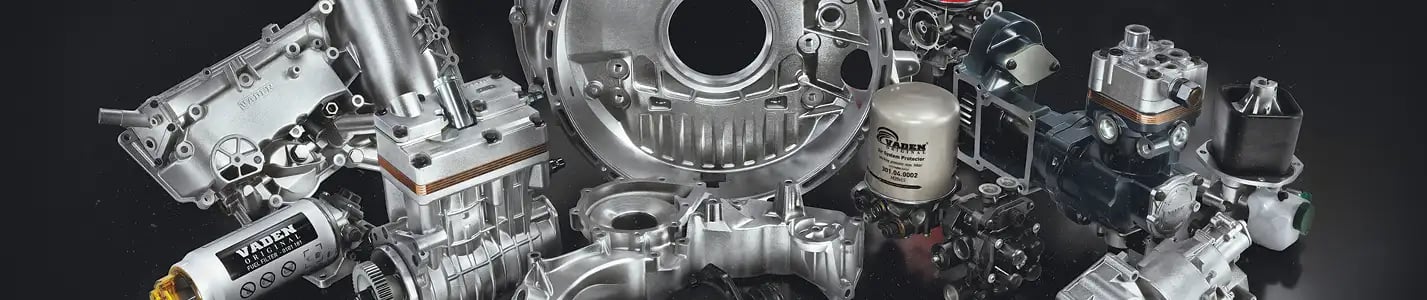
The VADEN product group offers complete air processing unit options for common applications of heavy commercial vehicles; in this category, complete units of the 305.01 series are listed covering different port layouts and control types. Products should be selected by filtering via OE number and vehicle application, and if in doubt, verified with the housing number of the old unit. You can access cross references from the product cards on the category page and plan the dryer cartridge and sealing elements together with the appropriate unit.
Frequently Asked Questions (FAQ)
What is the difference between the complete air processing unit and the air dryer?
The air dryer is only the component that retains moisture in the air. The complete air processing unit combines, in addition to the drying function, pressure regulation, four-circuit protection, pressure limiting, and in most applications heating functions in a single housing. Therefore it works as a single unit instead of a separate dryer plus a separate regulator and protection valve; the pipeline and number of connections are reduced.
Can just the dryer cartridge be replaced without changing the complete air processing unit?
Yes. If the failure is only in drying efficiency, that is, water accumulates in the tanks but regulation and circuit isolation work correctly, cartridge replacement is sufficient. However, if symptoms such as continuous purge leakage, the compressor not unloading, or pressure dropping while parked are present, the problem is in the internal sections of the unit and complete replacement is required. If the cartridge saturates again quickly, compressor oil leakage should also be checked.
Is water accumulation in tanks always caused by the air processing unit?
No. The most common cause is a saturated dryer cartridge or non-functioning regeneration; however, excessive oil from the compressor, a blocked air intake filter, freezing of the purge port, and never opening the tank drain cocks also cause water accumulation. These sources should be eliminated in order before replacing the unit.
What information is needed when choosing a complete air processing unit?
The OE number on the old unit's housing, and the vehicle's make, model, production year, and chassis information are needed. In addition, port count and thread size, whether the unit is mechanically regulated or electronically controlled, and heater socket type should be confirmed. Selection should be made based on OE number, not brand name; Wabco, Knorr-Bremse, Bendix, or vehicle manufacturer numbers should be used as cross reference.
Can a vehicle continue driving with a faulty air processing unit?
It should not. The unit determines the pressure and dryness of the air going to the brake system; in the event of a failure, pressure drop, loss of circuit isolation, and sudden air loss from freezing in winter can occur. Under these conditions, brake performance cannot be guaranteed. The vehicle should be stopped at a safe point and directed to service.
Related technical guide: Air Processing Unit (APU/EAC): Faults, Replacement & Care