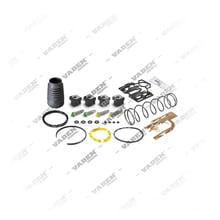
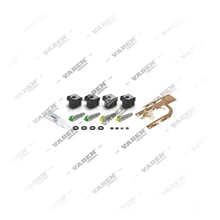
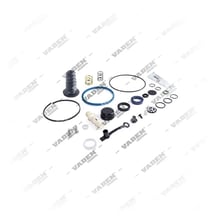
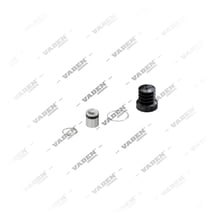
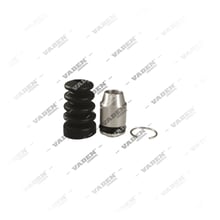
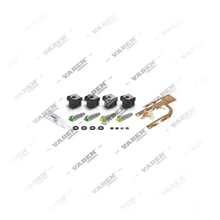
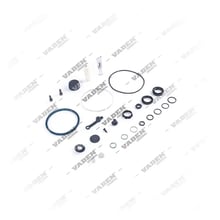
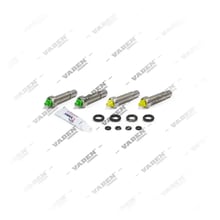
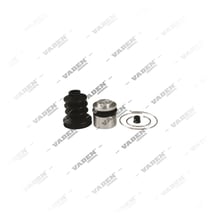
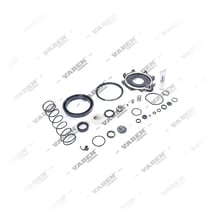
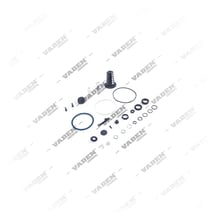
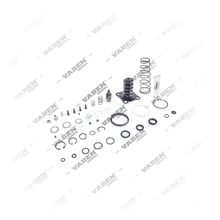
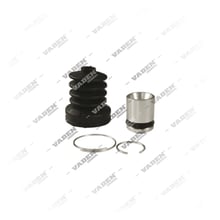
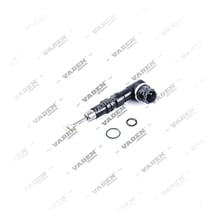
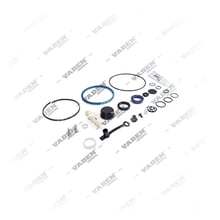
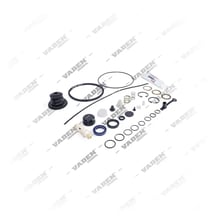
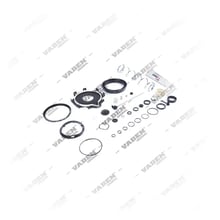
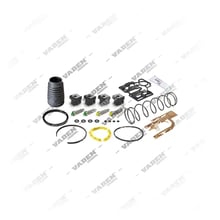
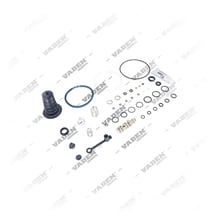
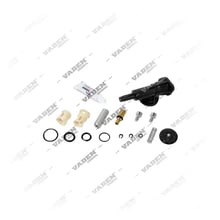
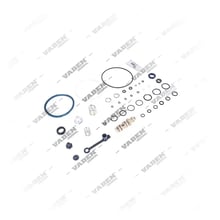
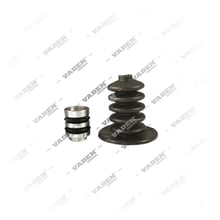
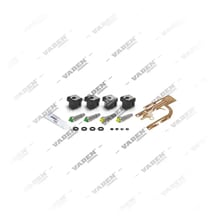
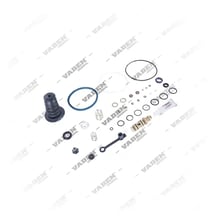
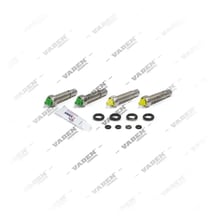
What Is a Clutch Slave Cylinder Repair Kit?
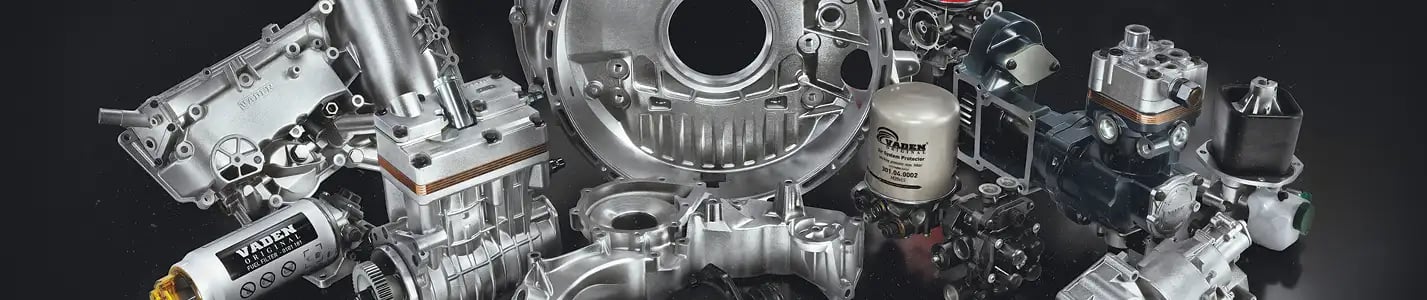
The Clutch Slave Cylinder Repair Kit is a service set that brings together the sealing and wear components of the slave cylinder (release cylinder) operating in a heavy commercial vehicle's clutch hydraulic circuit. In the system, the master cylinder converts pedal force into hydraulic pressure; the slave cylinder then turns that pressure into mechanical motion, pushing the clutch fork or the release bearing. Over time, the part that actually wears out is not the cylinder body itself but the rubber seals, O-rings, and dust boot inside it. That is why a repair kit is the most economical way to restore sealing without replacing the complete cylinder. In the field, this group is also known as a clutch cylinder seal kit or a slave cylinder overhaul kit.
How Does a Clutch Slave Cylinder Repair Kit Work?
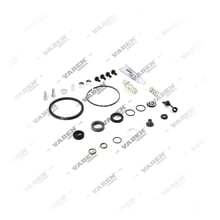
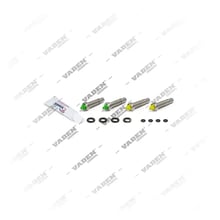
Each part in the kit renews a specific link in the pressure chain inside the slave cylinder. Once the set is installed, the cylinder becomes able to convert the hydraulic pressure coming from the pedal into piston movement without loss. The components below are common to most kits.
- Piston seal: Provides the seal between the bore and the piston; it is the main element preventing pressure from leaking back toward the pedal side.
- O-rings and sealing rings: Prevent hydraulic fluid from leaking out at the fitting, bleeder valve, and body joint surfaces.
- Dust boot: Seals the area where the pushrod enters the cylinder, keeping salt, mud, and dust from scoring the bore.
- Return spring and circlip: Return the piston to its starting position when the pedal is released and hold the piston assembly's axial position.
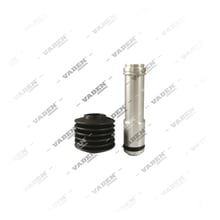
- Piston and pushrod: Included in comprehensive kits; renewed together when the piston surface is scored.
Clutch Slave Cylinder Repair Kit Technical Specifications
The decisive technical spec for these kits is the cylinder's bore diameter. On heavy commercial vehicles this measurement typically ranges from 22 mm to 38 mm; since it can vary by clutch type even within the same vehicle family, the size must be verified against the removed part. Because the sealing elements work in constant contact with hydraulic brake fluid (DOT class), they are manufactured from EPDM-based elastomers; systems that use mineral oil require a different compound, and choosing the wrong elastomer causes the seal to swell. Dust boots are selected to withstand a wide temperature range, with a typical operating window of roughly -40 °C to +120 °C. For installation torque, bleeding sequence, and fluid type, the vehicle manufacturer's current service manual is the authoritative source.
Clutch Slave Cylinder Repair Kit Types and Subgroups
- Sealing kits: Contain only the seal, O-ring, and dust boot. The most economical repair option when the bore and piston are still sound.
- Complete kits with piston: Include a piston, pushrod, and spring in addition to the seals; preferred for cylinders with a scored piston surface.
- External-type kits: For the classic cylinders mounted outside the gearbox that push the clutch fork. Distinguished by a long pushrod and a large dust boot.
- Concentric-type kits: For the in-gearbox cylinders that sit on the input shaft, integrated with the release bearing; repair scope is limited.
- Air-assisted booster kits: For clutch servos that reinforce hydraulic actuation with air pressure; also cover the diaphragm of the air section.
How to Choose the Right Clutch Slave Cylinder Repair Kit
The most reliable way to find the right kit is to start with the OE part number stamped on the removed slave cylinder's body. If the number is illegible, compare the vehicle make, model, and gearbox type together with the cylinder bore diameter and connection type. Because Mercedes-Benz, MAN, Scania, Volvo, DAF, Iveco, Renault Trucks, BMC, and Ford vehicles can use different clutch actuation layouts even within the same model series, choosing a kit by model name alone is a common mistake.
Criteria to check when selecting a Clutch Slave Cylinder Repair Kit| Criterion | What to check | Why it matters |
|---|
| OE part number | Cast or stamped reference on the body | The most definitive way to confirm compatibility |
| Cylinder bore diameter | Bore diameter, typically in the 22-38 mm range | A seal of the wrong diameter will not hold pressure |
| Cylinder type | External, concentric, or air-assisted | Kit contents vary by type |
| Hydraulic fluid | DOT-class brake fluid or mineral oil | An incompatible elastomer will swell and leak |
| Pushrod | Rod length, clevis end, and fitting thread | A size mismatch throws off free play |
| Kit scope | Seals only, or piston included | Replacing just the seal on a worn piston is short-lived |
Maintenance and Points to Watch for the Clutch Slave Cylinder Repair Kit
- Always measure the bore: If it shows scoring, pitting, or corrosion, replacing the seal alone will not provide a lasting fix.
- Lubricate correctly: Wet the seals only with the hydraulic fluid used in the system; grease and engine oil will degrade the rubber.
- Don't mix up seal orientation: The sealing lip must face the pressure side; a reversed seal causes immediate pressure loss.
- Bleed the circuit completely: Repeat bleeding in the manufacturer's specified sequence; trapped air causes a spongy pedal.
- Renew the hydraulic fluid: Moisture-laden fluid will degrade even new seals; drain the circuit and refill with the correct grade.
- Don't neglect the dust boot: A torn boot is the primary cause of dirt and water entering the cylinder.
Common Faults and Their Solutions
- Pedal goes to the floor and doesn't return: The piston seal may no longer be sealing, or the return spring may be broken; remove the cylinder and renew the seal and spring.
- Difficulty shifting gears, clutch not fully disengaging: An internal leak lets part of the pressure bleed back. After fitting the kit, bleed the system and verify the free play.
- Wetness around the slave cylinder: The dust boot has torn or an O-ring has failed; replace the seals and check the fitting tightness.
- Spongy pedal feel: Air may remain in the circuit; repeat bleeding and check the bleeder valve for a tight seal.
- Leaking again soon after the repair: The main causes are unsuitable fluid, a reversed seal, or a worn bore; compare the bore measurement against the service limits.
Why VADEN ORIGINAL?
- Manufactured to OE dimensions: Seal lip geometry, O-ring cross-section, and piston tolerances are produced to match original part dimensions.
- Elastomer matched to the fluid: Seals are selected from compounds compatible with the fluid in use, preventing premature failures caused by swelling.
- Broad OEM coverage: The 122 products in this category are cross-referenced against the OE numbers of the most common slave cylinder types.
- Complete kit contents: The sets cover every sealing element needed for a single repair, so the service job doesn't have to be reopened.
- International supply: VADEN ORIGINAL products are exported to more than 100 countries, so parts availability never disrupts a maintenance schedule.
Conclusion
The Clutch Slave Cylinder Repair Kit renews the sealing elements that wear out most often in the clutch hydraulic circuit, restoring clutch actuation to its original performance at low cost. For the right result, verify the cylinder type, bore diameter, fluid class, and kit scope against the removed part, and don't skip the seal orientation, lubrication, and bleeding steps during installation. If the bore is beyond its service limits, replacing the complete unit is the more lasting fix.
Frequently Asked Questions (FAQ)
What does a clutch slave cylinder repair kit do?
It is used to renew the wearing sealing elements inside the clutch slave cylinder, such as the seal, O-ring, dust boot, and spring. If the cylinder body is still sound, it restores hydraulic sealing without replacing the complete unit. This brings the pedal feel and full clutch disengagement back to normal.
How can I tell if the slave cylinder is leaking?
The clearest signs are the pedal going to the floor, a spongy pedal feel, difficulty shifting gears, and wetness around the slave cylinder. A drop in hydraulic fluid level without any visible leak also indicates that the fluid is often collecting inside the dust boot. If these symptoms appear, the cylinder should be removed and inspected.
Should I fit a repair kit or replace the complete slave cylinder?
If the cylinder's inner surface is free of scoring and corrosion, a repair kit is an economical and lasting solution. If the bore has pitting, deep scoring, or corrosion, even new seals will leak again soon; in that case, replacing the complete unit is the better choice. Before deciding, compare the bore measurement against the service limits in the manual.
How do I choose the right clutch slave cylinder repair kit?
The most reliable method is matching the OE part number on the removed slave cylinder's body. If the number is illegible, compare the cylinder bore diameter, cylinder type (external, concentric, or air-assisted), pushrod length, and fitting thread. Even the same model series can use different clutch actuation layouts.
What are the most common installation mistakes?
The most common mistakes are fitting the seal backward, lubricating it with grease or engine oil, and failing to fully bleed the hydraulic circuit. Seals should be wetted only with the fluid used in the system, with the sealing lip facing the pressure side. Renewing the hydraulic fluid during the repair also significantly extends the life of the new kit.
Related technical guide: Clutch Central Unit (Lower/Upper Servo): Faults & Replacement