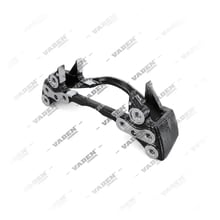
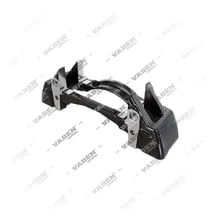
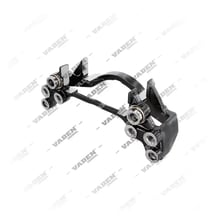
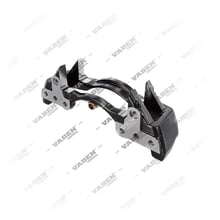
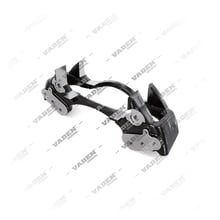
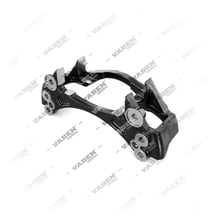
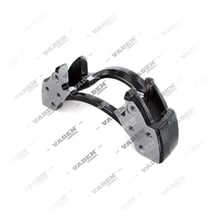
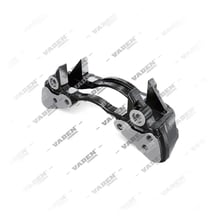
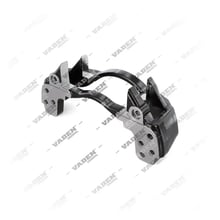
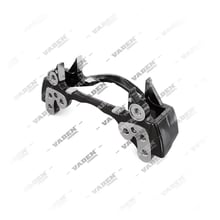
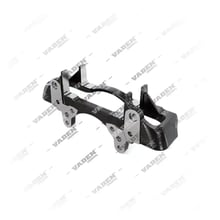
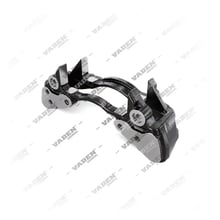
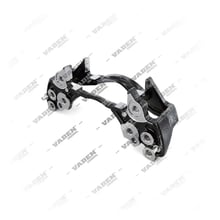
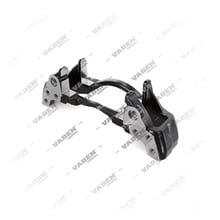
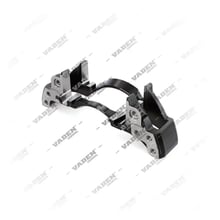
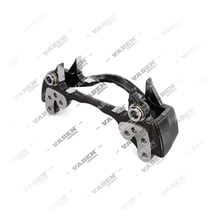
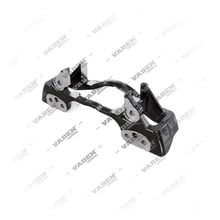
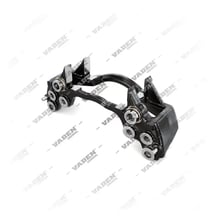
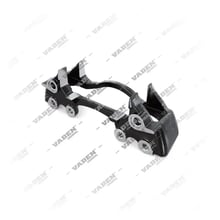
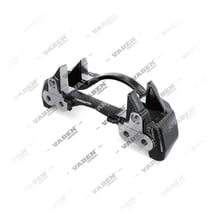
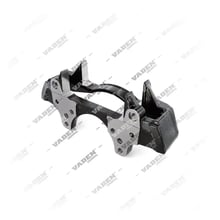
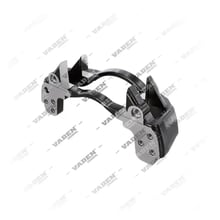
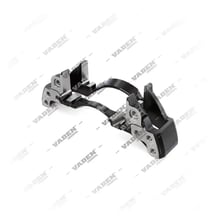
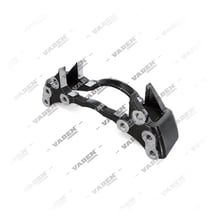
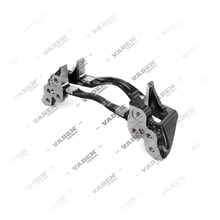
What Is a Caliper Carrier Slide Pin?
The caliper carrier slide pin is the guide component that lets a heavy commercial vehicle's disc brake caliper slide axially on its carrier. On floating-type calipers, the caliper body is not bolted rigidly to the carrier; instead it travels back and forth on two slide pins, which transfer the braking force evenly onto the disc surface. On the shop floor this part is also referred to as the caliper guide pin, caliper slide pin, or simply the caliper slide. Together with the bushings, boots, and caps inside the carrier, it forms a complete slide pin kit, made to the dimensions of the Knorr-Bremse, Wabco, and OE caliper families used on truck, tractor, bus, and trailer axles.
How Does a Caliper Carrier Slide Pin Work?
When the brake pedal is applied, force from the brake chamber travels through the adjuster mechanism and pushes the inner pad against the disc. The instant that pad contacts the disc, the caliper body reacts by sliding the other way, pressing the outer pad against the disc too. The caliper carrier slide pin keeps this motion true and on-axis, without runout. Equally, once the brake is released, the caliper must retract freely, and that depends on the slide pins working correctly; otherwise the pad never leaves the disc and the brake keeps dragging.
- Axial guidance: Keeps the caliper body aligned perpendicular to the disc axis and prevents it from wandering sideways.
- Force balancing: Ensures the inner and outer pads press against the disc with equal force, preventing one-sided wear.
- Free return: Allows the caliper to slide back once the brake is released, preventing a dragging brake.
- Wear compensation: Lets the slide travel increase as the pads wear thinner, working in step with the adjuster mechanism.
- Protection: Boots and caps shield the slide pin surface from water, salt, and brake dust.
Caliper Carrier Slide Pin Technical Specifications
Slide pins are typically machined from case-hardened or quenched-and-tempered steel, with surfaces protected by corrosion-resistant coatings such as nitriding, phosphating, or zinc-nickel plating. Because the coating largely determines how long the part survives salt and moisture exposure, checking diameter and length alone is not enough. Surface roughness, hardness depth, and the running clearance against the bushing all determine how smoothly the pin slides; these values vary by caliper family, and the vehicle manufacturer's current service manual remains the authoritative reference.
The slide pin should never be assessed on its own; it must be evaluated as a system together with its bushing, boot, and cap. Fitting a new pin into a worn, oversized bushing leaves clearance behind, causes caliper runout, and leads to uneven pad wear. Retaining bolts must be tightened to the torque the manufacturer specifies, and in most applications the single-use bolt requirement must be respected.
Caliper Carrier Slide Pin Types and Subgroups
- Long slide pin (primary guide pin): Handles most of the slide travel and typically runs inside a metal bushing.
- Short slide pin (secondary guide pin): Prevents the caliper from rotating; in most applications it works with a flexible bushing.
- Slide pin bushings and bearing sets: The bronze, steel, or composite bushings the pin slides inside; once clearance opens up, replace them together with the pin.
- Boot and dust seal kits: Protect the slide pin surface from contamination; a torn boot is the single most common starting point for failure.
- Cap, plug, and bolt sets: Close off the slide pin bore and secure the pin to the carrier.
- Complete slide pin repair kits: Bundle the pin, bushing, boot, and fasteners together, removing the risk of a missing part.
How to Choose the Right Caliper Carrier Slide Pin
The first step is identifying the caliper family and its position on the axle, since the same vehicle can carry different caliper types front and rear. The second is confirming the existing pin's diameter and length with a caliper gauge, and the third is cross-checking against the OE number or the caliper type plate. Visual resemblance is not enough — even a few millimetres of difference will throw off the slide travel.
Caliper carrier slide pin selection and compatibility criteria| Criterion | What to check | Result of a wrong choice |
|---|
| Caliper family | Type plate and OE number on the caliper body | Pin does not fit the bore, or sits with excess play |
| Slide pin length | Distinction between long and short pin, overall length | Slide travel falls short, pads wear one-sided |
| Pin diameter and tolerance | Caliper-gauge measurement, fit with bushing inner diameter | Binding or excess clearance, caliper runout |
| Bushing type | Metal, composite, or flexible mounting | Motion stiffens, return is delayed |
| Surface coating | Presence of a corrosion-resistant coating | Early rusting and seizure in salt and moisture |
| Boot and cap fit | Whether the kit seats properly in the caliper bore | Water and dirt ingress, short service life |
Caliper Carrier Slide Pin Maintenance and What to Watch For
- Check at every pad change: Push the caliper by hand to test how freely it slides; if there is resistance, remove and inspect the pins and bushings.
- Inspect the boots visually: Even the smallest tear lets water in and starts the pin rusting.
- Use only the correct grease: Apply a high-temperature grease that is rubber-compatible and approved for caliper use.
- Clean the bore: Before fitting a new pin, remove every trace of rust and old grease.
- Respect the torque spec: Tighten the bolts to the manufacturer's torque and sequence, and never reuse a single-use bolt.
- Replace as a set: Renew the pin, bushing, and boot together, and work both sides of the same axle at once.
Common Failures and How to Fix Them
- Pad wearing one-sided: The slide pin has seized, or bushing clearance has increased; strip and clean the assembly.
- Dragging and overheating after release: A rusted pin is blocking retraction; replace the pin and bushing and reassemble with the correct grease.
- Rattling or knocking noise from the brake: Pin-to-bushing clearance has grown, or a bolt has loosened; measure the clearance and check the torque.
- Vehicle pulling to one side under braking: The caliper on one side is not sliding freely; compare pin movement on both sides.
- Grease leaking from the boot, or the boot swelling: Points to the wrong grease or a damaged boot; replace the boot and use approved grease.
- Pin seized in its bore: Corrosion from salt and moisture has progressed; inspect the carrier bore too.
Why VADEN ORIGINAL?
- Manufactured to OE dimensions: Pin diameter, length, and surface treatment match the original part's working values.
- Extensive OEM coverage: A broad cross-reference list spanning the caliper families common on truck, tractor, bus, and trailer axles.
- Complete kits: The slide pin, bushing, boot, and fasteners are supplied together, avoiding a second teardown.
- Corrosion resistance: Coated surfaces reduce the risk of seizure in salty, humid conditions.
- Global supply reach: Backed by an export network covering more than 100 countries for strong parts availability.
Conclusion
The caliper carrier slide pin is one of the small but decisive parts of a disc brake: by letting the caliper slide freely, it directly shapes pad life, brake balance, and stopping distance. A pin that seizes or develops excess play quickly turns into added cost in pads and discs. Checking slide-pin movement at every pad service, renewing damaged components as a complete set, and following the manufacturer's torque values at assembly is the most economical approach long-term.
Frequently Asked Questions (FAQ)
What does a caliper carrier slide pin do?
The caliper carrier slide pin lets a floating-type disc brake caliper slide axially on its carrier. This means the inner and outer pads press against the disc with roughly equal force, and the caliper retracts freely once the brake is released. When the pin fails to do its job, the pads wear one-sided and the brake starts to drag.
How can you tell a caliper slide pin has failed?
The clearest signs are rapid wear on the inner or outer pad, the wheel rim overheating after the brake is released, the vehicle pulling to one side under braking, and rattling noises from the caliper area. If the caliper does not slide easily when pushed by hand, the pin has seized. A torn boot is also a warning sign that failure is close.
Should the slide pin be replaced on its own, or as a kit?
The slide pin forms a system together with the bushing it runs in and the boot that protects it. Fitting a new pin into a worn bushing does not eliminate the clearance, and the problem returns before long. For this reason, replacing the pin, bushing, boot, and cap together as a kit is recommended.
What grease should be applied to a caliper slide pin?
Only a high-temperature grease that is approved for caliper applications and compatible with rubber should be used. Unsuitable lubricants can swell and tear the boot, and eventually cause the pin to seize in its bore. For the exact grease type and quantity, the vehicle manufacturer's current service manual is the authoritative source.
How do I choose the right caliper carrier slide pin?
Start by identifying the caliper family and axle position, then measure the existing pin's diameter and length with a caliper gauge. Pay attention to the long-versus-short pin distinction, and cross-check against the OE number or the caliper type plate. Do not rely on visual similarity — even a few millimetres of difference will throw off the slide travel.
Related technical guide: Caliper Carrier & Guide Pins: Faults, Replacement, Care