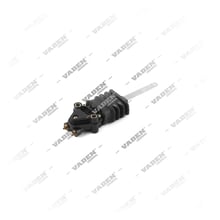
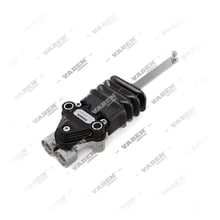
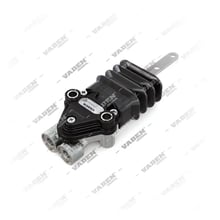
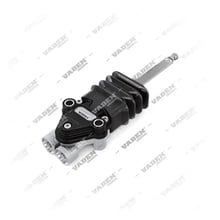
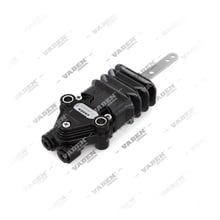
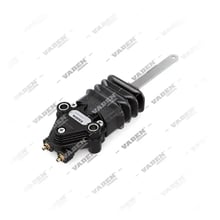
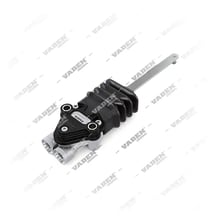
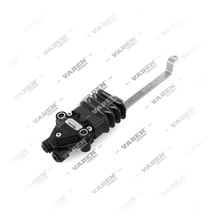
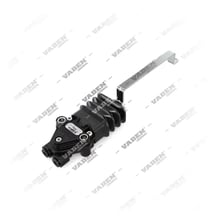
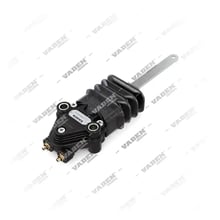
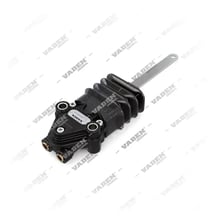
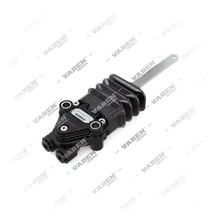
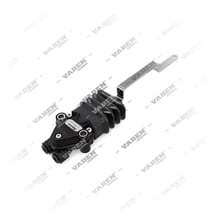
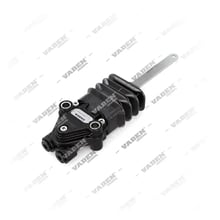
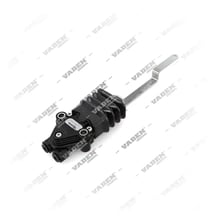
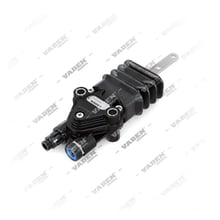
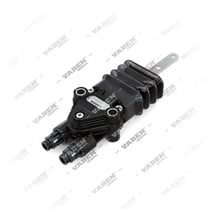
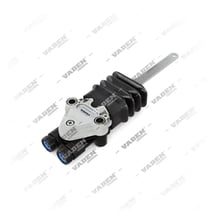
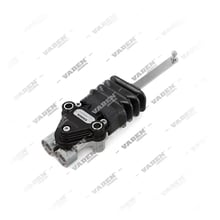
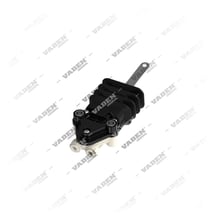
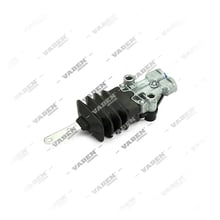
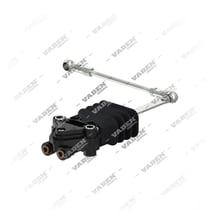
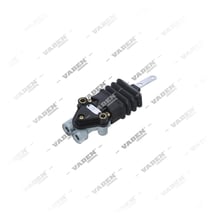
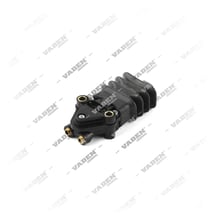
What Is a Suspension Level Valve?
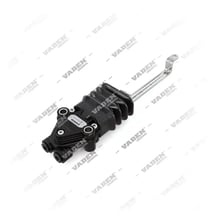
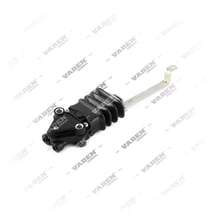
The suspension level valve is a pneumatic control component on heavy commercial vehicles that automatically regulates the amount of air delivered to the air suspension bellows in response to ride-height changes. Mounted in the cab suspension assembly, this valve continuously measures the distance between the cab and the chassis through a mechanical lever and linkage rod. When the cab drops, it feeds air into the bellows; when it rises, it vents the excess air, holding the cab at its factory-set ride height. In the field it is also known as the ride height valve or cab height valve, and on trucks, tractor units and buses it has a direct bearing on cab comfort.
How Does a Suspension Level Valve Work?
The control lever extending from the valve body connects to the cab chassis through a linkage rod. As the cab height changes, the lever rotates and the spool or diaphragm assembly inside the valve moves into one of three positions. This cycle repeats automatically throughout the drive, with no additional electronic control required.
- Fill position: When the cab drops below its set ride height, the valve opens the pressure coming from the reservoir to the bellows and the cab rises.
- Neutral position: Once the target height is reached, the supply and exhaust ports close and the air volume in the bellows is held constant.
- Exhaust position: When the cab rises too far, the valve vents air from the bellows through the exhaust port to lower the level.
- Damping: Many models include a delay feature that prevents unnecessary air consumption on short, sharp bumps.
Suspension Level Valve Technical Specifications
Level valves are built from durable materials because they operate in a section of the cab suspension exposed to constant vibration and temperature swings. The body is typically pressure die-cast aluminium or reinforced engineering plastic; internal sealing elements are selected from oil- and ozone-resistant elastomers. Operating pressure falls within the typical range of heavy commercial vehicle pneumatic circuits; for exact pressure, lever angle and tightening torque, the vehicle manufacturer's current service manual is the authoritative source.
- Housing material: Corrosion-resistant aluminium alloy or glass-fibre reinforced polymer.
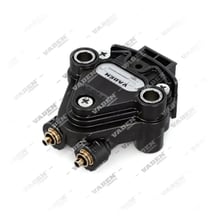
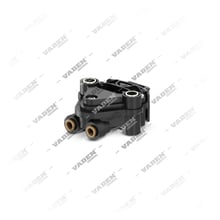
- Connection ports: Three ports — supply, bellows and exhaust — with metric or imperial threads.
- Sealing set: Nitrile- or EPDM-based o-rings and diaphragms provide long service life in humid, salt-exposed environments.
- Control lever: Fixed-length or adjustable lever; some models are supplied with a steel rod and ball joint end.
- Compatibility: Matching is based on OE part number, port orientation and lever rotation direction.
Suspension Level Valve Types and Subgroups
- Mechanical lever valves: The most common type in cab suspension; they take feedback through a lever and rod and require no electrical connection.
- Delayed-action valves: These do not react to every lever movement on rough ground; they fill or vent only once a threshold is exceeded, reducing air consumption.
- Dual-acting valves: These feed the bellows on each side of the cab separately, balancing lateral tilt; preferred on wide-cab tractor units.
- Drain-function types: These allow the bellows to be emptied in a controlled manner before cab maintenance or tilting.
- Linkage and repair components: Control lever, rod, ball joint end, bracket and gasket sets; these allow only this group to be renewed when the valve itself is sound.
How to Choose the Right Suspension Level Valve
The first step in selection is reading the OE reference number stamped on the removed valve; cross-checked against the make, model and cab type, this number largely eliminates the risk of ordering the wrong part. If the number cannot be read, port count, port orientation, lever rotation direction and mounting hole dimensions should be compared with the removed part. Because different valves are used within the same vehicle family depending on cab type, verification against the chassis number is recommended.
Suspension level valve selection and compatibility criteria| Criterion | How to verify | Consequence of the wrong choice |
|---|
| OE part number | Cross-check the stamp on the body against the chassis number | Different internal characteristics, deviation in cab stance |
| Port count and orientation | Compare the position of the supply, bellows and exhaust ports | Lines are strained, leaks at the fitting connection |
| Lever rotation direction | Determine whether upward lever movement fills or vents | Cab keeps rising continuously or never rises at all |
| Lever and rod length | Verify the set height against the figure in the service manual | Premature wear of the bellows and shock absorber |
| Vehicle application | Check against Mercedes-Benz, MAN, Scania, Volvo, DAF, Iveco cab type | Incompatible connection and return process |
Suspension Level Valve Maintenance and Points to Watch
- Check the lever and rod connection: Play in the ball joint ends causes the valve to misread height; it should be checked at every scheduled service.
- Keep the exhaust port clear: Mud or ice blockage prevents air from venting, locking the cab in a raised position.
- Maintain air quality: Moist air causes the spool inside the valve to stick; the dryer and reservoir should be drained regularly.
- Set the adjustment per the manual: After installation, cab height should be measured and the rod length adjusted accordingly; for the exact figure, the vehicle manufacturer's current service manual is the authoritative source.
- Do not remove under pressure: Removing the valve or a hose while the system is pressurised can cause the bellows to empty suddenly and lead to injury.
Common Faults and Their Solutions
- Cab stays permanently low: A blockage in the supply line or loss of internal sealing is likely. Measure supply pressure, check lever position, and renew the valve if the seal has failed.
- Cab rises excessively: The valve may be unable to return to the exhaust position, or the rod may have broken. Check the rod and ball joint ends; replace the part if the spool is seized.
- Continuous hissing leak: Uninterrupted air escaping from the exhaust port points to a failed internal seal or diaphragm. Confirm the leak with soapy water and renew the valve.
- Cab leans to one side: In dual-bellows systems, supply to one side has weakened; check the hose, fitting and, if fitted, the second valve.
- Compressor cycles too often: A small but continuous leak in the valve increases air consumption. Run a leak test and replace the faulty valve without delay.
Why VADEN ORIGINAL?
- Built to OE dimensions: Body, port layout, lever rotation direction and mounting hole pattern are manufactured to match the original part, so no extra work is needed on the vehicle.
- Broad OEM cross-reference: A cross-referenced list covering the common OE references used in cab suspension is provided.
- Durable sealing set: Elastomers resistant to oil, ozone and temperature swings deliver stable performance over long service intervals.
- Stock depth: Valves and linkage components are available under one roof, shortening service downtime.
- Exports to over 100 countries: The product range, used across a wide variety of climates and road conditions, is refined through field feedback.
Conclusion
The suspension level valve is a small but critical component that automatically maintains the height of the cab's air suspension, directly determining both ride comfort and the service life of the cab's mounting components. Deviations in cab stance, a continuous air leak, or the compressor cycling unusually often should first be traced to this valve and its lever linkage. When selecting a replacement part, the OE reference, port orientation and lever rotation direction should be verified, and after installation the ride height should be checked against the service manual.
Frequently Asked Questions (FAQ)
What does a suspension level valve do?
The suspension level valve automatically adjusts the amount of air in the cab's air suspension bellows in response to ride-height changes. When the cab drops it feeds air into the bellows, and when it rises it vents the excess air. This keeps the cab at a constant ride height regardless of load or road conditions.
What are the symptoms of a faulty suspension level valve?
The most common symptoms are the cab staying permanently low, rising excessively, or leaning to one side. Continuous air escaping from the exhaust port and the compressor cycling unusually often are also typical warning signs. In these cases, the lever and rod connection should be checked first, followed by the valve's internal sealing.
How is cab height adjusted after replacing the level valve?
After the valve is fitted, the system is charged and the distance between the cab and chassis is checked. Adjustment is made by changing the length of the rod that connects the control lever to the chassis. Because the exact setting figure varies by vehicle and cab type, the vehicle manufacturer's current service manual is the authoritative source.
How do you tell whether the level valve or the bellows is at fault?
Once the system is charged, the valve's exhaust port is checked; if air is escaping continuously from there, the fault is usually in the valve. If the leak is coming from the bellows body or a fitting connection, the bellows or the line is responsible. A soapy-water test is the most practical way to tell the two apart.
Which vehicles use a suspension level valve?
It is standard equipment on trucks, tractor units and buses fitted with air cab suspension. Mercedes-Benz, MAN, Scania, Volvo, DAF, Iveco and Renault Trucks cabs use versions with different port and lever configurations. The correct part should be determined by OE reference number and cab type.