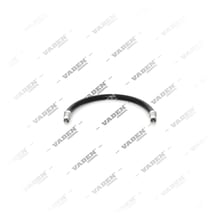
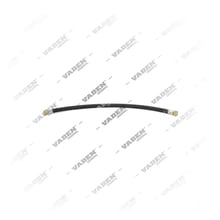
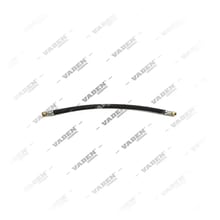
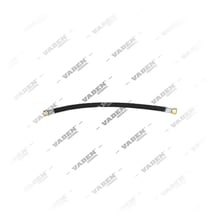
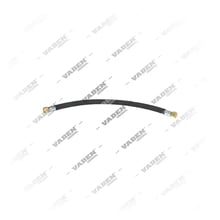
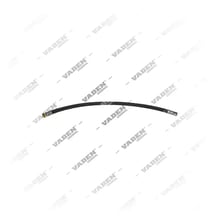
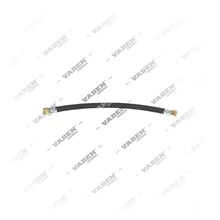
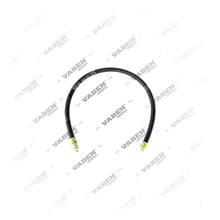
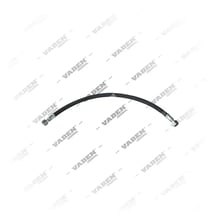
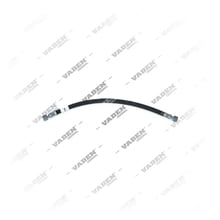
What Is a Brake Chamber Hose?
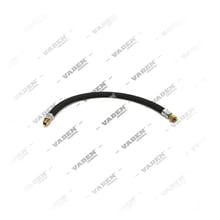
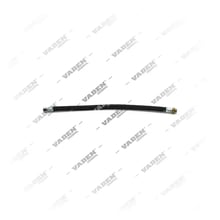
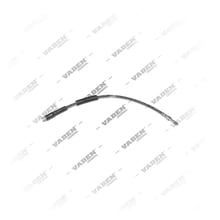
A brake chamber hose is the flexible connecting line in a heavy commercial vehicle's air brake system that carries compressed air from the brake valve to the brake chamber (brake actuator). It is also known in the field as a brake actuator hose, chamber supply hose or brake air hose. Because the brake chamber on trucks, tractor units, buses and trailers sits at a point on the axle in constant motion, the final connection between the fixed pipe from the valve and the chamber is always made with a flexible hose.
This flexibility keeps the line from stretching or snapping during suspension travel, axle articulation and steering movement. Because air must reach the chamber within milliseconds, the hose's inner diameter and length directly affect brake response time. Exposed to road salt, gravel impact and heat more than most components, it needs regular visual checks.
How Does a Brake Chamber Hose Work?
A brake chamber hose is not a control component, but it shapes the fill and exhaust characteristics of the circuit. Pressing the pedal sends the pressure wave to the chamber; releasing it lets the air vent quickly. This two-way behaviour sets how promptly the brake applies and releases.
- Pressure transmission: Air leaving the valve travels through the hose to the chamber's diaphragm and moves the push rod.
- Motion compensation: The flexible body absorbs suspension travel and axle articulation between axle and chassis.
- Rapid exhaust: On release, chamber air is vented to atmosphere through the hose and the quick-release valve.
- Sealing: Fittings and ferrules at each end prevent air from leaking under pressure.
- Vibration isolation: The flexible body reduces vibration transmitted into the rigid pipework.
Brake Chamber Hose Technical Specifications
The body is typically synthetic rubber or a polyamide (PA)-based thermoplastic: the inner layer seals, the middle layer supplies textile braid reinforcement, and the outer layer resists abrasion and ozone. Typical working pressure in heavy-duty air brake circuits is roughly 8-12.5 bar, and hoses are built with a safety margin above this. Operating temperature is generally quoted as around -40 degrees C to +100 degrees C; for exact pressure, temperature and torque values, follow the vehicle manufacturer's current service manual.
Sizing rests on two figures: inner diameter and free length. Common nominal sizes fall in the 8-16 mm outer-diameter class, and because fill and exhaust time change with inner diameter, this size should never be altered. Threaded fittings, banjo connections or push-in connectors are used at the ends, and fitting type and thread pitch must match the original exactly.
Brake Chamber Hose Types and Subgroups
- Textile-braided rubber hoses: The most common type, valued for flexibility in tight spaces and points of constant movement.
- Polyamide (PA) hoses: Lightweight and chemically resistant; used on fixed-routing lines along the chassis.
- Spiral (coiled) hoses: Used where a wide range of motion is needed, such as between a tractor unit and a trailer.
- Ready-fitted hose assemblies: Complete sets with both ends factory-crimped, reducing assembly error.
- Connection and repair components: Straight and elbow fittings, T-connectors, banjo nuts and seals.
How to Choose the Right Brake Chamber Hose
The most reliable method is to work from the OE reference printed on the removed hose and its fittings. If it cannot be read, take measurements with calipers instead. Free length must be long enough that the line does not stretch at full axle droop and compression, yet short enough that it never rubs the tyre or chassis.
Brake chamber hose selection and compatibility criteria| Criterion | What to check | Practical note |
|---|
| OE reference | Number printed on the hose or fitting | The most reliable matching method |
| Inner diameter | Nominal size class (typically 8-16 mm OD) | Do not change the size; response time is affected |
| Free length | Fitting axis to fitting axis | Must not stretch or rub when suspension is fully extended |
| Connection type | Threaded fitting, banjo or push-in | Thread pitch must match the original |
| Body material | Textile-braided rubber or polyamide | Rubber for moving areas, polyamide for fixed lines |
| Working pressure | Circuit pressure and safety factor | Typically 8-12.5 bar; exact value in service manual |
| Vehicle application | Make, model, axle and mounting location | Varies across Mercedes-Benz, MAN, Scania, Volvo, DAF, Iveco |
Brake Chamber Hose Maintenance and Points to Watch
- Inspect visually: Cracking, blistering, crushing and chafe marks are early signs of body fatigue; replace the hose once these appear.
- Route it correctly: Keep the hose clear of sharp edges, the exhaust line and rotating parts, and secure it with clamps.
- Avoid leaving it twisted: A body twisted along its axis fatigues early under pressure and cracks at the fitting base.
- Tighten fittings to spec: Over-tightening crushes the thread and seal, under-tightening causes leaks; for exact torque, see the current service manual.
- Test after installation: Pressurize to working pressure, run a leak test with soapy solution, and check brake response.
Common Faults and Their Solutions
- Continuous hissing and pressure loss: Usually a crack at the base of a fitting or a failed seal; test the connection with soapy solution.
- Brake applies or releases late: Inner-wall delamination, crushing or a wrong inner diameter restricts airflow; check the bore and revert to the OE size.
- Imbalance between axles: A kinked hose or one of different length changes fill time; compare both sides.
- Blistering on the surface: The inner layer has delaminated and the braid is damaged; replace immediately given the burst risk.
- Freezing in cold weather: Moisture in the circuit can freeze inside the hose; check the air dryer cartridge and reservoir drain valves.
Why VADEN ORIGINAL?
- Built to OE dimensions: Inner diameter, free length, fitting type and thread size are set from the original part.
- Broad OEM coverage: Compatible with Wabco- and Knorr-Bremse-type architectures used across Mercedes-Benz, MAN, Scania, Volvo, DAF, Iveco and Renault Trucks.
- Controlled material quality: Body and reinforcement are chosen for heavy-duty pressure and temperature ranges; leak testing is part of production.
- Wide product range: References across different lengths and connection types make single-source sourcing easy.
- Exported to over 100 countries: Products reach service points and distributors worldwide through an extensive export network.
Conclusion
As the final and most mobile link in the air brake circuit, the brake chamber hose has a direct bearing on braking safety. A hose chosen with the correct inner diameter, length and fitting type preserves brake response time and prevents pressure loss. Catching cracks, blisters and chafe marks early stops a minor issue turning into a serious failure. In this category you will find brake chamber hoses and connection components for a wide range of vehicle applications, selectable by OE reference.
Frequently Asked Questions (FAQ)
What does a brake chamber hose do?
It is the flexible connecting line that carries compressed air from the brake valve to the brake chamber, the brake actuator. Because it has to absorb suspension and axle movement, a hose rather than a rigid pipe is used at this part of the line. How promptly the brake applies and releases depends directly on the integrity of this line.
How do I know a brake chamber hose needs replacing?
Cracking, blistering, crushing or chafe marks on the outer surface, a hissing sound at the base of the fitting, and pressure loss in the circuit while parked are typical warning signs. A brake that applies or releases late can point to delamination inside the hose. In any of these cases the hose is not repaired, it is replaced as a complete unit.
Can I fit a brake hose with a different inner diameter?
It is not recommended. Because the inner diameter sets the fill and exhaust time of the line, changing it can create a braking imbalance between axles and lengthen stopping distance. Always stick to the original part's size class and OE reference.
Should I choose a rubber hose or a polyamide hose?
For points that work continuously with suspension and steering movement and bend through a tight radius, a textile-braided rubber hose is the better fit. For fixed-routing lines that run along the chassis, a polyamide hose stands out for its light weight and chemical resistance. The choice should follow the vehicle's original application.
What checks should be made after replacing the hose?
Pressurize the system to working pressure and run a leak test on the connections with soapy solution, confirming the hose is installed without twisting or tension. Check that the line does not rub against any part when the axle is at full droop and full compression. For fitting torque, the vehicle manufacturer's current service manual is authoritative.
Related technical guide: Brake Chamber: Fault Diagnosis, Replacement and Maintenance Guide
Related technical guide: Brake Chamber, Diaphragm & Hose: Faults, Replacement, Care