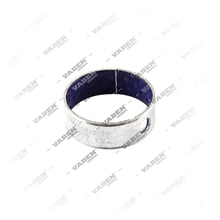
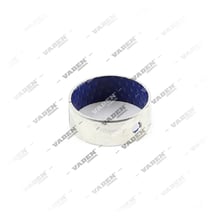
What is a Caliper Adjuster Shaft Bushing?
This bushing is a thin-walled bearing part typically made of bronze, sintered metal, or composite material. It is pressed into the shaft bore in the caliper body and supports the rotational motion of the adjuster shaft with low friction. The bushing prevents direct metal-to-metal contact between the shaft and the body, protecting both parts from premature wear.
Applying a thin layer of grease to the shaft surface during bushing installation reduces dry friction at initial operation.
What are the functions of a Caliper Adjuster Shaft Bushing?
- Bearing support: Allows the adjuster shaft to rotate inside the caliper body with low friction.
- Clearance control: Limits the shaft's radial and axial movement within manufacturer tolerances.
- Wear protection: Prevents direct metal contact between the shaft and body, protecting both surfaces.
- Sealing support: Provides a reference surface for adjacent seal and gasket elements to seat correctly.
- Vibration damping: Partially dampens micro-vibrations generated during braking.
What are the symptoms of a failing Caliper Adjuster Shaft Bushing?
As the bushing wears, radial clearance on the shaft increases, causing a loss of precision in the pad adjustment mechanism and uneven pad wear. A metallic rattling or squeaking noise from the caliper during braking is a sign that the shaft has excess play inside the body. In advanced wear, oval deformation can form in the shaft bore and the adjustment mechanism may stiffen and fail to fully engage. Corrosion stains on the bushing surface due to dust and moisture ingress are another typical symptom. In severely worn bushings, surface damage can also form on the shaft itself, so both the bushing and the shaft must be dimensionally checked, not just the bushing.
How is a Caliper Adjuster Shaft Bushing inspected?
Inspection requires removing the caliper and shaft, then visually examining the bushing's inner surface for scratches, ovalization, or discoloration. The shaft diameter is measured with calipers and compared with the manufacturer tolerance. The shaft is reinserted into the bushing and turned by hand to check for stiffness or excessive play. Radial clearance can be measured with a dial indicator.
What should be considered during replacement?
- Correct size: The bushing's inner diameter must exactly match the shaft size used.
- Pressing method: The bushing must be pressed into the body with a suitable tool, without tilting or forcing.
- Lubrication: Suitable grease should be used before installation and during periodic maintenance.
- Seal check: Adjacent seals and gaskets should also be checked and renewed if necessary when replacing the bushing.
- Function test: After installation, verify the pad adjustment mechanism moves freely and precisely.
- Shaft surface: If a new bushing is paired with a worn shaft, it can wear out again quickly, so the shaft surface should also be evaluated.
How to choose a Caliper Adjuster Shaft Bushing?
Selection should verify the caliper model, shaft diameter and bushing material (bronze/sintered/composite). The vehicle's current OE service manual should be used as reference. Bushing material selection should take into account the vehicle's operating conditions (dust, moisture, temperature), and a material closest to the original part specification should be preferred.
Caliper Adjuster Shaft Bushing - General Information| Property | Description |
|---|
| Application | Disc brake caliper adjuster shaft bearing |
| Material | Bronze, sintered metal or composite |
| Installation | Press-fit into the caliper body |
| Function | Low-friction rotational bearing |
| Service interval | Visual/clearance check during periodic brake service |
Maintenance and service life
The service life of the caliper adjuster shaft bushing depends on proper grease use and protection from dust and moisture ingress. Cleaning and re-lubricating the bushing area during periodic brake service delays wear. Since damaged seals allow dirt and moisture to enter and shorten bushing life, seal inspection should not be neglected. For vehicles operating on salted roads, cleaning the bushing area more frequently is recommended.
VADEN Caliper Adjuster Shaft Bushing
VADEN manufactures adjuster shaft bushings for various caliper families to OE-equivalent material and tolerance standards, supporting long-lasting and reliable operation of the pad adjustment mechanism through precise bearing support. With correct dimensional tolerance and material quality, it offers a solution aimed at preserving pad adjustment precision over the long term on heavy commercial vehicles.
Frequently Asked Questions (FAQ)
What does a caliper adjuster shaft bushing do
It is a bearing element that allows the adjuster shaft to rotate inside the caliper body with low friction and minimal play.
What happens when the bushing wears out
Radial clearance on the shaft increases, causing loss of precision in the pad adjustment mechanism and a metallic rattling noise.
What measurement should be taken when replacing the bushing
The shaft diameter should be measured with calipers and compared to manufacturer tolerance, and radial clearance checked with a dial indicator.
Is lubrication needed when installing the bushing
Yes, a thin layer of grease before installation and during periodic maintenance prevents dry friction and premature wear.
Should the seal be checked together with the bushing
Yes, adjacent seals and gaskets should also be checked and renewed if necessary when replacing the bushing.