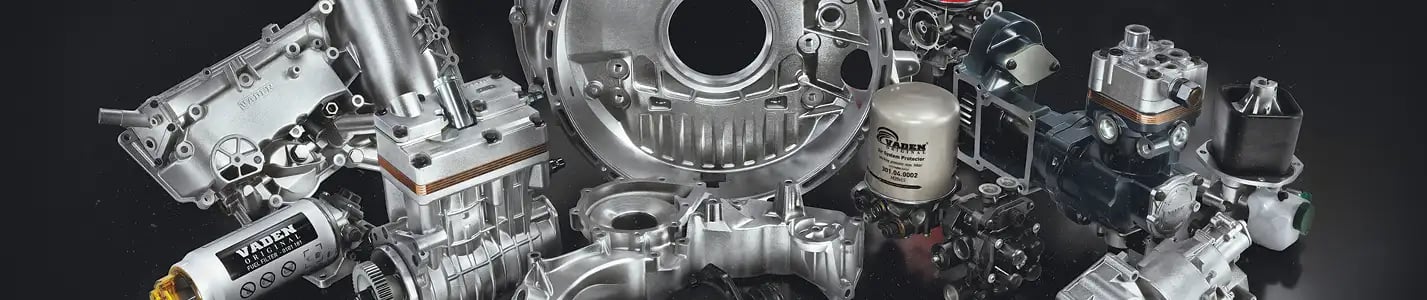
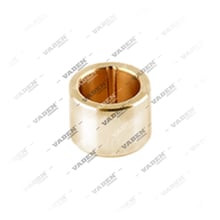
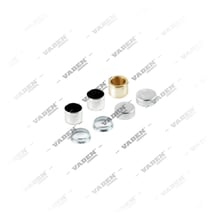
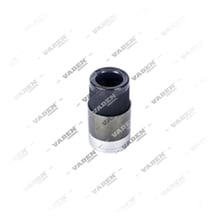
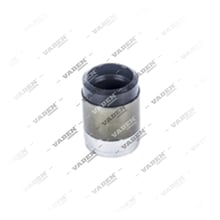
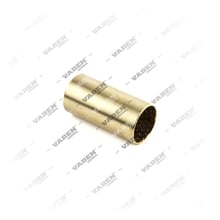
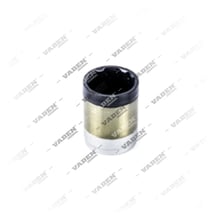
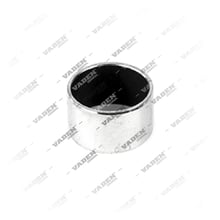
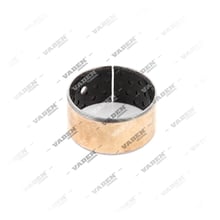
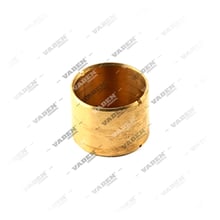
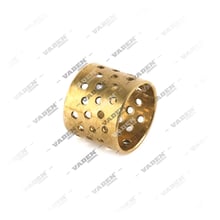
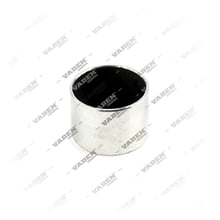
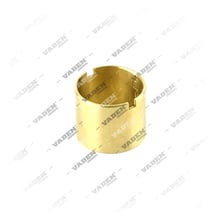
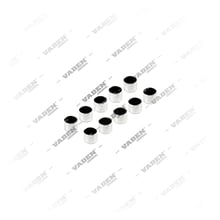
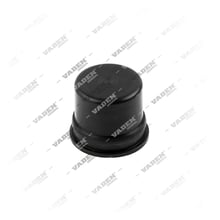
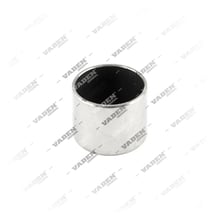
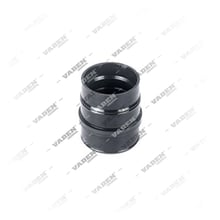
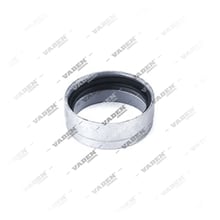
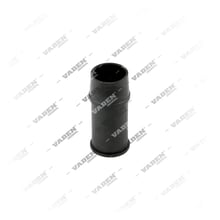
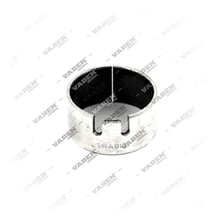
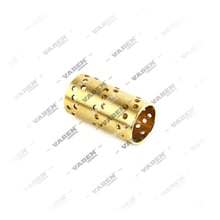
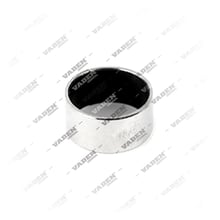
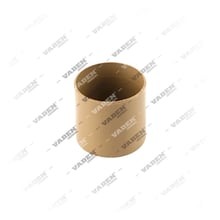
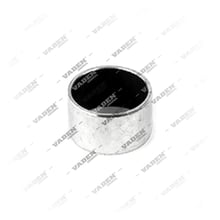
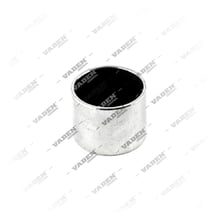
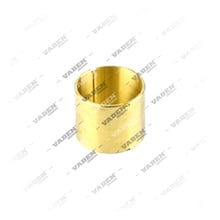
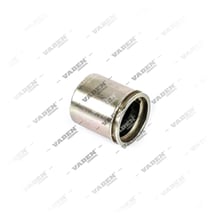
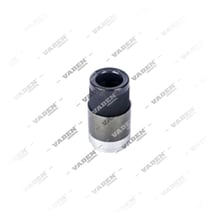
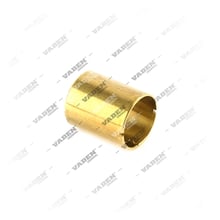
What Is a Caliper Guide Pin Bush?
A caliper guide pin bush is the friction bearing inside which the guide pins of an air disc brake caliper slide, letting the caliper move axially over its carrier. It sits under the Caliper Guide Pin sub-heading of the Brake Caliper group and is also known in the field simply as the guide bush. Most pneumatic disc brake calipers on heavy commercial vehicles run on two guide pins — one long, one short — each riding in its own bush. Even a perfectly sound pin cannot compensate for an oval-worn bush: once the bush loses its shape, the caliper loses its free movement.
Caliper guide pin bushes are widely used on truck, tractor, bus and trailer axles, across Knorr-Bremse and Wabco-based caliper families. The bush centers the pin, limits lateral play, and provides the sealing surface that the boot and grease pack work against.
How Does a Caliper Guide Pin Bush Work?
In floating-caliper air disc brakes, chamber pressure pushes only the inner pad against the disc. The reaction force then drags the caliper body the other way, pulling the outer pad against the far face of the disc. How smooth and repeatable this sliding motion stays depends entirely on the condition of the guide pin and bush pair.
- Carrying the slide: Absorbs the caliper's axial travel with minimal friction.
- Centering: Keeps the caliper aligned over the disc so both pads wear evenly.
- Limiting play: Controls radial clearance to cut down on vibration and noise.
- Load distribution: Spreads lateral forces across a wide contact area, protecting both the pin and its carrier bore.
- Sealing: Retains grease at the contact face and, together with the boot, keeps out water, road salt and dust.
Caliper Guide Pin Bush Technical Specifications
Caliper guide pin bushes are made from materials built to withstand the brake zone's high temperatures and road-salt exposure. The long-pin side usually runs a steel-bodied bush with a bronze or polymer-lined bore, while the short-pin side typically uses a glass-fibre-reinforced polyamide or elastomer-reinforced bush. Some designs in the second group allow limited angular float to absorb carrier tolerances.
Outer diameter, length and bore values vary by caliper family, so selection should always follow caliper make, type and OE reference rather than guesswork. Both the carrier-bore fit and the pin's running clearance are held to tight tolerances; wear limits are, in practice, judged from the overall play measured at the caliper. For torque and clearance limits, the vehicle manufacturer's current service manual remains the reference.
Types and Sub-Groups of Caliper Guide Pin Bushes
- Long pin bush: Carries the main sliding axis; its steel body with bronze or polymer lining takes the highest load.
- Short pin bush: Seats on the secondary pin, absorbing assembly tolerances through limited angular movement and preventing binding.
- Polymer-lined slide bush: Its low friction lets the caliper retract quickly after braking, reducing drag.
- Bronze or sintered-bearing bush: Prioritises strength under high load and temperature for heavy-tonnage service.
- Elastomer-reinforced bush: Used where vibration and shock damping matter most.
- Bush and seal kits: Bush, boot, cap and grease supplied together for a complete overhaul.
How to Choose the Right Caliper Guide Pin Bush
Selection starts with identifying the caliper family — the maker's plate and type code on the caliper are the most reliable source. Next, confirm whether the pin in question is the long or short one, and check the bush's inner and outer diameters. Because the same vehicle model can carry different caliper families across model years, basing the choice on model alone is a mistake.
- Caliper type and OE reference: The bush is specific to its caliper family; match it against the OE number before ordering.
- Pin position: Long and short bushes are not interchangeable.
- Duty cycle: Choose the material type based on urban, long-haul or construction-site use.
- Kit integrity: Renew the bush together with the pin, boot and caps.
Caliper guide pin bush selection and application comparison| Bush type | Typical material | Key feature | Suited to |
|---|
| Long pin bush | Steel body, bronze lining | High load capacity | Heavy-duty calipers |
| Short pin bush | Reinforced polyamide | Tolerance compensation | Tractor, trailer axle |
| Polymer-lined bush | PTFE slide layer | Low friction | Distribution, bus |
| Bronze-bearing bush | Sintered bearing | Heat resistance | Heavy tonnage, gradients |
| Elastomer-reinforced bush | Metal and elastomer | Vibration damping | Poor roads, trailer |
| Bush and seal kit | Bush, boot, cap | Complete overhaul | Scheduled pad service |
Caliper Guide Pin Bush Maintenance and Key Precautions
- Check at every pad change: Test the caliper's play by hand; renew both bush and pin if you feel slack or binding.
- Don't neglect the boot: A torn boot lets water and salt into the bush.
- Use only the recommended grease: An incompatible grease can swell or dissolve the polymer lining.
- Never force the bush into place: Use the proper tool; a direct hammer blow will oval the bush.
- Clean the bore: Never fit a new bush into a carrier bore that hasn't been cleared of corrosion and old grease.
- Renew as a set: Replacing a single bush upsets the caliper's parallel action against the disc.
- Take torque figures from the manual: For pin and cap screw torque, the vehicle manufacturer's service manual is the reference.
Common Faults and Solutions
- Uneven wear between inner and outer pads: The bush is worn or seized; renew the bush-and-pin set.
- Drag after braking: A bush seized by dried-out grease or corrosion; clean the bore and fit a new bush.
- Rattling or metallic noise from the brake: Excessive play; measure it, and if beyond limit, replace both bush and pin.
- Lateral movement in the caliper: An oval-worn bush or damaged carrier bore; renew the bush and inspect the bore as well.
- Grease leaking from the bush: A torn boot or improperly seated cap; replace the seal kit.
- Recurring failure: A mismatched bush type or wrong grease; verify the caliper family against the OE reference.
Why VADEN ORIGINAL?
- Manufactured to OE dimensions: Bore and diameter tolerances match the original values for each caliper family.
- Broad OEM coverage: Matched to Mercedes-Benz, MAN, Scania, Volvo, DAF, Iveco and Renault Trucks applications running Knorr-Bremse and Wabco-based calipers.
- Consistent materials: Slide-layer and body materials are chosen for temperature and corrosion resistance.
- Kit integrity: Bush, pin, boot and cap are supplied together to prevent repeat failures.
- Cataloged reference structure: Products are listed by OE number and caliper type.
- Exported to 100+ countries: In service in over a hundred countries, across every climate and road condition.
Conclusion
The caliper guide pin bush is a small but critical component that governs how freely and evenly an air disc brake caliper slides. A worn bush sets off a chain of problems, from uneven pad wear to brake drag, so the bush, pin and seals should be checked together at every pad change and renewed as a set when needed.
Frequently Asked Questions (FAQ)
What does a caliper guide pin bush do?
A caliper guide pin bush is the bearing that lets an air disc brake caliper slide over its guide pins with low friction. It centers the caliper on the disc, limits radial play, and ensures the inner and outer pads press against the disc evenly. Once the bush wears, the caliper loses its free movement and pad wear becomes uneven.
How do I know it's time to replace the caliper guide pin bush?
The clearest signs are uneven wear between the inner and outer pads, rattling from the brake, noticeable lateral play in the caliper, and drag that persists after the brake is released. Check the caliper's axial and radial play by hand at every pad change. If you feel play, or the caliper moves stiffly, renew the bush and pin together.
Can the long and short pin bushes be used interchangeably?
No. The long pin bush carries the main sliding axis and is built for the higher load, while the short pin bush provides limited angular float to compensate for assembly tolerances. Fitting a bush in the wrong position can cause the caliper to bind or wear prematurely.
Is it fine to replace just the pin and leave the bush in place?
No. The pin and bush wear together as a pair; a new pin running inside a worn bush will develop play again in short order. Renewing the bush, pin, boot and cap as a set reduces both labor and the risk of repeat failure.
What grease should be used on a caliper guide pin bush?
Only the high-temperature grease specified by the caliper manufacturer should be used. An incompatible grease can swell or dissolve the polymer slide layer, and in the hot brake zone it may thin out quickly and stop protecting the surface. For the correct grease type and quantity, follow the vehicle manufacturer's current service manual.
Related technical guide: Caliper Guide Pin, Bushing & Bolt: Faults, Repair, Care