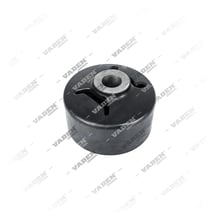
What is a Suspension Bracket Bushing?
On trucks and tractor units operating under heavy load, the bracket bushing directly affects the service life of the connection point that fixes the position of the axle or leaf spring; a worn bushing can cause permanent damage to the bracket itself and to the surrounding bore surfaces. For this reason the bushing, though relatively small, is critical to the accuracy of the suspension geometry. In some chassis designs, more than one bushing size can be used at the same bracket point; front and rear suspension brackets may call for different diameters and lengths, so it is important to check the vehicle fitment table before replacement. On tandem-axle vehicles, bushings used in stabilizer (anti-roll bar) brackets can also have a different hardness rating than a conventional leaf-spring bracket bushing.
What are the functions of the Suspension Bracket Bushing?
The bushing's functions within the suspension system can be summarized as follows.
- Vibration damping: Prevents road impacts from being transferred harshly to the chassis.
- Wear prevention: Protects the bracket and pin surfaces by eliminating metal-to-metal contact.
- Freedom of motion: Allows the suspension to make its designed, limited rotational movement.
- Noise reduction: Lowers mechanical noise transmitted into the cab.
- Position fixing: Prevents axial shift of the bracket and preserves suspension geometry.
What are the symptoms of a faulty Suspension Bracket Bushing?
When the bushing wears out, the first symptom is usually a knocking or squeaking noise heard at low speed in turns or on rough ground. A slight increase in vibration can be felt in the steering wheel or the cab floor. The vehicle may lean to one side under load, or tire wear may become uneven, because a worn bushing shifts the suspension geometry. Visual inspection may reveal cracking, fragmentation or complete separation of the rubber section; in some cases the bushing comes out entirely, leaving a gap between the bracket and the pin. In advanced wear the bracket bore becomes oval, a condition that bushing replacement alone cannot fix. If a worn bushing is not noticed and continues in service for a long time, the increased vibration can add to driver fatigue and promote fatigue cracks at chassis weld points, which is why early diagnosis matters.
How is the Suspension Bracket Bushing checked?
For inspection, the vehicle should be raised and the suspension left unloaded, then the bracket area should be loaded by hand or with a pry bar to check for movement. The rubber surface should be examined for cracking, hardening, or swelling caused by oil contact. The clearance between bushing and pin is assessed visually with a flashlight, and measured with calipers if needed. During a road test, attention should be paid to abnormal noise at low speed through corners and speed bumps. Whether the bracket bore has become oval should also be checked at this stage, since bushing replacement alone will not resolve that condition. During inspection, the corresponding bushing on the opposite (symmetric) side should also be checked; since both sides are usually exposed to similar load and aging conditions, wear on one side often indicates the other side is likely to fail soon too.
What should be considered during replacement?
Before replacement, the vehicle must be securely supported and the suspension relieved of load. The old bushing should be removed with a press or a suitable removal tool, without forcing and deforming the bracket bore. The bore should be cleaned before fitting the new bushing, and manufacturer-specified assembly lubricant should be used if required. The bushing must be seated fully and axially inside the bracket; angled fitting causes premature wear. The pin or stud must be torqued according to the value given in the vehicle's current service manual; under- or over-tightening shortens the bushing's service life. Tightening should ideally be done with the suspension close to its normal ride height rather than under full load, so the rubber operates under the correct preload once the vehicle is moving.
How is the Suspension Bracket Bushing selected?
Selection is determined by inner/outer diameter, length, rubber hardness and bracket type. The table below summarizes the selection criteria.
Suspension Bracket Bushing selection criteria| Criterion | Description |
|---|
| Inner/outer diameter | Must give a clearance-free fit with the pin and bracket bore |
| Length | Must exactly fit the width of the bracket |
| Rubber hardness | Correct Shore hardness should be chosen for the load type |
| Metal sleeve | Should have a corrosion-resistant coating |
| Vehicle fitment | Should be confirmed against the OE reference for chassis and suspension type |
Maintenance and service life
Bushing life depends on load conditions, road surface and maintenance regime; rather than a fixed mileage figure, periodic visual inspection is recommended. Vehicles operating frequently under heavy load should have shorter inspection intervals. Rubber parts should be kept away from oil and solvent contact, as these can cause premature cracking. The bracket area should be included in general inspection at the intervals given in the vehicle's current maintenance plan. In fleet management, logging bushing checks together with regular mileage records allows the typical wear trend across similar vehicles to be tracked, so the maintenance plan can be optimized accordingly.
VADEN Suspension Bracket Bushing
VADEN manufactures bracket bushings for heavy commercial vehicle suspension systems to OE dimensions and material standards. A formulation focused on vibration damping and durability gives workshops a reliable replacement solution.
Frequently Asked Questions (FAQ)
How often does a suspension bracket bushing need replacement?
There is no fixed interval; it depends on load conditions and road surface. Periodic visual inspection at scheduled maintenance is recommended.
When the bushing wears, does only the bushing get replaced or the bracket too?
Usually only the bushing is replaced; but if the bracket bore has become oval, the bracket or the complete assembly may need replacement.
Can a metal bushing be used instead of a rubber one?
No, the rubber bushing performs the vibration damping function; a metal bushing cannot provide this and can damage the chassis.
Does replacing the bushing require special tools?
Yes, in most cases a press or a bushing removal tool is recommended to remove the old bushing without deforming it.
Does a worn bushing affect tire wear?
Yes, a degraded bushing shifts the suspension geometry and can lead to uneven tire wear.