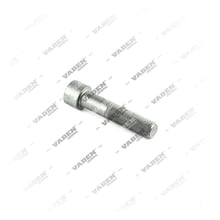
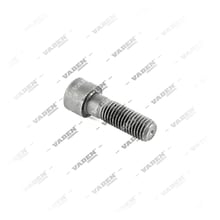
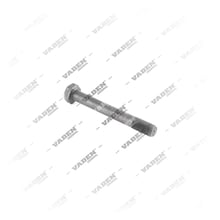
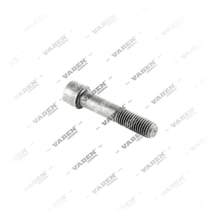
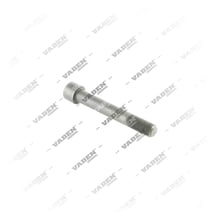
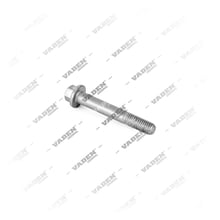
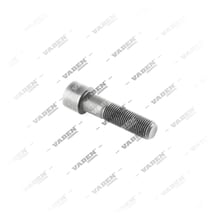
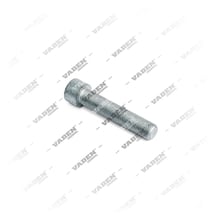
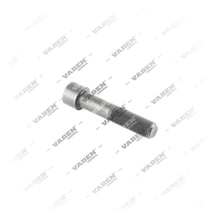
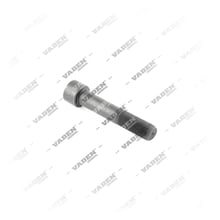
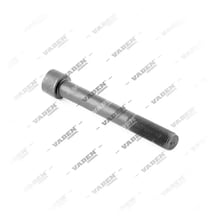
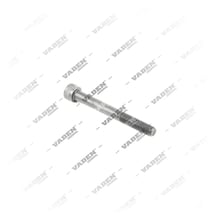
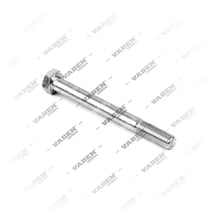
What Is a Caliper Guide Pin Bolt?
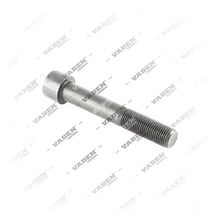
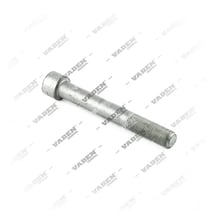
A caliper guide pin bolt is a high-strength fastener that secures the guide pin (slide pin) assembly to the caliper body and the carrier bracket on heavy commercial vehicle disc brake calipers. It is also known in the field as a caliper slide pin bolt or guide pin fastening bolt. As a sub-group of the Brake Caliper and Caliper Guide Pin chain, this category covers the bolts that lock the guide pin body to the carrier, guide pin cover bolts, and matching washers. On the disc-braked axles of trucks, tractor units, buses, and trailers, the caliper's ability to slide freely depends on these bolts being correctly tightened.
How Does a Caliper Guide Pin Bolt Work?
A floating-type disc brake caliper slides axially on the carrier bracket so it can press both pads against the disc evenly. The guide pins provide this sliding motion, and the caliper guide pin bolt locks the pin in place under preload. Tightened to the specified torque, the bolt develops a controlled stretch in its shank and locks the joint through friction.
- Creating preload: Tightened to the specified torque and angle, the bolt stretches within its elastic range; this stretch generates the clamping force that keeps the joint from loosening under vibration.
- Carrying load: The reaction moment that builds up in the caliper during braking is transferred through the guide pins to the bolt, which must carry this shear and bending load without deforming.
- Preserving axial freedom: When the guide pin is locked in the correct position, the caliper slides without binding and pad wear progresses evenly on both faces.
Caliper Guide Pin Bolt Technical Specifications
These bolts require high tensile strength, a controlled yield point, and durable surface protection. In heavy-duty applications they are typically made from heat-treated alloy steel in strength grades 10.9 and 12.9. The coating often includes a lubricant that stabilizes friction.
- Strength grade: Typically 10.9 or 12.9; a lower-grade substitute risks breakage.
- Thread size and pitch: Heavy vehicle calipers mostly use metric threads between M10 and M16, in standard or fine pitch.
- Tightening method: Torque-plus-angle is the usual method; the vehicle manufacturer's current service manual is authoritative for exact values.
Caliper Guide Pin Bolt Types and Sub-Groups
Caliper guide pin bolts are distinguished by their function on the caliper. Since the same caliper can carry several bolts of different lengths and strengths at once, the safest practice when disassembling is to mark which bolt belongs where.
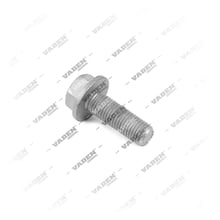
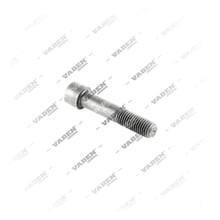
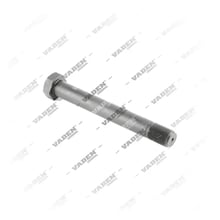
- Guide pin body bolt: Attaches the guide pin body to the caliper carrier; carries the highest load and is replaced most often.
- Guide pin cover bolt: Secures the cover and boot of the guide pin bore; since sealing is its main role, it is shorter and smaller in diameter.
- Carrier bracket bolt: Fastens the caliper carrier to the axle flange; carries the highest torque and is most likely to be single-use.
- Adjuster mechanism cover bolt: Holds the cover of the automatic pad adjuster unit; small in diameter, but if it leaks, water enters the caliper.
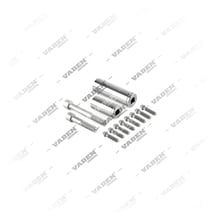
- Bolt and washer kits: Service kits supplying the bolt, a lock washer, and a sealing element together where required.
How to Choose the Right Caliper Guide Pin Bolt
The starting point for selection is always the vehicle's and the caliper's OE reference number. Across different caliper generations from the same manufacturer, thread size may stay the same while bolt length and head type change, so a visual comparison alone is not enough. The table below summarizes the criteria to verify before ordering.
Caliper Guide Pin Bolt Selection and Compatibility Criteria| Criterion | How to Verify | Why It Matters |
|---|
| OE reference number | Match against the number stamped on the removed bolt or caliper | Most reliable method, eliminates errors |
| Thread size and pitch | Measure with a thread gauge and calipers | Wrong pitch strips the thread |
| Bolt length | Measure from under the head to the tip | Short bolt won't grip; long one bottoms out |
| Strength grade | The 10.9 or 12.9 marking on the head | Lower grade can break under torque |
| Single-use warning | The vehicle manufacturer's current service manual | A reused bolt cannot restore preload |
Caliper Guide Pin Bolt Maintenance and Points to Watch
These fasteners do not need a separate maintenance schedule, but should be checked at every pad change and caliper overhaul. Most installation problems trace back not to the bolt itself but to incorrect tightening.
- Use a torque wrench: Installing with an impact gun either strips the thread or leaves insufficient preload; a calibrated torque wrench, and an angle gauge where required, is essential.
- Do not reinstall a single-use bolt: Looking intact does not mean it has retained its preload.
- Clean the bore: Rust and old threadlocker residue in the tapped hole absorb most of the applied torque as friction.
- Renew the boot and cover together: A bolt working behind a torn boot rusts and seizes quickly.
Common Faults and Their Solutions
Problems with a caliper guide pin bolt are usually noticed not in the bolt itself but in brake behavior. When the following symptoms appear, remove the caliper so the guide pin assembly and its bolts can be inspected together.
- One-sided pad wear: The guide pin may be seized or the bolt loosened; check that the caliper slides freely, clean the guide pin assembly, and fit a new bolt at the correct torque.
- Metallic knocking or rattling: A bolt that has lost its preload creates play; remove it and check the threaded bore and body for deformation.
- Seized bolt that will not turn: Usually caused by corrosion after the boot has torn; work it loose gradually with penetrating oil, and use a suitable extractor if the head has rounded off.
- Sheared bolt: A sign of over-tightening, the wrong strength grade, or fatigue; remove the broken piece and replace all bolts in the group together.
Why VADEN ORIGINAL?
VADEN ORIGINAL caliper guide pin bolts are manufactured with the real operating conditions of heavy-duty brake systems in mind. Products in this category are made to OE dimensions and strength grades, cross-referenced to common disc brake caliper types.
- Manufactured to OE dimensions: Thread size, length, head type, and strength grade match the original part.
- Broad OEM coverage: Referenced against common caliper types found on Mercedes-Benz, MAN, Scania, Volvo, DAF, Iveco, and Renault Trucks vehicles.
- Supplied as kits: Where needed, the bolt, washer, and sealing element are offered together, reducing the risk of incomplete installation.
- Exported to more than 100 countries: A product range developed using field feedback from varied climate and road conditions.
Conclusion
Although the caliper guide pin bolt is a small fastener, it is one of the critical parts that determines whether a disc brake caliper functions correctly. When the right strength grade, dimensions, and tightening method come together, the caliper slides freely and the pads wear evenly. Starting selection from the OE reference number, renewing single-use bolts, and confirming torque values from the vehicle manufacturer's current service manual are the foundation of safe brake maintenance.
Frequently Asked Questions (FAQ)
What does a caliper guide pin bolt do?
It secures the disc brake caliper's guide pin (slide pin) assembly to the caliper body and the carrier bracket. When tightened to the specified torque, the preload it creates counters the shear and bending forces that arise during braking. This allows the caliper to slide freely in the axial direction so the pads press evenly against the disc.
Can a caliper guide pin bolt be reused?
On heavy vehicle calipers, a significant portion of these bolts are single-use, because they are tightened using the torque-plus-angle method, which stretches them within their elastic range. A bolt that has been removed cannot re-establish the same preload. The vehicle manufacturer's current service manual is authoritative on whether replacement is required.
What torque should a caliper guide pin bolt be tightened to?
The torque value varies widely depending on the bolt diameter, strength grade, and caliper type, and many applications also call for an additional angle turn after the initial torque. For this reason, giving a single generic figure would not be accurate. Use the vehicle manufacturer's current service manual for the correct torque and angle.
What symptoms does a loose caliper guide pin bolt cause?
The most common symptoms are metallic knocking during braking, noticeable play in the caliper, and one-sided pad wear. At a more advanced stage the caliper's axial sliding is disrupted and brake imbalance appears. When these symptoms occur, the caliper should be removed so the guide pin assembly and its bolts can be inspected together.
Should grease or copper anti-seize be applied to a caliper guide pin bolt?
On bolts with a self-lubricating coating, additional lubricant is not recommended, since lowering the friction coefficient can cause excessive preload and breakage at the same torque value. For the guide pin body, use the specific grease specified by the manufacturer. Unless a separate instruction says otherwise, the bolt thread itself should be installed dry.
Related technical guide: Caliper Guide Pin, Bushing & Bolt: Faults, Repair, Care