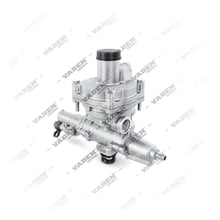
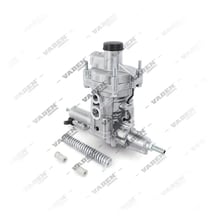
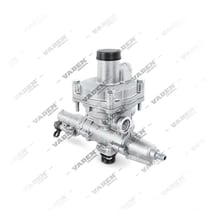
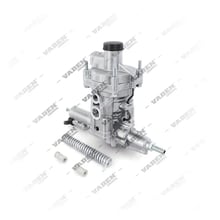
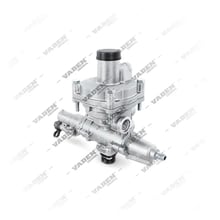
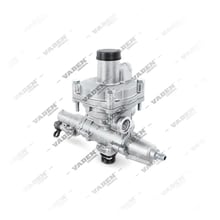
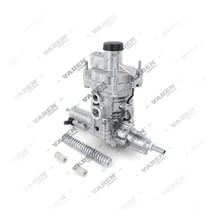
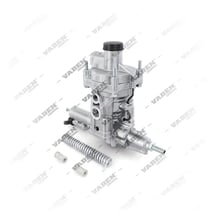
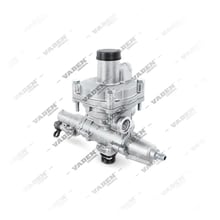
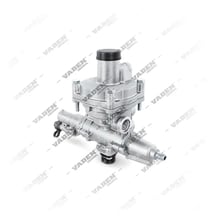
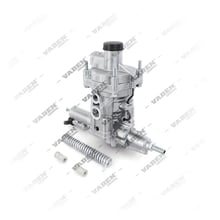
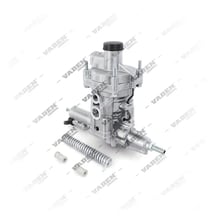
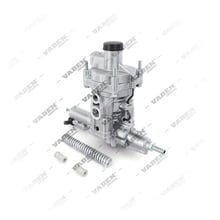
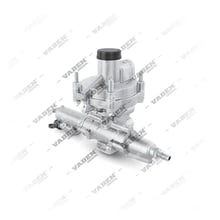
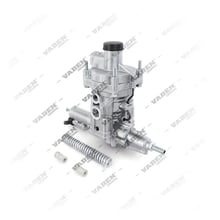
What Is the ALB Load Sensing Valve Complete Unit?
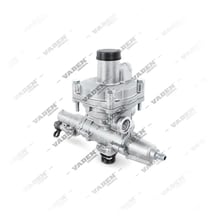
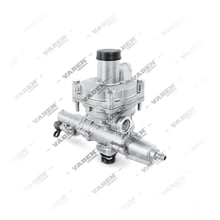
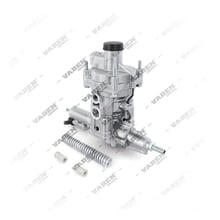
The ALB Load Sensing Valve Complete Unit is a ready-to-install assembly that automatically adjusts brake pressure in a heavy commercial vehicle's air brake system according to axle load. In the field it is also called the load sensor valve or the automatic load-apportioning brake force regulator. This subcategory, under the ALB Load Sensing Valve group within Brake System, covers complete units supplied with housing, internal valve assembly, adjustment lever, and fittings — not single parts like a diaphragm or repair kit. It is used in the axle brake circuits of trucks, tractor units, buses, trailers, and semi-trailers.
How Does the ALB Load Sensing Valve Complete Unit Work?
The valve tracks the distance between axle and chassis through a mechanical lever and a tension spring. As the vehicle is loaded, the suspension compresses, the lever angle changes, and the internal piston assembly raises the outlet pressure sent to the brake chambers. When the vehicle is unloaded, the lever returns to its original position and outlet pressure is throttled back down. On air-suspended vehicles, pneumatic-control types handle the same job by reading bellows pressure instead.
- Load sensing: Lever angle or bellows pressure conveys the instantaneous axle load to the valve.
- Pressure apportioning: The piston-and-spring assembly reduces inlet pressure to a ratio matching the load.
- Stepless transition: Since the adjustment is continuous, intermediate loads also get proportional braking force.
- Circuit protection: If the control lever breaks, most designs default to full load so braking force is not lost.
- Quick release: When the pedal is released, chamber air vents through the exhaust port.
Technical Specifications of the ALB Load Sensing Valve Complete Unit
Complete units are typically built with a die-cast aluminum housing, surface-protected against road salt. Operating pressure falls within the typical range for heavy commercial vehicle pneumatic circuits. This is general guidance; for critical values such as pressure ratio, lever length, and mounting angle, the vehicle manufacturer's current service manual is the authoritative source.
- Housing and material: Die-cast aluminum housing, surface-protected fittings, nitrile-based sealing set.
- Port layout: Inlet from the brake valve, outlet to the chamber line, exhaust, and on some types a control port.
- Apportioning characteristic: Outlet pressure is throttled when unloaded, approaching inlet pressure at full load.
- Compatibility criteria: OE number, lever direction and length, port position, and mounting hole spacing.
Types and Subgroups of the ALB Load Sensing Valve Complete Unit
This category groups the complete-unit families that correspond to different suspension and axle layouts. Identifying the correct family comes before checking individual dimensions — a mechanical-lever valve cannot correctly read load data on an air-suspended vehicle.
- Mechanical lever type: Used on leaf-spring suspension; lever and spring attach to the axle clamp.
- Pneumatic-control type: Used on air-suspended tractors, buses, and trailers, referencing bellows pressure.
- Trailer-type valves: Work with the trailer brake valve and include an empty/laden adjustment plate.
- Tractor and truck-type valves: Connect to the rear axle circuit and are compatible with ABS modulators.
- Sets with adjustment bracket: Include a bracket, lever, rod, and spring with the housing; chosen when the linkage is also damaged.
How to Choose the Right ALB Load Sensing Valve Complete Unit
The most reliable starting point is the OE reference number stamped on the housing of the removed unit. If it cannot be read, evaluate the vehicle's make, model, axle layout, and suspension type together. The table below summarizes the criteria to verify before ordering.
Selection and compatibility criteria for the ALB Load Sensing Valve Complete Unit| Criterion | What to check | Why it matters |
|---|
| OE reference number | Number on the old valve's housing | Most accurate way to cross-match |
| Suspension type | Leaf-spring or air suspension | The two types are not interchangeable |
| Control lever | Lever direction, length, rod connection | Wrong lever length upsets the pressure ratio |
| Port layout | Inlet, outlet, exhaust position and thread size | Determines line and fitting type |
| Mounting dimensions | Hole spacing and bracket orientation | Wrong bracket distorts the load reading |
| Vehicle application | Mercedes-Benz, MAN, Scania, Volvo, DAF, Iveco | Valve varies by axle layout within the same series |
Maintenance and Points to Watch for the ALB Load Sensing Valve Complete Unit
Because this valve operates under the chassis close to the axle, it is exposed to mud, salt, and stone impacts. Most maintenance concerns relate to the linkage mechanism rather than the housing itself. The job is not complete until an outlet pressure check follows installation.
- Lever and linkage check: Confirm the rod is not bent, the spring is not broken, and the joints move freely.
- Verifying the adjustment: Measure outlet pressure in unloaded and laden positions; the service manual is the reference for the values.
- Tightening torque: Tighten fittings and bolts within the specified range; overtightening damages the threads.
- Air quality: Do not neglect dryer and filter maintenance; moist air shortens sealing-element life.
- Common mistake: Pulling the lever to an arbitrary position because braking feels weak causes lock-up or a longer stopping distance.
Common Faults and Their Solutions
Load sensing valve faults usually show up as brake imbalance and, at first glance, can be mistaken for a pad or chamber problem. Reading the symptom correctly avoids unnecessary parts replacement. Below are the situations most commonly seen in the field.
- Rear wheels lock up on an empty vehicle: The lever is stuck in the full-load position; free the mechanism and readjust, or replace the unit if the sticking is inside the housing.
- Stopping distance increases when loaded: The valve has stayed in the unloaded position or the internal piston is worn; if the adjustment is correct, renew the complete unit.
- Continuous air leak and hissing: Sealing elements have deteriorated; locate the leak with soapy water and replace the unit if it comes from the housing.
- Delayed brake response: Moist air has fouled or frozen the internal passages; check the air dryer.
- Erratic braking on a trailer: The adjustment plate is in the wrong position; verify plate and valve type against the trailer data.
Why VADEN ORIGINAL?
VADEN ORIGINAL manufactures to OE dimensions for heavy commercial vehicle air brake systems. The complete units in this category are made to match the port position, lever geometry, and mounting dimensions of the original part removed from the vehicle, and the range is backed by an extensive OEM cross-reference list.
- Manufactured to OE dimensions: Housing, port, and mounting dimensions match the original; no adapter is needed.
- Extensive OEM cross-reference: Numbers cross-referenced with Mercedes-Benz, MAN, Scania, Volvo, DAF, and Iveco applications.
- System compatibility: Apportioning characteristics suited to Wabco- and Knorr-Bremse-type pneumatic architectures.
- Wide availability: Exports to more than 100 countries and a broad dealer network make sourcing easy.
Conclusion
The ALB Load Sensing Valve Complete Unit delivers, as a single part, the assembly that apportions braking force according to load and directly affects driving safety. To find the right product, verify the OE number, suspension type, lever geometry, and port layout together. A pressure check after replacement is the only reliable way to confirm the valve is doing its job.
Frequently Asked Questions (FAQ)
What does the ALB load sensing valve do?
It measures the load carried on the axle and automatically apportions the air pressure sent to the brake chambers. This prevents the wheels from locking up on an empty vehicle and keeps braking force from falling short on a fully loaded one. It is one of the fundamental elements of brake balance on heavy commercial vehicles.
Should I buy a complete unit, or is a repair kit enough?
If the fault is limited to the diaphragm, seals, or lever assembly, a repair kit is usually enough. If there is a crack in the housing, wear in the internal piston, or permanent sticking, replacing the complete unit is the safer solution. If the outlet pressure measured after adjustment is still incorrect, a complete replacement is recommended.
Can a mechanical-lever valve and a pneumatic-control valve be used interchangeably?
No. The mechanical-lever type measures the distance between the axle and the chassis on leaf-spring suspension, while the pneumatic-control type references the pressure of the air-suspension bellows. If the wrong type is fitted, the valve cannot read load data correctly and brake distribution is thrown off.
What symptoms appear when the load sensing valve fails?
The most common symptoms are early rear-wheel lock-up on an empty vehicle, longer stopping distance when loaded, continuous air leakage from the exhaust port, and delayed brake response. Erratic braking on trailers is also a frequently seen sign. In these cases, the lever mechanism and outlet pressure should be checked together.
How do I determine the correct ALB load sensing valve?
The most reliable method is matching the OE reference number on the housing of the removed valve. If the number cannot be read, the suspension type, lever direction and length, port layout, and mounting hole spacing should all be verified together. For adjustment values, the vehicle manufacturer's current service manual is the authoritative source.
Related technical guide: ALB Load Sensing Valve: Faults, Replacement & Setting Guide