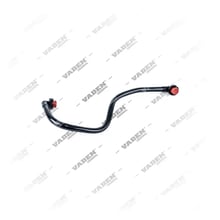
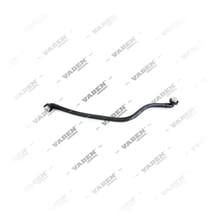
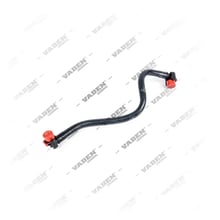
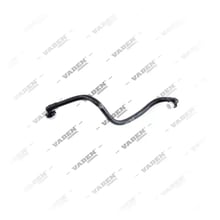
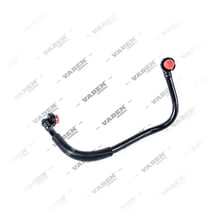
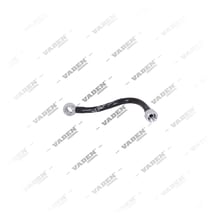
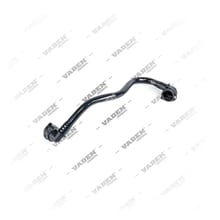
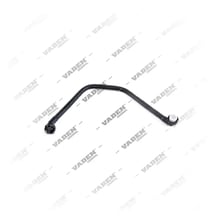
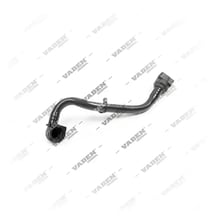
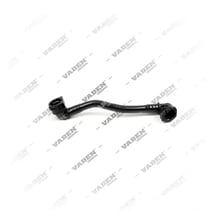
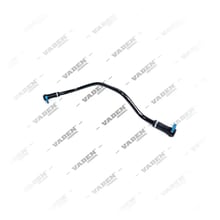
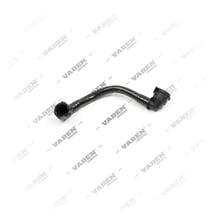
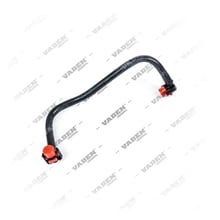
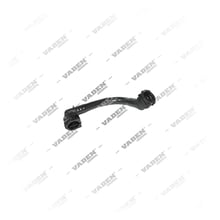
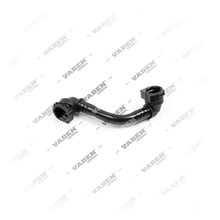
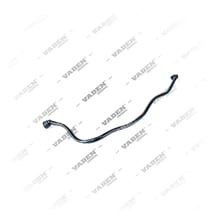
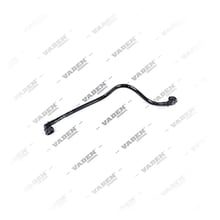
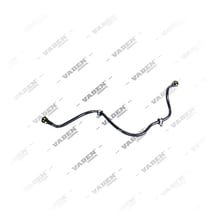
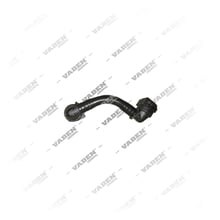
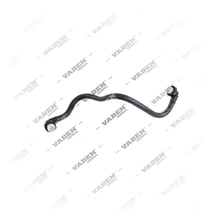
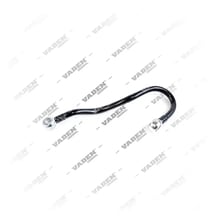
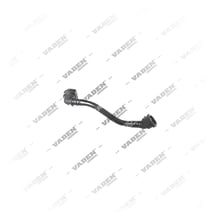
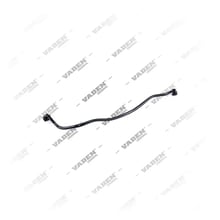
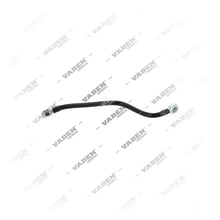
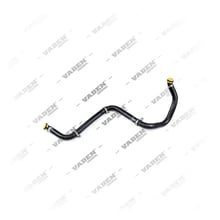
What Is a Compressor Water Pipe?
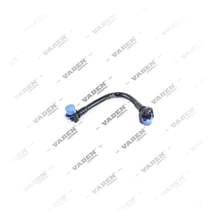
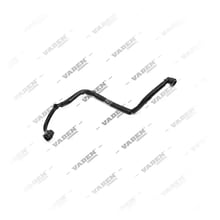
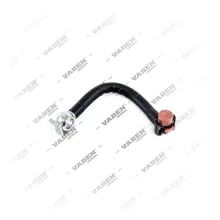
Compressor Water Pipe is the pipe and fitting assembly that carries engine coolant to the compressor housing and cylinder head in water-cooled air brake compressors, then returns the heated coolant into the engine circuit. It belongs to the Compressor Parts subgroup within the Air Brake Compressors main group; not a standalone unit, but a service component completing the compressor's cooling circuit. In the field it is also called the compressor coolant pipe, cooling water pipe, water inlet/outlet pipe, or circulation pipe. Since the compressor spins continuously with the engine, the heat it generates must be carried away, and the water pipe is that loop's transport leg.
How Does a Compressor Water Pipe Work?
Coolant is drawn from the engine block, routed through the water jacket in the compressor's cylinder head and housing, and returned to the engine circuit once it has absorbed heat. The water pipe forms the supply and return legs of this loop and must withstand the circuit's pressure, temperature, and vibration. Fittings, banjo bolts, flanges, and gaskets at the ends provide the seal, while the pipe is bent to route through the engine bay without touching cables or fuel lines.
- Coolant inlet: Coolant from the engine circuit reaches the compressor head through the inlet pipe.
- Heat transfer: The coolant picks up heat from the head and housing surfaces warmed by compression.
- Return line: Heated coolant returns to the engine circuit through the outlet pipe and is cooled at the radiator.
- Sealing: Gaskets, o-rings, and banjo washers keep the connections leak-free under pressure.
Compressor Water Pipe Technical Specifications
Water pipes are mostly made from steel, stainless steel, copper, or aluminum alloy, with corrosion-resistant coating applied depending on the application. Outer diameter and wall thickness are set by the flow rate of the water jacket; heavy commercial vehicle compressors use small-diameter lines, and the exact dimension varies by compressor type. Thread type at the ends, banjo diameter, flange bolt spacing, and gasket seat compatibility are the critical dimensions. For torque and tolerance values, the vehicle manufacturer's service manual is authoritative.
Compressor Water Pipe Types and Subgroups
- Water inlet pipe: Carries coolant from the engine circuit to the compressor head; usually shorter.
- Water outlet pipe: Returns heated coolant to the engine circuit; sees greater thermal expansion.
- Rigid metal pipes: Fixed-geometry steel or copper pipes; bend angle and orientation must match exactly.
- Banjo and union-connected pipes: Fitted with a banjo bolt or union nut at the ends; washers must be renewed at every removal.
- Flanged pipes: Bolted to the compressor head with a gasket; flange flatness is key to sealing.
- Sealing components: Banjo bolts, washers, o-rings, gaskets, and clamps.
How to Choose the Right Compressor Water Pipe
The most reliable approach is to work from the OE reference number on the removed pipe or the compressor itself. Since different engine variants of the same model can use different pipe geometries, brand and model information alone is not enough. Compare end fitting type, outer diameter, length, and bend direction when selecting a replacement.
Compressor Water Pipe selection and compatibility criteria| Criterion | What to check | Effect of a mismatch |
|---|
| OE reference number | Matching against the original pipe or compressor number | Wrong geometry, cannot be installed |
| Fitting type | Banjo, union, flange, or hose nipple | Sealing cannot be achieved |
| Diameter and wall thickness | Outer diameter and wall thickness match the original | Flow rate drops, cooling suffers |
| Length and bend | Overall length, bend direction, routing path | Strained installation, fatigue cracking |
| Material and coating | Steel, stainless steel, copper, or aluminum | Premature corrosion, perforation |
| Gasket and washer | O-ring, washer, and gasket size supplied with the pipe | Water leak at the connection |
Compressor Water Pipe Maintenance and What to Watch For
Although it looks like a simple part, a fault in the water pipe directly affects compressor life, so check it visually at every service. Swelling, greenish scale, or a dried coolant stain means the line is leaking; pulling the pipe into place under tension is the most common installation mistake, and combined with vibration it leads to cracking.
- Renew the gasket at every removal: banjo washers and o-rings are single-use.
- Apply controlled torque: overtightening shears the bolt or warps the flange; follow the service manual.
- Install without strain: the pipe should sit naturally, not be forced into place by the bolt.
- Maintain coolant quality: the correct antifreeze ratio slows corrosion; plain water causes scale and rust.
- Check the clamps: a loose clamp lets the pipe rub against the chassis or wiring.
Common Faults and Solutions
- Water leaking at a connection: coolant stains and a dropping level under the compressor, caused by a fatigued gasket or deformed banjo washer. Renew the sealing components.
- Crack in the pipe body: fatigue cracking from vibration and strained installation usually starts at the base of a bend. Do not repair; fit a new pipe to OE dimensions.
- Blockage inside the pipe: scale and sediment reduce flow, and the head runs hotter than normal. Flush the line, or replace it if the blockage is permanent.
- External corrosion and perforation: insufficient antifreeze protection and road salt thin the wall. Use a corrosion-resistant pipe.
- Compressor overheating: with the water line out of action, head temperature rises and carbon reaches the air circuit. Verify inlet and outlet flow.
- Water entering the air circuit: indicates head gasket or water jacket damage; water shows up in the air tank. Renew the head and gasket assembly.
Why VADEN ORIGINAL?
VADEN specializes in air brake compressors and compressor parts for heavy commercial vehicles. Products in the Compressor Water Pipe range are made to the dimensions of the original part; diameter, bend geometry, and fitting type are cross-matched against the OE reference.
- Manufactured to OE dimensions: bend angles and connection sizes are machined from the original part.
- Broad OEM coverage: wide reference coverage for water-cooled compressors on Mercedes-Benz, MAN, Scania, Volvo, DAF, Iveco, and Renault Trucks.
- Material and surface protection: materials and coatings suited to cooling circuit conditions.
- Catalog completeness: listed alongside gaskets, heads, and repair kits.
- Exported to over 100 countries: a range matured through field feedback across climates and road conditions.
Conclusion
Compressor Water Pipe is a small but critical component that keeps water-cooled air brake compressors thermally balanced. A small leak or blockage can quickly turn into head deformation and valve damage. For this reason, OE reference, fitting type, and material compatibility should be weighed together when choosing a replacement, and gaskets and washers renewed at every connection opened.
Frequently Asked Questions (FAQ)
What does a compressor water pipe do?
In water-cooled air brake compressors, it carries engine coolant to the compressor's cylinder head and housing, then returns the heated coolant back to the engine circuit. This carries away the heat generated during compression and keeps the compressor at its normal operating temperature. If the line goes out of action, the compressor overheats.
How can you tell a compressor water pipe has failed?
The clearest sign is an antifreeze stain around the compressor and a coolant level that keeps dropping. The pipe body may show a crack, greenish scale buildup, or a dried water mark. In the case of a blockage rather than a leak, the compressor head runs far hotter than normal.
Can a compressor water pipe be repaired?
Welding a cracked or perforated water pipe, or using temporary sealing products on it, is not recommended. Because this line operates under pressure and vibration, a repaired spot opens up again within a short time. The correct fix is to fit a new pipe to OE dimensions and renew the gasket and washers.
What should you watch for when replacing the water pipe?
The pipe should sit in its own geometry without strain, and should never be forced into place by tightening the bolt. Banjo washers, o-rings, and gaskets should be renewed at every removal. For tightening torque, the vehicle manufacturer's current service manual is authoritative; overtightening can shear the bolt or warp the flange.
How do you choose the right water pipe?
The most reliable method is to cross-match against the OE reference number on the removed original pipe or on the compressor. Then compare the end fitting type, outer diameter, overall length, and bend direction against the original part. Different engine variants of the same vehicle model may use different pipe geometries.
Related technical guide: Compressor Cooling Plate & Water Cooling: Faults, Repair & Care